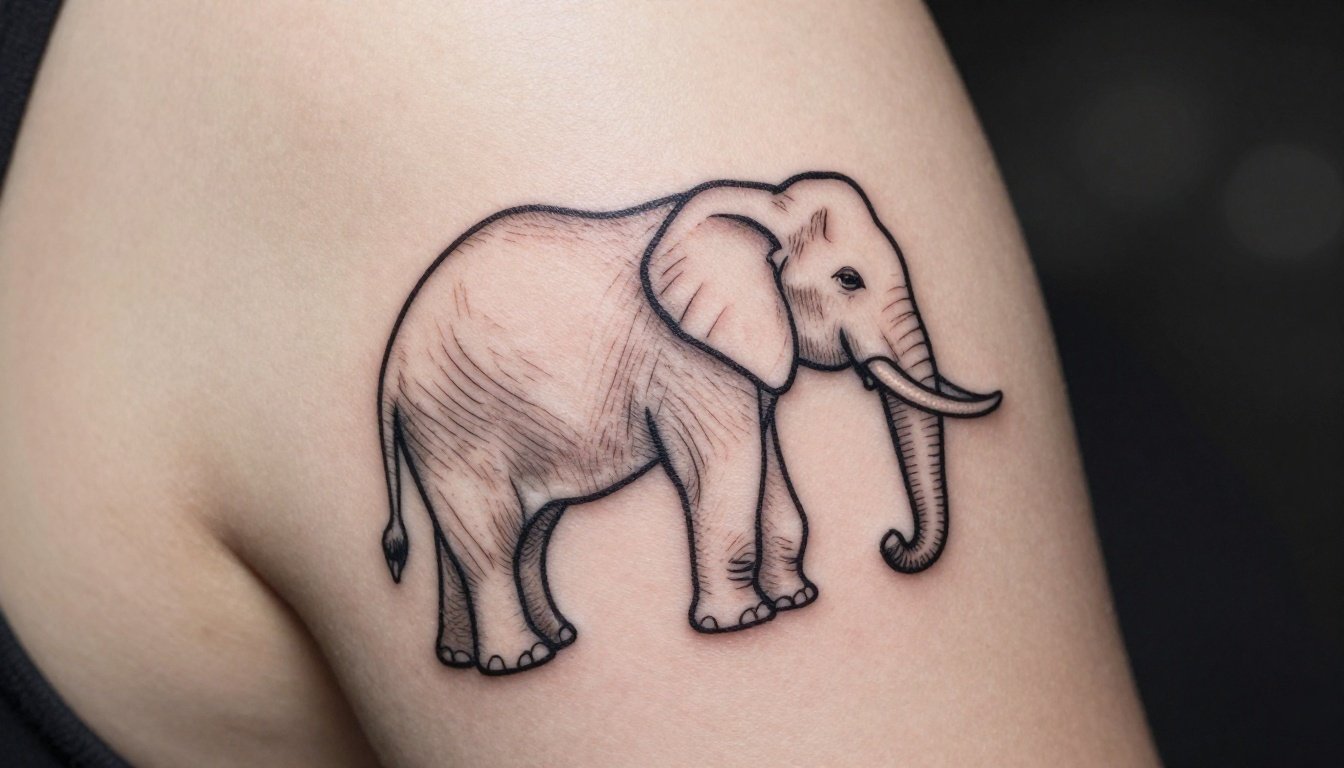
5 Elegant Elephant Outline Tattoo Designs for Meaningful Ink
An elephant outline tattoo can hold a whole family story in a few graceful lines. Its clean silhouette may express quiet strength, wisdom, loyalty, protection, memory, or the lasting bond between loved ones, without relying on heavy shading.
Elegant line art depends on a clear profile, smooth curves, and thoughtful negative space, so even a small design can stay refined and readable. The five ideas ahead include a solo elephant profile, a trunk-up design, a mother-and-calf outline, a tiny herd, and a personalized floral elephant.
As you choose your favorite, you’ll also find practical guidance on symbolism, placement, size, personalization, artist selection, and aftercare. Start with the design ideas, then narrow your choice by considering which details tell your story best.
Key Takeaways
- Choose a solo, trunk-up, mother-and-calf, herd, or floral elephant outline to match your story and preferred style.
- Elephant tattoos can express wisdom, loyalty, protection, family bonds, memory, and strength. Their cultural symbolism varies across traditions, so choose imagery respectfully.
- Fine lines and negative space keep small designs elegant, while larger tattoos allow floral details, names, dates, or meaningful symbols.
- Consider placement, skin movement, long-term readability, and your artist’s linework before booking the tattoo.
- A personal detail, such as a birth flower or family arrangement, can turn a familiar elephant motif into meaningful ink.
5 Elegant Elephant Outline Tattoo Designs to Inspire Your Next Tattoo
Simple linework keeps an elephant recognizable while leaving space for personal meaning. These five styles range from delicate and minimal to gently decorative, so you can choose a design that fits both your story and your preferred tattoo aesthetic.
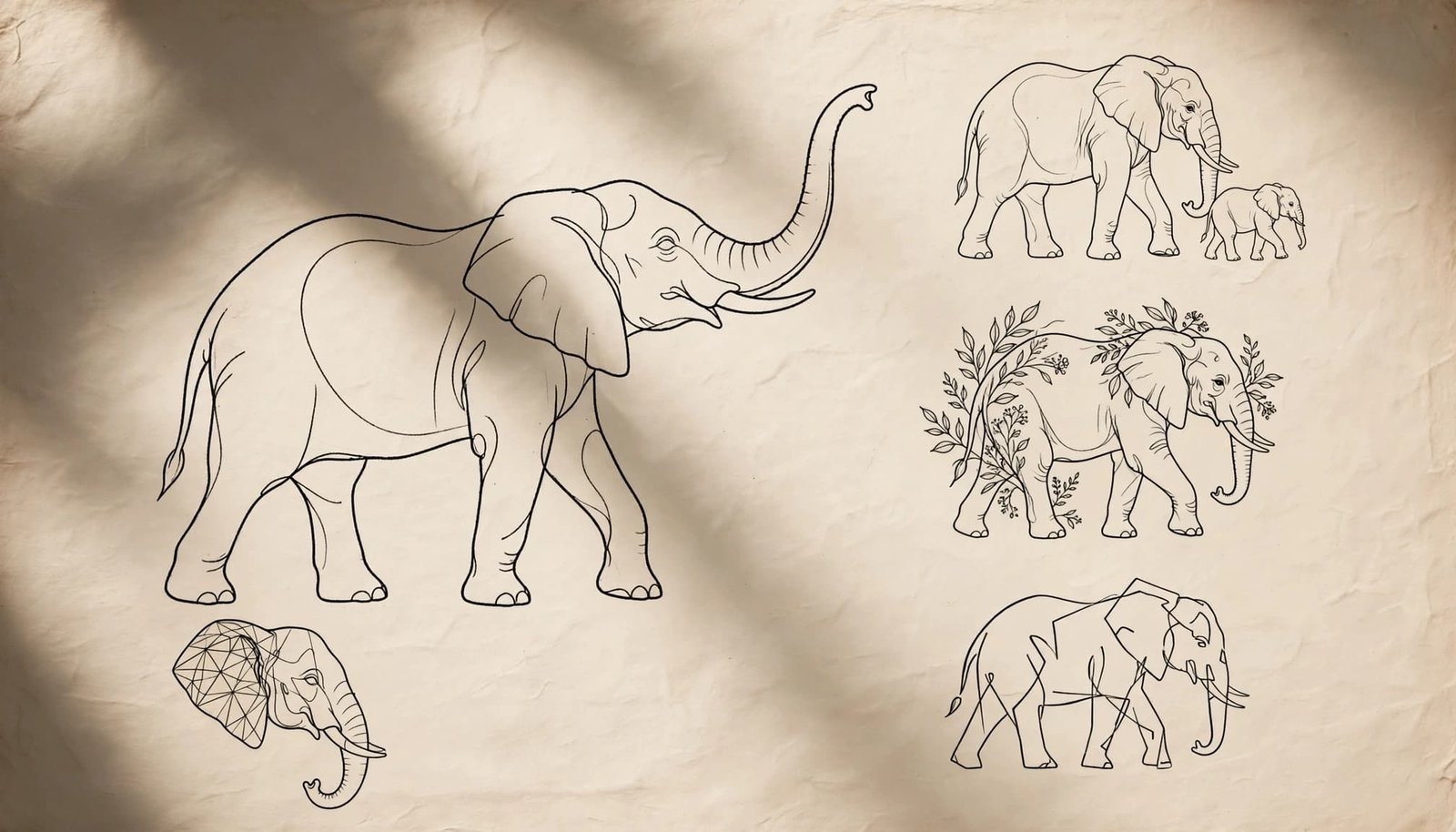
A Graceful Single-Line Elephant With a Curved Trunk
One continuous line can trace the elephant’s back, ear, legs, and trunk in a single fluid motion. The clean shape feels modern and refined, while its open interior keeps the tattoo light enough for everyday wear.
A raised trunk may suggest optimism, good luck, or forward movement. A softly curved or lowered trunk creates a calmer, more grounded mood. Place this elephant on the wrist, inner forearm, ankle, or collarbone, but ask your artist to avoid an extremely thin line or crowded tiny details. Those choices can become difficult to read as the tattoo ages.
A Mother and Calf Outline for Family and Protection
Two simple elephant profiles standing close together create a tender family tattoo. The smaller calf can tuck beneath the adult’s head or walk beside its parent, suggesting nurturing, loyalty, protection, or an intergenerational bond.
The design doesn’t have to carry only one meaning. Matching tattoos, different trunk positions, or a small heart-shaped gap can add a personal touch without overpowering the silhouettes. Because both elephants need room to remain clear, choose the outer forearm, shoulder blade, thigh, or calf instead of a very small placement.
A Fine-Line Side Profile With a Botanical Detail
Pair a refined elephant side profile with one small leaf, flower, vine, or sprig. The organic detail softens the animal’s strong outline and may suggest growth, healing, peace, or a meaningful place.
A flower near the ear feels delicate, while a vine following the back adds gentle movement. A leaf beside the trunk creates a simple focal point. Choose one botanical element rather than filling the elephant with flowers. Keep the design open and airy so the plant and animal don’t blur together over time.
An Abstract Negative-Space Elephant Outline
An incomplete outline can leave out part of a leg, tail, ear, or body contour. These open sections create a light artistic style and invite you to decide what the unfinished shape means.
The design may suit themes of change, freedom, healing, or a story still being written. Add a small dot, star, circle, or meaningful initial only when it supports the elephant’s main shape. Even an abstract tattoo should remain recognizable at a glance, especially if you want its symbolism to feel clear.
A Geometric Elephant With a Subtle Mandala Ear
Keep the outer elephant contour simple, then add restrained geometric lines or a small mandala inside the ear. Circles, triangles, and symmetrical patterns can suggest harmony, order, spirituality, or inner strength.
This style balances minimalist linework with decorative detail. Choose a palm-size or larger placement, such as the upper arm, shoulder blade, thigh, or outer forearm. Interior patterns need breathing room, so overly fine geometry can disappear when squeezed into a tiny tattoo.
Choose the Meaning and Mood Behind Your Elephant Tattoo
An elephant outline tattoo can carry a personal message without looking crowded. People often connect elephants with resilience, wisdom, memory, loyalty, protection, calm leadership, and good luck, but no single meaning has to define your design. Your experience gives the symbol its strongest meaning.
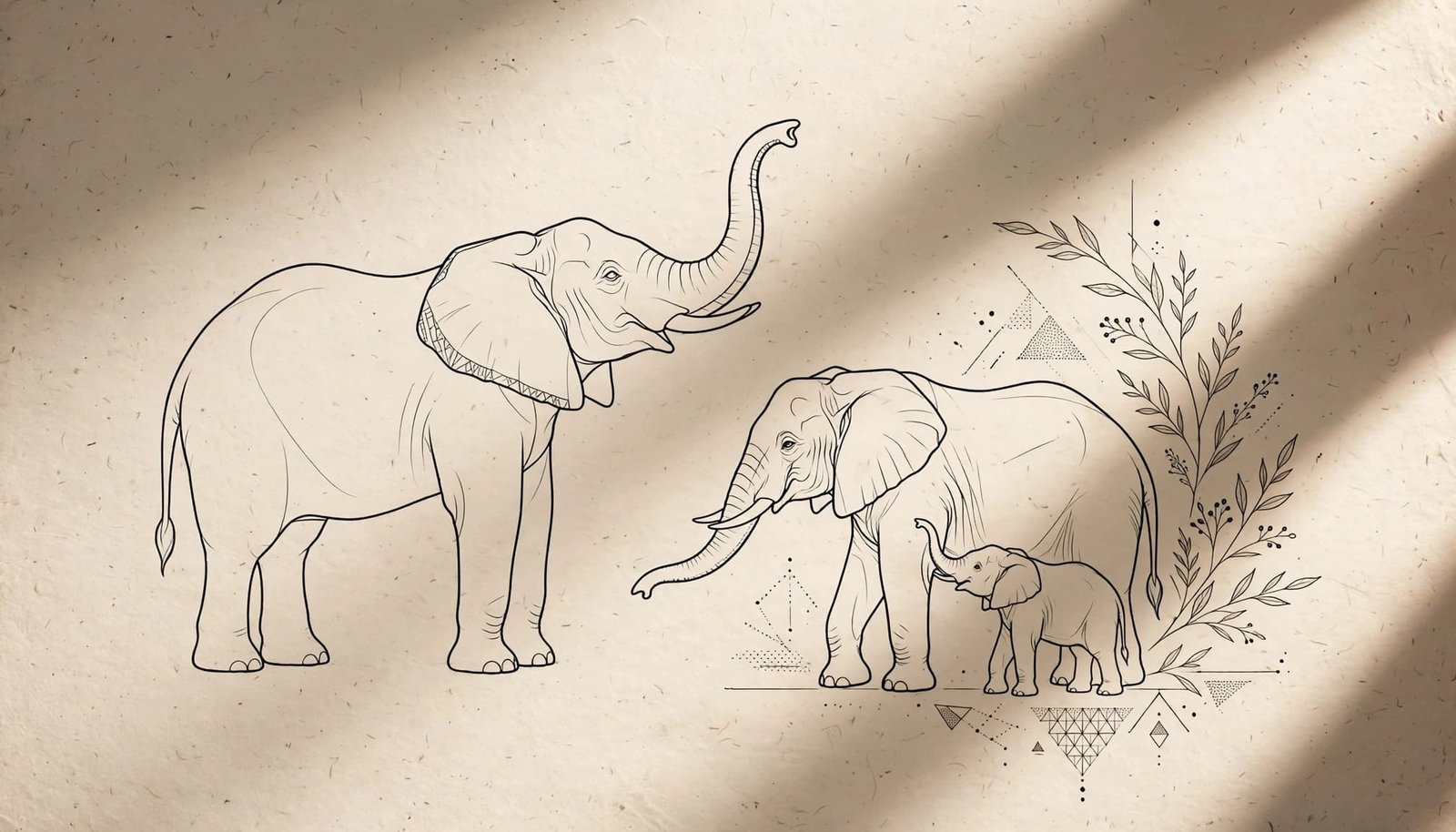
Match the Design With Strength, Wisdom, Family, or Good Fortune
Start by choosing one or two words you want your tattoo to express. Write them down before selecting flowers, stars, initials, or other decorative details. This simple step keeps the design connected to your story instead of letting small embellishments take control.
A strong, upright elephant silhouette can suggest endurance and steady confidence. Its broad back and grounded legs give the outline a sense of patience under pressure. For a personal reminder of family, a mother-and-calf pair can express protection, loyalty, or a bond that continues across generations.
A raised trunk often creates a lighter, more hopeful mood. Many people associate it with good fortune, optimism, celebration, or welcoming positive energy. Meanwhile, a lowered trunk can feel more peaceful and reflective. An elephant looking forward may suit someone focused on a new chapter, while a still side profile can honor memory and calm strength.
The same outline can tell different stories. One person may choose an elephant to remember a loved one, while another may connect it with survival, motherhood, travel, or personal growth. Your reason matters more than a fixed symbolism guide.
Use Small Details to Change the Emotional Tone
The elephant’s pose changes the feeling before you add any decoration. A side profile usually looks graceful and easy to read. A forward-facing head feels direct and confident, while a curled trunk adds softness and movement. Raised trunks suggest hope or luck, and lowered trunks create a grounded, gentle impression.
Facial details also shape the design. A tusk-free elephant often feels softer, friendlier, and more minimal. Visible tusks can give the tattoo a bolder or more protective character. Choose the version that fits your personality, not only the one that looks striking in a reference photo.
Small additions can carry private meaning:
- A flower may honor a birth month, a season, or someone you love.
- A star can suggest direction, faith, or a milestone.
- A heart, initial, or date can preserve a relationship or important memory.
- A geometric accent can add balance without changing the animal’s identity.
Keep the elephant as the visual focus. Every added line should have a reason, especially in a fine-line tattoo where crowded details can blur over time.
Keep Cultural References Thoughtful and Personal
Elephants hold important meanings in many cultures and religious traditions. Hindu and Buddhist imagery may connect the animal with wisdom, auspiciousness, purity, power, or sacred stories. Elephant symbolism in Indian art shows why these meanings deserve more care than a quick decorative choice.
Before using a mandala, ceremonial pattern, or deity-related image, research its origin and purpose. Choose the motif because it connects with your values or background, not because it looks exotic. If you adapt a traditional visual language, ask a knowledgeable tattoo artist or cultural practitioner for a respectful simplification.
Find the Right Placement and Size for Clear, Lasting Linework
Placement and scale shape more than the first impression of an elephant outline tattoo. They affect how much detail the design can hold, how often the skin bends or rubs, and how clearly the lines may age. A tiny elephant can look graceful, but only when its shape has enough room to breathe.
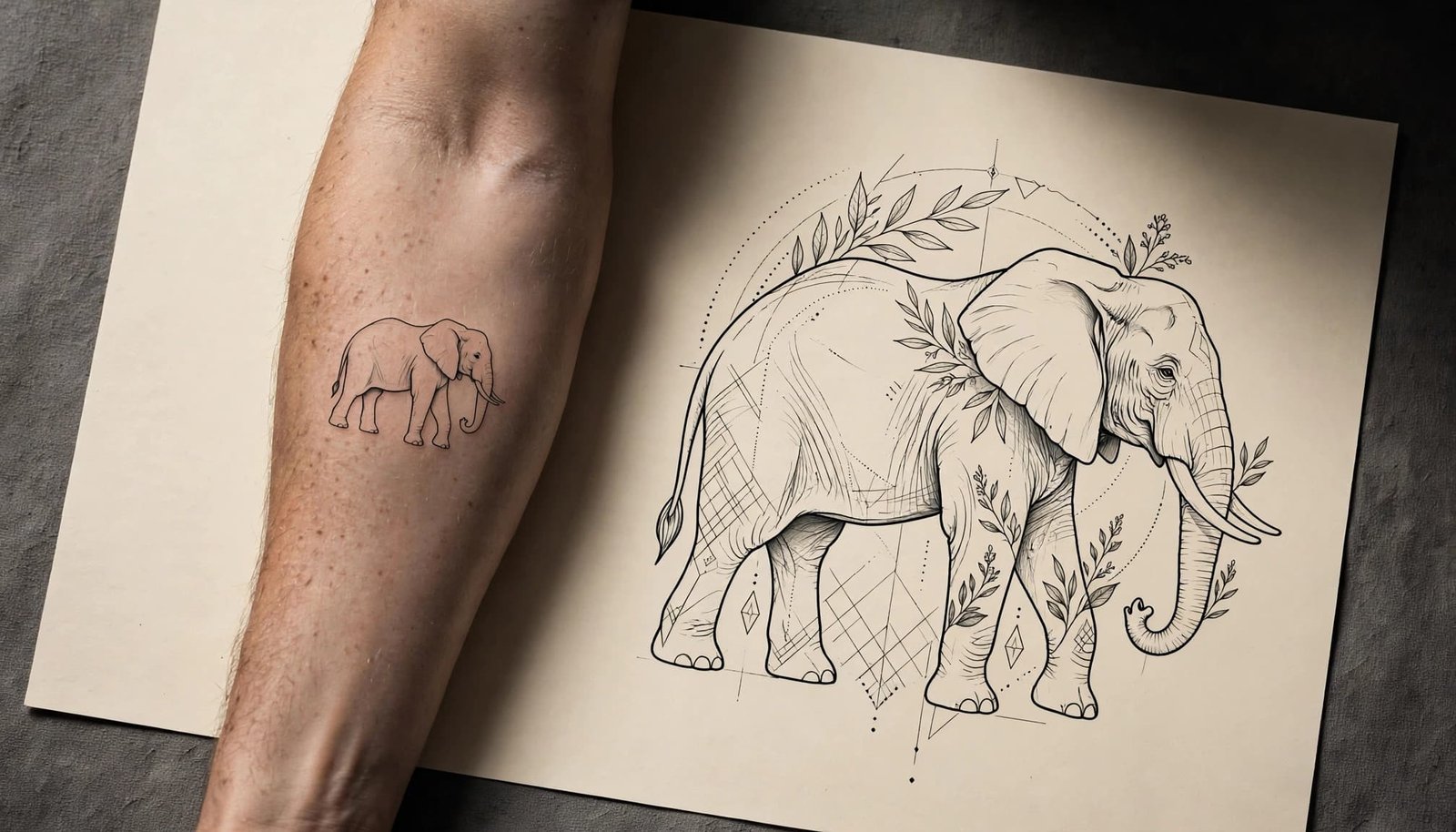
Best Small Placements for a Minimal Elephant Outline
Small line-art elephants work well on the wrist, inner forearm, ankle, behind the ear, and collarbone. These areas suit a simple side profile, a tiny trunk-up elephant, or a micro design with one clean contour.
The wrist and collarbone keep the tattoo easy to show, especially with short sleeves, bracelets, or an open neckline. An ankle or behind-the-ear elephant feels more personal and discreet, so those placements suit designs you want to reveal selectively. The inner forearm offers a useful middle ground because it is visible, relatively flat, and easy to protect from constant rubbing.
Very small tattoos need simplified anatomy. Your artist may need to reduce the ear folds, shorten the tusks, limit facial details, and use fewer lines for the legs. Without those adjustments, the elephant can become a dark cluster instead of a graceful silhouette.
When a Larger, Flatter Area Is the Better Choice
Choose the outer forearm, upper arm, shoulder blade, thigh, or calf when your design includes more than one elephant or several interior details. A mother-and-calf pair needs enough separation for both bodies to remain recognizable. Botanical lines, geometric accents, and interior ear patterns also need open space.
Flatter skin gives the tattoo more visual room and reduces distortion when you move. For example, a shoulder blade can hold a balanced pair, while a thigh can support a larger floral elephant with a long, sweeping back line. The outer forearm is a strong choice when you want to admire the design often without placing it directly over a bend.
Palm-size or larger tattoos can use modest line-weight variation. A slightly stronger outer contour with lighter botanical or geometric details creates visual hierarchy without heavy shading. Open negative space also helps the elephant remain recognizable as the tattoo ages, because each line has more separation from the next.
Balance Visibility, Movement, and Long-Term Clarity
Finger, hand, wrist-crease, inner-elbow, and ankle-bone tattoos face more friction, bending, washing, or sun exposure. These areas can fade faster or make delicate lines look uneven. The ankle bone also offers limited flat space, which can force a larger design to wrap around the curve.
The smallest possible tattoo isn’t always the most elegant choice. Use this practical rule: more detail requires more size. Ask your artist for the same elephant stencil in several sizes, then check whether the ears, legs, tusks, and trunk still look clear from a normal viewing distance.
Before booking, view the artist’s healed work, not only fresh tattoo photographs. Look for healed fine-line pieces on body areas with similar movement and friction. A design that looks airy on the day of the appointment should still read as an elephant after the skin has settled.
Plan the Tattoo Carefully, From Artist Consultation to Aftercare
A graceful elephant outline tattoo depends on decisions made before the appointment begins. Review the artist’s healed work, test the design at several sizes, approve the stencil carefully, and follow aftercare instructions closely. Fine linework has room to breathe when you plan each detail with patience.
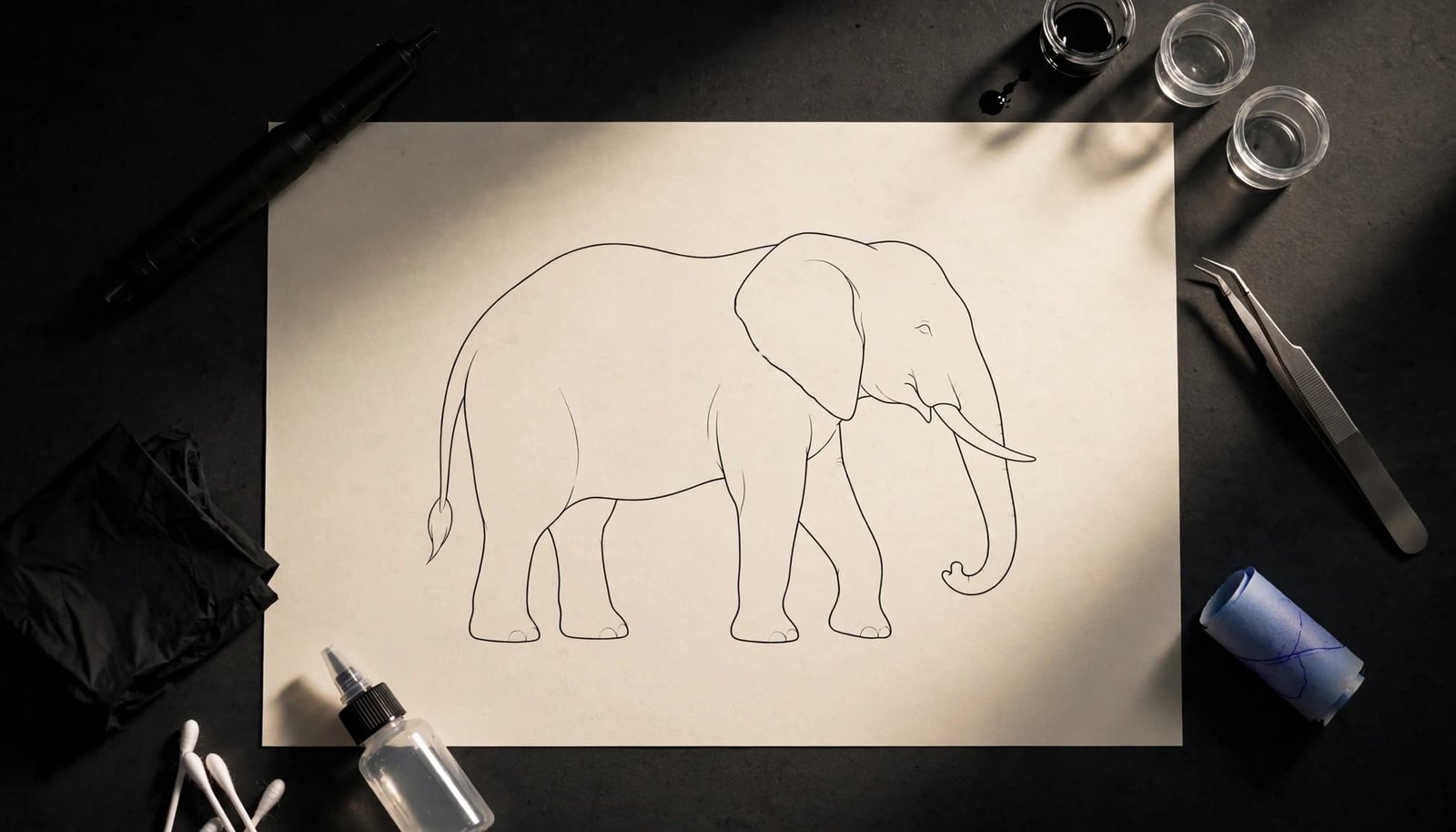
Choose an Artist Who Shows Strong Fine-Line and Animal Work
Start with the artist’s portfolio, but don’t judge it only by fresh tattoo photographs. Ask to see healed examples, especially fine-line animal tattoos photographed several weeks or months after the appointment. Healed work shows whether curves remain smooth, line weight stays even, and small features remain readable.
Look for clean anatomy in the elephant’s ear, trunk, legs, tail, and tusks. The best outline tattoos also preserve open space instead of packing every area with tiny marks. Ask whether the artist regularly works with:
- Fine-line tattoos and delicate single-needle details.
- Small-scale animal designs with simplified anatomy.
- Your preferred placement, particularly if the skin bends, rubs, or moves often.
During your consultation, discuss your skin, desired size, line weight, and the possibility of fading. A skilled artist may remove a tiny ear fold, shorten a tusk, or simplify the feet so the design stays clear over time. You can also review practical tattoo aftercare guidance before your appointment, then give the artist’s instructions priority because they know the products and technique used.
Review the Stencil Before the Needle Starts
Treat the stencil as the final design check, not a quick formality. View the elephant while standing, sitting, and moving the nearby body part. Check whether the trunk, ear, leg spacing, tail, tusks, and posture look balanced from each angle.
Ask your artist to show two or three size options. A smaller version may suit the wrist, but a slightly larger stencil could preserve the elephant’s anatomy with more breathing room. If details appear crowded, simplify them before tattooing begins.
The stencil should follow your body’s natural lines without making the elephant look bent or distorted. A long forearm design may need a different curve than one placed on the shoulder blade. Before the needle starts, confirm the exact placement and review every personalized detail, including spelling, dates, initials, and numbers.
Protect Fine Linework During the Healing Period
Wash your hands before touching the tattoo, then follow the artist’s bandage instructions. Once they tell you to remove or change the covering, clean the area gently with lukewarm water and mild, fragrance-free soap. Pat it dry with a clean towel, and apply only a thin layer of the recommended moisturizer.
While the tattoo heals, don’t scratch, pick, scrub, or peel flaky skin. Avoid soaking it in pools, baths, hot tubs, lakes, or the ocean. Loose clothing can reduce rubbing, while avoiding direct sun protects the fresh ink. After the tattoo fully heals, apply broad-spectrum sunscreen when the area is exposed.
Contact a qualified health professional if the tattoo develops unusual redness, bumps, a rash, worsening pain, fever, or drainage, or if it doesn’t appear to be healing normally.
Conclusion
The most elegant elephant tattoo isn’t necessarily the smallest or the most detailed. It is the design with a clear silhouette, balanced linework, and personal meaning. A single-line elephant can feel refined and minimal, while a mother-and-calf outline carries family and protection. Botanical, abstract, and geometric styles add personality without taking attention away from the animal’s graceful shape.
Choose the symbol that fits your story, then test the placement and size before booking. A skilled tattoo artist can simplify fine details, adjust the stencil to your body, and help the design remain readable as it heals and ages. Follow their aftercare instructions, keep the fresh tattoo protected from friction and sunlight, and wait until it fully heals before applying sunscreen.
Whether your elephant carries strength, wisdom, family, or hope, its meaning should feel natural to you. The right outline becomes more than delicate ink. It becomes a personal reminder you can carry with confidence.
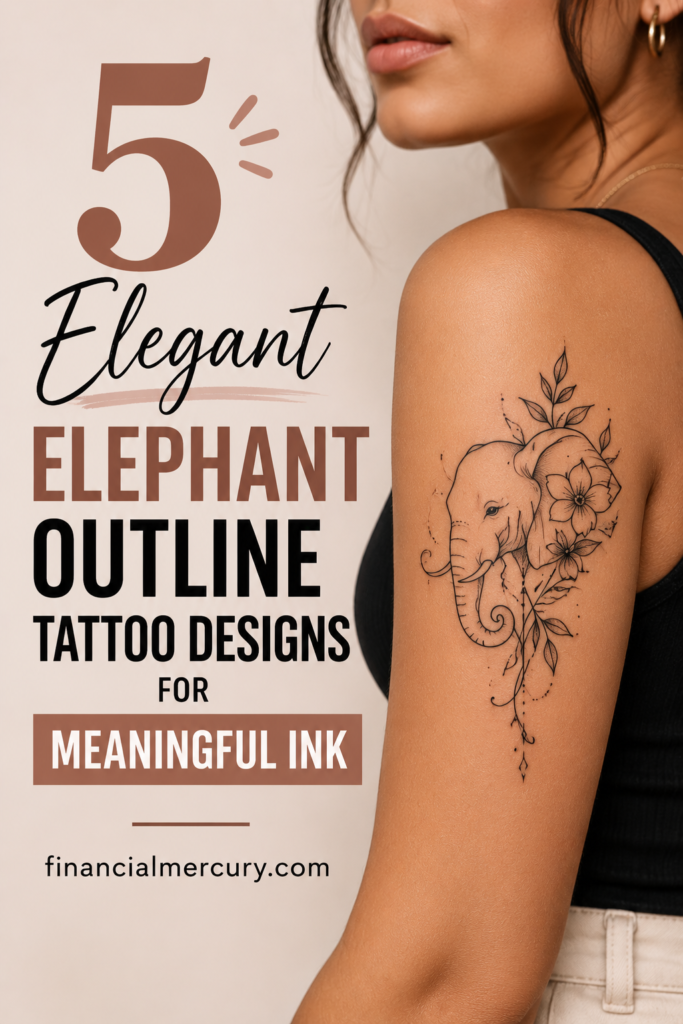
Save the pin for later

- 30 Trendy Tattoo Ideas for 2026: Styles and Placement - September 27, 2026
- 30 Gorgeous Fine Line Tattoo Ideas to Try - September 27, 2026
- 25 Fine Line Tattoo Ideas for Women With Meaning - September 22, 2026
Leave a Reply