15 Neighborhood Tattoo Ideas to Personalize Your Hometown Story
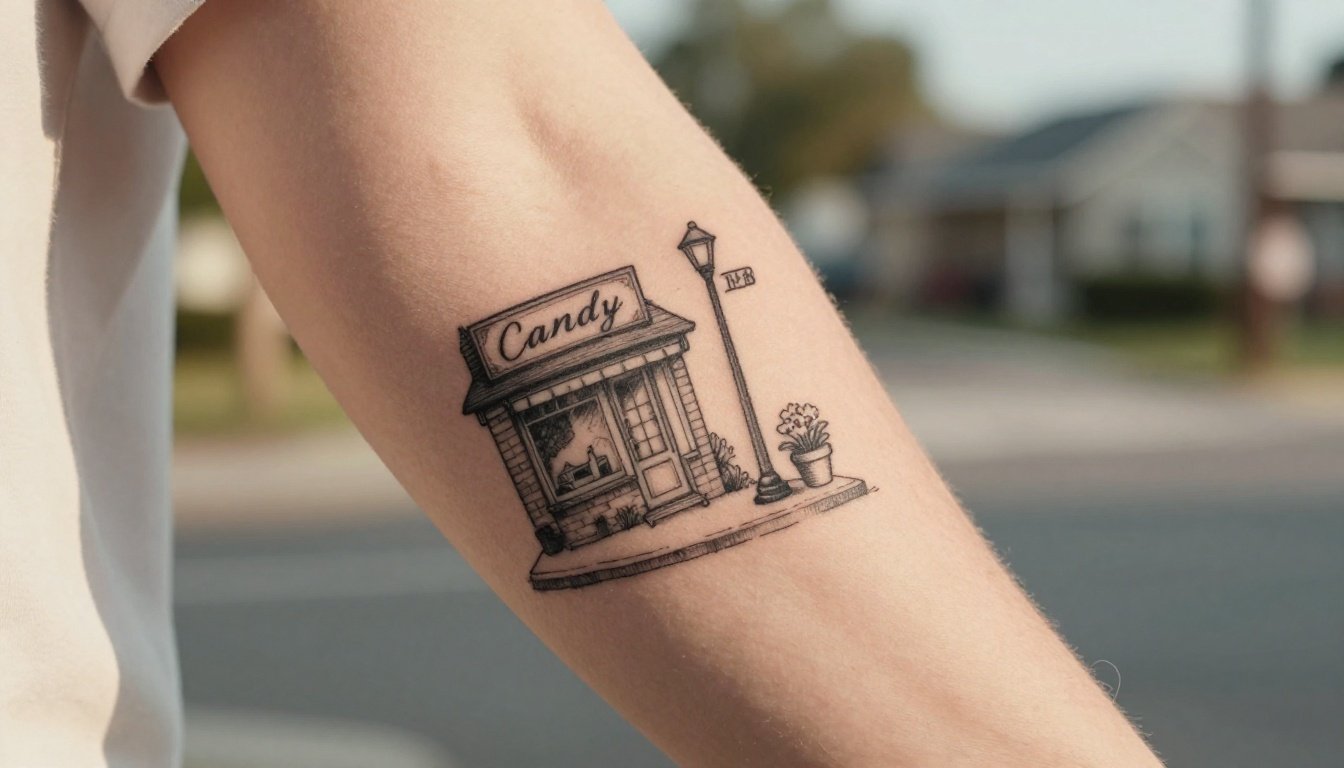
Picture the corner store where you bought candy after school, the stoop where your family gathered on summer evenings, or the park where you learned to ride a bike. A neighborhood tattoo can hold those ordinary places and turn them into a lasting reminder of belonging, childhood memories, family roots, community, or the street that helped shape you.
The best design doesn’t need to copy a landmark exactly. Use these 15 neighborhood tattoo ideas as starting points, then add personal details such as an address number, local flower, favorite sign, skyline, street name, or meaningful date. You’ll also find guidance on each idea’s meaning, suitable tattoo styles and placements, personalization, cultural respect, and basic aftercare, with more inspiration in these meaningful tattoo ideas for women.
Start with the familiar sights and small details that make your neighborhood feel like home.
Key Takeaways
- Choose a neighborhood tattoo around a personal place, such as a childhood home, corner store, park, streetlamp, or local landmark.
- Add meaningful details, including an address number, birth flower, map line, favorite color, or memorable date.
- Match the design to its placement: small symbols suit wrists and ankles, while detailed streetscapes need more room.
- Respect cultural symbols and ask your artist to create original artwork instead of copying another tattoo.
- Before booking, review personalized tattoo designs for women and follow professional tattoo care guidance.
15 Neighborhood Tattoo Ideas That Turn a Place Into Personal Art
A meaningful neighborhood tattoo begins with a memory, not just a city name. Choose the route, doorway, corner, or person that made the place feel like home, then let your artist simplify it into lasting artwork.

Map lines, coordinates, and block designs for a subtle hometown tattoo
- Fine-line street map: Trace the route you walked to school, visited a grandparent, met a friend, or took when returning home. A single highlighted line can carry more emotion than a full map.
- Exact coordinates: Use latitude and longitude for your childhood home, a gathering place, or the location where an important relationship began. Check every number carefully before tattooing.
- Block-number grid: Turn the neighborhood layout into a clean geometric design using a meaningful block number or intersection. Leave enough space between small details so they remain readable as the tattoo ages.
A wrist, inner forearm, rib, ankle, or upper arm can suit these discreet designs. For additional placement inspiration, browse these meaningful ankle tattoo ideas.
Street signs, initials, and everyday landmarks with a story
- Custom street sign: Combine a road name with a year, move-in date, or family milestone. Verify the spelling and date before the stencil reaches your skin.
- Neighborhood initials or ZIP code: Clean lettering can turn local initials or a ZIP code into a compact hometown tattoo. Typewriter, block, or simple script styles each create a different mood.
- Tiny local landmark: Draw the corner store, school, church, mosque, bridge, bus stop, or park where your memories happened. Ordinary places often hold more personal weight than famous attractions.
Simple line art works well on the collarbone, shoulder, or calf. A forearm or upper back gives lettering more room, especially if you want a short date beside the image.
Homes, stoops, and building facades that honor where life began
- Childhood home outline: Reduce the roofline, doorway, and one recognizable window to a fine-line silhouette. This design can honor family, first friendships, or the place that gave you safety.
- Row house or apartment facade: Illustrate the building front with simplified windows, balconies, or a distinctive entrance. Remove clutter so repeated lines don’t blur together over time.
- Stoop scene: Add steps, a chair, potted plants, or a glowing doorway light to capture evenings spent with family and neighbors. Each small detail should have a real connection to your story.
Fine-line and blackwork suit smaller tattoos, while illustrative styles add warmth through selective detail. Realism needs more space, so consider the forearm, calf, thigh, or upper back.
Skyline, bridge, and route-inspired designs for neighborhood pride
- Recognizable skyline: Use a few accurate building shapes instead of a crowded city panorama. Bold blackwork stays readable at a distance, while illustrative color creates a softer memory.
- Bridge or connecting road: Show a bridge linking two places, such as home and school or your old neighborhood and new city. It can express movement, return, or connection.
- Daily route design: Feature a bus, train, bicycle, or walking path that shaped your routine. Add one small date, symbol, or short line of text without overcrowding the composition.
Forearms and calves suit horizontal routes. Larger skyline or bridge scenes can spread across the thigh, ribs, or back.
Community symbols that make the tattoo about people, not just a place
- Linked hands or simple figures: Use minimal silhouettes to honor neighbors, chosen family, or people who helped you belong. Keep the figures symbolic and original.
- Roots growing from a street map: Let map lines become tree roots beneath a trunk or neighborhood outline. This design can express growth, stability, and family history.
- Anchor, bird, or flower with a local detail: Pair an anchor with a street outline for stability, a bird with a route for freedom, or a birth flower with a meaningful address number. Choose the symbol because it fits your life, not merely because it looks attractive.
A tiny flower or initial suits a discreet tattoo, while a larger emblem can combine a date, map outline, and personal symbol. Confirm every number, name, and architectural detail with your artist before the needle starts.
How to Choose the Right Neighborhood Tattoo Style and Size
Your neighborhood tattoo should match both the memory and the amount of detail it needs. A simple street symbol may look best at two inches, while a row-house facade or city skyline needs more room for clean lines.
Before choosing a style, decide what must remain recognizable. Is it the route itself, the shape of your childhood home, a local flower, or the lettering? That answer will guide the design more effectively than choosing a style based only on appearance.

Match the style to your neighborhood tattoo idea
Each tattoo style creates a different mood and handles detail in its own way.
- Fine-line tattoos suit exact coordinates, a single map route, a house outline, or a delicate local flower. Their light strokes feel personal, but tightly packed streets and windows can blur as the ink settles.
- Minimalist tattoos reduce an idea to its clearest shape. A roofline, bridge silhouette, streetlamp, or ZIP code can work well when you want a discreet design with little visual weight.
- Blackwork uses solid black areas and strong contrast. It fits bold bridges, skylines, block-number designs, and symbolic roots growing from a map. The style stays easy to see, though it may feel too heavy for a soft childhood memory.
- Traditional tattoos bring thicker outlines, saturated color, and familiar symbols. A local flower, bird, anchor, or heart can carry neighborhood meaning without showing the entire street.
- Illustrative tattoos offer more room for personality. Use this approach for a stoop scene, row-house facade, bus route, or corner store with a few carefully chosen details.
- Realism can capture a recognizable building or landmark, but it needs substantial space and an artist experienced in architectural tattoos. Tiny realistic windows rarely remain distinct.
- Watercolor tattoos suit routes, flowers, sunsets, and abstract skyline memories. Their color can feel gentle and expressive, but the design should still have enough structure to remain readable without relying only on soft washes.
- Script works for a street name, neighborhood nickname, date, or short phrase. Choose simple letterforms with generous spacing, especially on the wrist, ribs, or other areas that move frequently.
For additional sizing ideas, these hip tattoo placement and sizing ideas show how small symbols and larger compositions can fit different parts of the body.
Give detailed designs enough room
Tiny tattoos have limited space for map intersections, building windows, skyline shapes, and lettering. When those elements sit too close together, ink can spread and merge over time. Fine-line guidance often recommends leaving roughly 2 to 3 millimeters between nearby elements, but your artist should judge the spacing for your skin and placement.
A larger design usually gives the artist more room for clean outlines, open negative space, and readable text. This matters most for coordinates, ZIP codes, narrow windows, and cursive lettering. A delicate script may look beautiful in a stencil yet lose clarity if the letters are too small or tightly connected.
A tattoo can be minimal without being miniature. Removing unnecessary detail often improves clarity more than shrinking the design.
Bring reference images that show the mood, structure, or architectural features you like. Then ask your tattoo artist to redraw the concept for your body, skin, and chosen placement rather than copying another person’s tattoo. Review the stencil at its actual size, check every number and letter, and accept that no style is guaranteed to age perfectly. Protecting healed work from strong sun can also help preserve contrast and color.
Placement Ideas That Follow the Shape of Your Neighborhood Design
The outline of your neighborhood tattoo should work with your body’s natural lines. A long road, skyline, or row-house facade needs a different placement than a tiny coordinate set or local icon. Start with the design’s direction, then consider visibility, comfort, healing, and any tattoos you may want later.
Match horizontal and vertical designs to your body
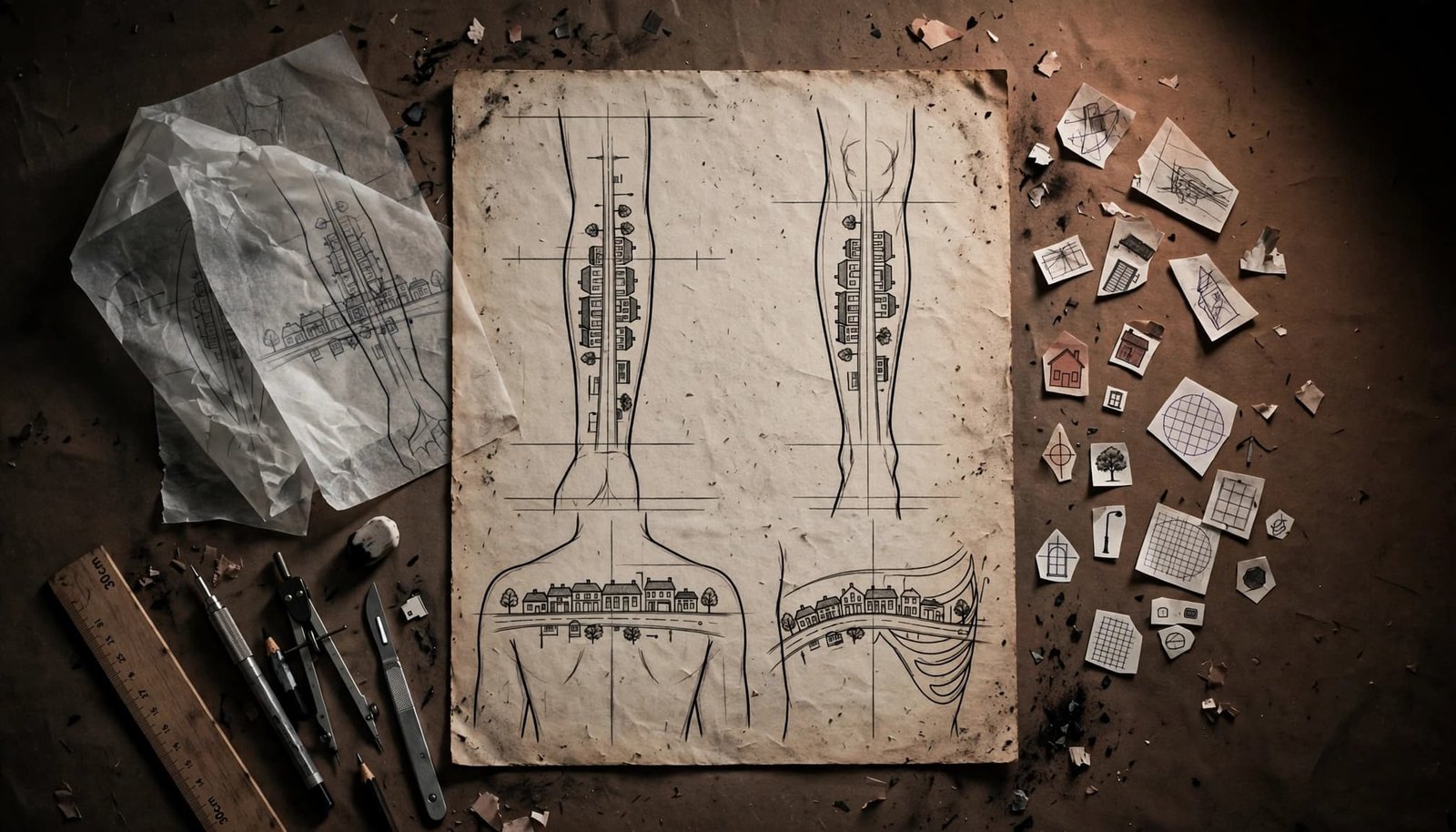
Horizontal designs have room to stretch across a natural section of the body. A skyline, road, bridge, or row of houses can follow the:
- Forearm, where a route or building facade stays easy to see.
- Calf, which gives a long, stable canvas for streets and skyline silhouettes.
- Ribs, where a private hometown scene can run with the body’s curve.
- Upper back, which suits wider designs with several architectural details.
Vertical street signs, apartment buildings, and tall landmarks usually fit the forearm or lower leg. Their narrow shape can follow the length of the limb without forcing the artwork into a cramped square. Ask your artist to position the stencil while you stand, sit, and bend your arm or leg. A design that looks balanced while resting may shift when your skin moves.
Keep small symbols discreet and easy to protect
Coordinates, initials, ZIP codes, tiny flowers, and simple neighborhood icons work well in compact placements. The wrist keeps a design visible throughout the day, while the ankle offers more privacy beneath socks or pants. A small collarbone tattoo can peek out with an open neckline, and behind the ear creates a discreet location for a short initial or tiny streetlamp.
You can find more ideas for small ankle tattoo designs if you want a compact placement with personal meaning. The inner wrist and collarbone often suit visible reminders, but workplace dress codes may make those areas harder to conceal. If you need flexibility, choose the inner forearm, upper arm, ribs, or ankle.
Pain also varies by placement. Areas with less padding, such as the ribs, ankle, collarbone, and behind the ear, often feel sharper than the outer forearm or calf. Skin movement matters too. Wrists flex, ankles bend, and ribs expand with breathing, so highly detailed lines may need careful sizing.
Place the tattoo where you can live with its visibility every day, not only where it looks best in a photo.
Sun exposure and friction deserve attention after your appointment. Keep a fresh tattoo out of direct sunlight until it heals. Once healed, the American Academy of Dermatology’s tattoo care guidance recommends broad-spectrum, water-resistant SPF 30 or higher for sun-exposed tattooed skin.
Before booking, print the design at its intended size and tape it to your chosen area for a few days. Better yet, ask the artist for a stencil and view it under normal clothing. This test reveals whether the placement feels comfortable, stays visible enough, and leaves space for future neighborhood symbols or related tattoos.
Personalize Your Neighborhood Tattoo Without Overcrowding the Design
A personal neighborhood tattoo needs a clear visual center. Choose one main image, one location marker, and one emotional detail, then let the empty space around them keep the design readable.
Start with the memory that matters most. Your idea might be the front steps of your childhood home, a corner store, a bridge, a park tree, or the bus route you took every morning. The goal is to capture the feeling of the place without drawing every building on the block.

Build the design around three personal details
Use this simple formula when your neighborhood tattoo idea feels too broad:
- Choose one main image. Pick the house outline, streetlamp, bridge, flower, skyline shape, or other object that carries the strongest memory.
- Add one location marker. Use a street name, verified coordinates, block number, ZIP code, or a simplified map pin.
- Include one emotional detail. Consider a move-in date, birth date, initials, childhood nickname, school color, favorite flower, or tiny object tied to a shared routine.
For example, a small row-house outline could sit above a map pin, with one favorite flower tucked beside the doorway. That combination says where you came from, while the flower adds a private detail only you understand.
Keep the supporting elements small and spaced apart. Adding every date, name, route, and landmark may turn a meaningful image into a crowded patch of ink. If you need several details, ask your artist whether a larger placement would give each one enough breathing room.
Decide whether color adds meaning
Color helps when it connects to a real part of your story. A school color, the shade of a neighborhood flower, or the warm red of a familiar storefront can give the tattoo a strong emotional cue. Use it selectively, perhaps in one flower, window, sign detail, or route line.
Black ink often keeps architectural designs clearer. It creates strong contrast for coordinates, lettering, map lines, and small silhouettes. A black-and-gray palette also makes several elements feel unified when the design includes both a building and a symbol.
Before choosing pigment, review the artist’s healed work and ask about the colors planned for your skin tone and placement. The FDA’s tattoo safety guidance also recommends keeping ink brand, color, and batch information when possible.
Bring a memory, not another tattoo to copy
Write five or six sentences about the place before your consultation. Describe what you saw, who was there, what time of day it was, and why the memory still stays with you. This gives the artist original material for a design made for your story.
Reference photos can show a preferred line weight or layout, but don’t ask an artist to reproduce someone else’s tattoo. Bring your written memory, personal photographs, and rough notes instead. The final artwork should fit your body and history.
Before approving the stencil, confirm:
- The spelling, punctuation, initials, and nickname are correct.
- Coordinates, ZIP codes, block numbers, and dates match your records.
- The map direction and landmark features are accurate.
- The design has enough open space between lines and letters.
- The stencil sits correctly when you stand, sit, and move.
- The final size includes every detail you requested.
Take a photograph of the stencil at full size before the appointment begins. A few careful checks can protect a lifetime memory from a preventable mistake.
Make a Meaningful Neighborhood Tattoo With Cultural Respect and Safe Care
A neighborhood tattoo can honor home without borrowing symbols that belong to another community. Choose imagery that comes from your own memories, then give equal attention to cultural meaning, studio hygiene, and healing.

Show cultural care in your design choices
Maps, house outlines, street numbers, local plants, and familiar buildings usually describe your personal connection to a place. However, a symbol may carry a much deeper message than its appearance suggests. Religious imagery, ceremonial patterns, sacred objects, traditional markings, and community-specific emblems can suggest faith, heritage, initiation, or group membership.
Before adding one, ask yourself where its meaning comes from and whether you have a genuine relationship with that tradition. A design that looks beautiful online may carry responsibilities you don’t understand. Treating it as decoration can hurt people and misrepresent your own story.
Respectful research should include more than a quick image search. Read reliable sources created by members of the tradition, learn how the symbol is used, and speak with a knowledgeable person when possible. If the design relates to your family or cultural background, ask relatives or community members what it means and whether its use is appropriate.
When you’re unsure, choose a personal image with clearer ownership. A doorway, bus route, local flower, map line, or childhood street can tell your story without implying religious or group membership. Share your references with the artist and ask for original artwork rather than copying a traditional design or another person’s tattoo. For placement inspiration that also considers hygiene and healing, review these safe sternum tattoo ideas.
Choose a hygienic studio and care for fresh ink
Start with a licensed studio that follows your state, county, or city’s requirements. Before booking, look for clean work surfaces, hand-washing access, sealed single-use needles, fresh gloves, and clear written aftercare instructions. Ask how the artist sterilizes reusable equipment and disposes of sharps. A professional should answer directly without making you feel difficult for asking.
After the appointment, follow the artist’s bandage instructions because coverings vary. Wash your hands before touching the tattoo, then gently clean it with warm water and mild, fragrance-free soap. Pat the area dry with a clean paper towel, and apply a thin layer of suitable fragrance-free moisturizer when your artist recommends it.
During healing, avoid:
- Scratching, picking, or peeling flakes from the tattoo.
- Pools, baths, hot tubs, and saunas.
- Direct sunlight and tight clothing that rubs the area.
- Hydrogen peroxide, rubbing alcohol, and heavily scented products.
Wait until the tattoo fully heals before applying sunscreen. Then use broad-spectrum SPF 30 or higher on exposed skin. Contact a medical professional if redness, swelling, warmth, pain, or discharge worsens. Yellow or green pus, spreading redness, red streaks, fever, a rash, or trouble breathing can point to infection or an allergic reaction. The Cleveland Clinic’s tattoo infection guide explains warning signs that deserve prompt medical attention.
Conclusion
A neighborhood tattoo doesn’t need a famous skyline or an exact address to carry lasting meaning. A street corner, daily route, familiar doorway, local flower, or set of coordinates can hold years of love, family history, and memories that still feel close.
Choose the story first, then refine the symbol, size, placement, and style with your tattoo artist. Check every name, number, and map detail, choose original artwork, and select an artist who follows strong hygiene practices and provides clear aftercare guidance. If your design uses a narrow vertical layout, these meaningful spinal tattoo ideas may offer useful placement inspiration.
The strongest neighborhood tattoo feels personal before it looks polished. With thoughtful planning and proper care, you can carry a piece of home forward while allowing the design to remain original, private, and unmistakably yours.
Save the pin for later


- 30 Trendy Tattoo Ideas for 2026: Styles and Placement - September 27, 2026
- 30 Gorgeous Fine Line Tattoo Ideas to Try - September 27, 2026
- 25 Fine Line Tattoo Ideas for Women With Meaning - September 22, 2026
Leave a Reply