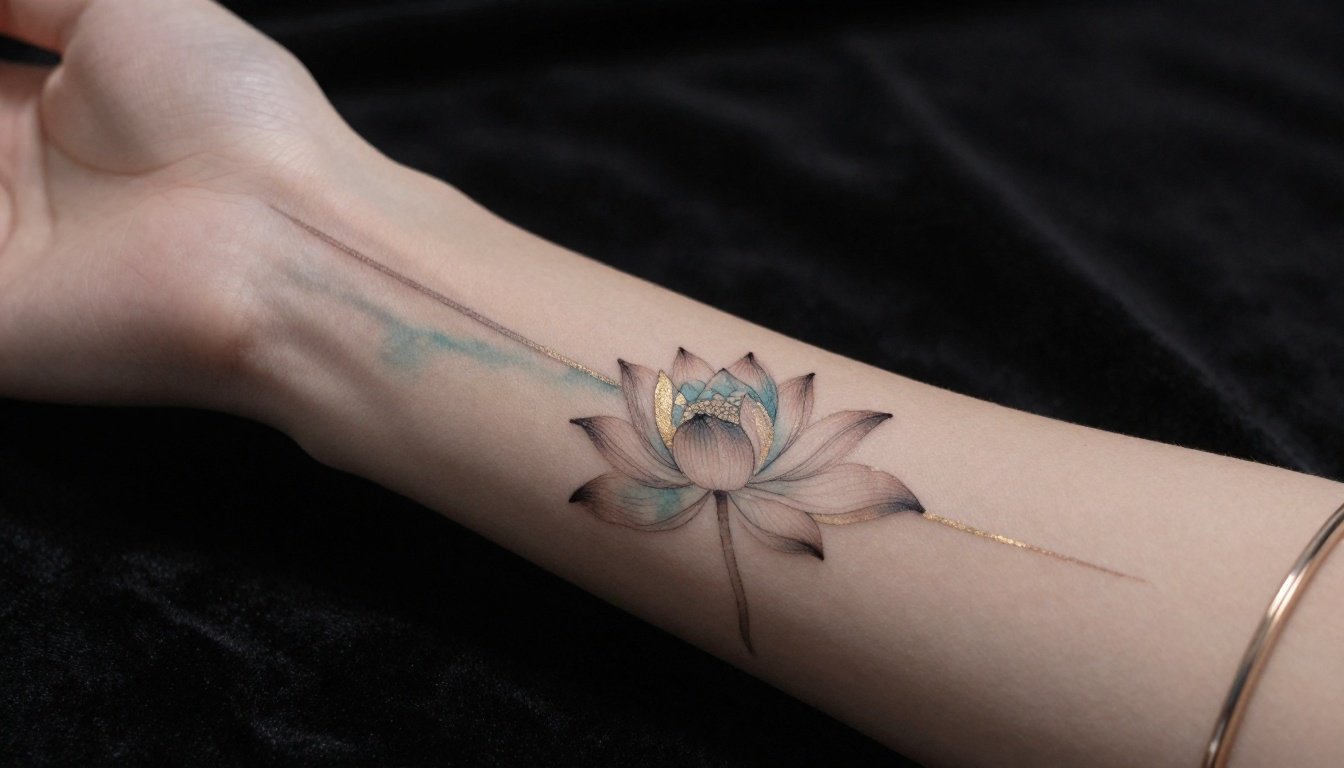
25 Aesthetic Religious Tattoos With Personal Meaning
A religious tattoo can carry faith, memory, hope, protection, or a personal turning point while still looking refined and artistic. The word “aesthetic” can describe many styles, including fine-line crosses, minimalist symbols, ornamental details, blackwork, watercolor shading, and carefully placed script that feels personal rather than overwhelming.
This collection of 25 aesthetic religious tattoos includes Christian, Jewish, Islamic, Hindu, Buddhist, Sikh, and interfaith-inspired designs. You’ll find ideas that pair sacred imagery with delicate florals, celestial elements, geometric shapes, and thoughtful placement, whether you want a visible statement or a private reminder close to your heart.
Before choosing a design, research its meaning, spelling, script direction, and cultural context. Sacred symbols and religious text deserve care, so consult a knowledgeable practitioner or artist when needed, then explore these meaningful tattoo concepts.
Key Takeaways
- Religious tattoos can express faith, memory, protection, healing, or a personal turning point through refined visual details.
- Choose symbols that match your beliefs, then confirm their meaning and cultural context before booking an appointment.
- Fine-line crosses, sacred text, florals, celestial details, and geometric elements can create an aesthetic design with personal depth.
- Check every word, translation, script direction, and verse reference before getting religious lettering.
- Explore this religious symbol overview before adapting imagery from a tradition different from your own.
25 Aesthetic Religious Tattoos That Feel Personal and Meaningful
These religious tattoo ideas pair recognizable symbols with fine-line detail, restrained shading, and personal details. Choose a design that reflects your beliefs, then confirm its cultural meaning and placement before booking.
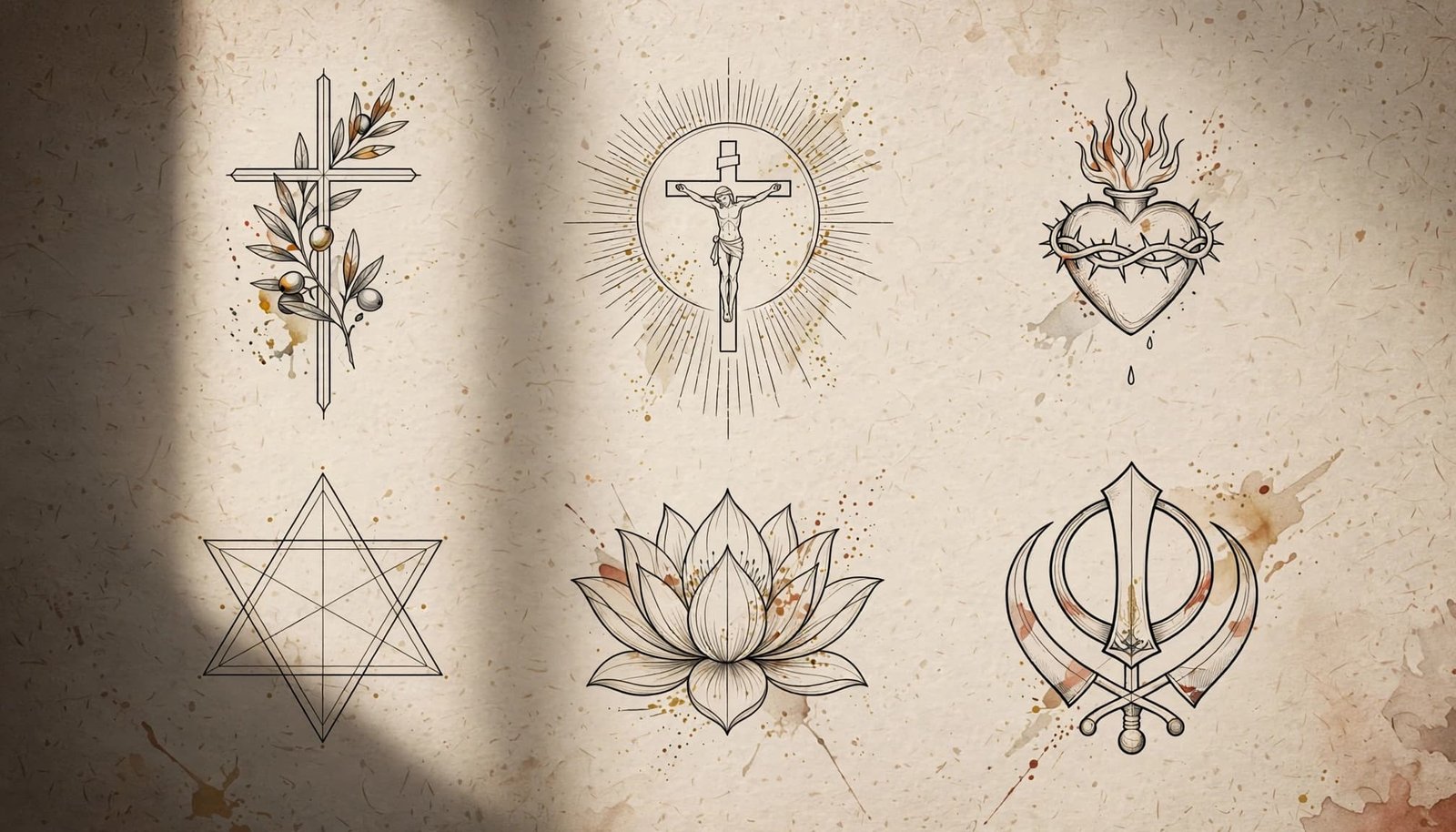
Fine-Line Crosses, Scripture, and Other Christian Tattoo Ideas
- A tiny fine-line cross with one olive branch can express devotion, peace, gratitude, or renewed faith. The inner wrist or collarbone keeps it delicate.
- A minimalist crucifix includes the figure of Jesus, while a plain cross has no figure. The first may focus on sacrifice and remembrance; the second can feel more open-ended. Try the forearm or upper back. Learn about Christian cross symbolism.
- A short Bible verse with a botanical flourish blends script and nature. Place it along the ribs or forearm, and verify the exact wording, translation, punctuation, and reference through Bible passage lookup.
- Praying hands with one light ray or star can suggest prayer, protection, hope, or healing. Soft blackwork suits the forearm, while finer lines suit the upper back.
- A rosary wrapped around the wrist or forearm creates a continuous devotional form. Keep the beads simple, especially when the tattoo expresses prayer, remembrance, or a loved one’s faith.
Angels, Sacred Hearts, and Gentle Christian Symbolism
- A guardian angel in soft black-and-gray linework can convey guidance, mercy, or spiritual strength. Fine-line and illustrative styles work well on the shoulder or upper arm.
- One angel wing paired with a name or date can honor someone who has died or celebrate personal protection. A small blackwork version fits the forearm or ribs.
- A Sacred Heart with subtle flames and a few flowers can express sacrifice, compassion, gratitude, or enduring love. Ornamental styling suits the chest, while a small version fits the upper arm.
- A dove carrying a tiny olive branch offers a gentle image of peace, forgiveness, and hope. Its gender-neutral shape works on the collarbone or inner forearm.
- A lamb or shepherd-inspired design can point to mercy, care, spiritual guidance, or strength. Use a small illustrative silhouette for a masculine, feminine, or gender-neutral tattoo.
Jewish-Inspired Star, Hebrew, and Hamsa Designs
- A fine-line Star of David can honor Jewish identity, family, heritage, or faith. Keep its geometry crisp on the wrist, collarbone, or upper back.
- Pairing the star with an olive branch adds themes of peace, ancestry, and hope. Use restrained botanical lines on the forearm or ribs.
- A Hebrew word or short phrase can feel intimate, but ask a fluent speaker or trusted religious source to check spelling, direction, vowel points, and sacred names first.
- A menorah-inspired linework tattoo can suggest tradition, remembrance, learning, or light. A simplified seven-branch design fits the inner forearm or shoulder.
- A Hamsa with a tiny eye or floral center may express protection, blessing, or connection to Middle Eastern heritage. The Hamsa appears across Jewish and other regional traditions, so choose its meaning thoughtfully rather than treating it as generic decoration.
Islamic, Hindu, Buddhist, and Sikh Faith-Based Tattoo Ideas
These traditions contain varied communities and interpretations. Confirm the proper form and suitability of any design with a knowledgeable member of that faith, especially before using sacred text, divine names, mantras, or religious script.
- A small crescent and star inspired by Islamic visual tradition can suggest identity, guidance, or family heritage. Keep it geometric and place it on the wrist or upper arm.
- Arabic calligraphy using a non-sacred personal word may offer a meaningful connection without copying Quranic text. Have a fluent Arabic speaker review the lettering before tattooing.
- An Om symbol paired with a lotus can express Hindu spirituality, meditation, creation, or inner balance. Use clean linework on the sternum, shoulder, or forearm.
- A Buddhist lotus or Dharma wheel can suggest awakening, discipline, compassion, or a personal spiritual practice. Choose a simple version for the wrist or upper back.
- A Sikh Khanda in clean geometric linework can reflect Sikh identity, courage, service, or spiritual commitment. Check its proportions with a knowledgeable Sikh practitioner before choosing an arm or chest placement.
Interfaith, Memorial, and Quietly Spiritual Tattoo Concepts
- A small cross and olive branch can become a memorial tattoo when paired with a meaningful date or initial. The inner wrist and ribs offer personal placements.
- A constellation surrounding one faith symbol can connect family history, guidance, and a private sense of wonder. Fine dots and thin lines suit the collarbone or shoulder blade.
- Pair a faith symbol with a loved one’s birth flower for a design that feels specific without becoming crowded. Place it on the forearm or upper back.
- A sunrise behind a mountain with a short spiritual phrase can suggest endurance, renewal, or gratitude. Verify every word, then consider the ribs or upper arm.
- A discreet symbol hidden inside a locket, circle, or geometric frame can suit private beliefs or interfaith families. Keep the linework simple, and avoid merging unrelated sacred systems into one confusing image.
How to Choose a Religious Tattoo That Still Feels Like You
Saved inspiration can show you what looks beautiful, but your strongest tattoo usually begins with a personal story. Before choosing a cross, lotus, Star of David, crescent, prayer beads, or sacred phrase, decide what you want the design to hold. A visible tattoo may invite conversation, while a rib, shoulder blade, or upper-arm piece can keep the meaning more private.
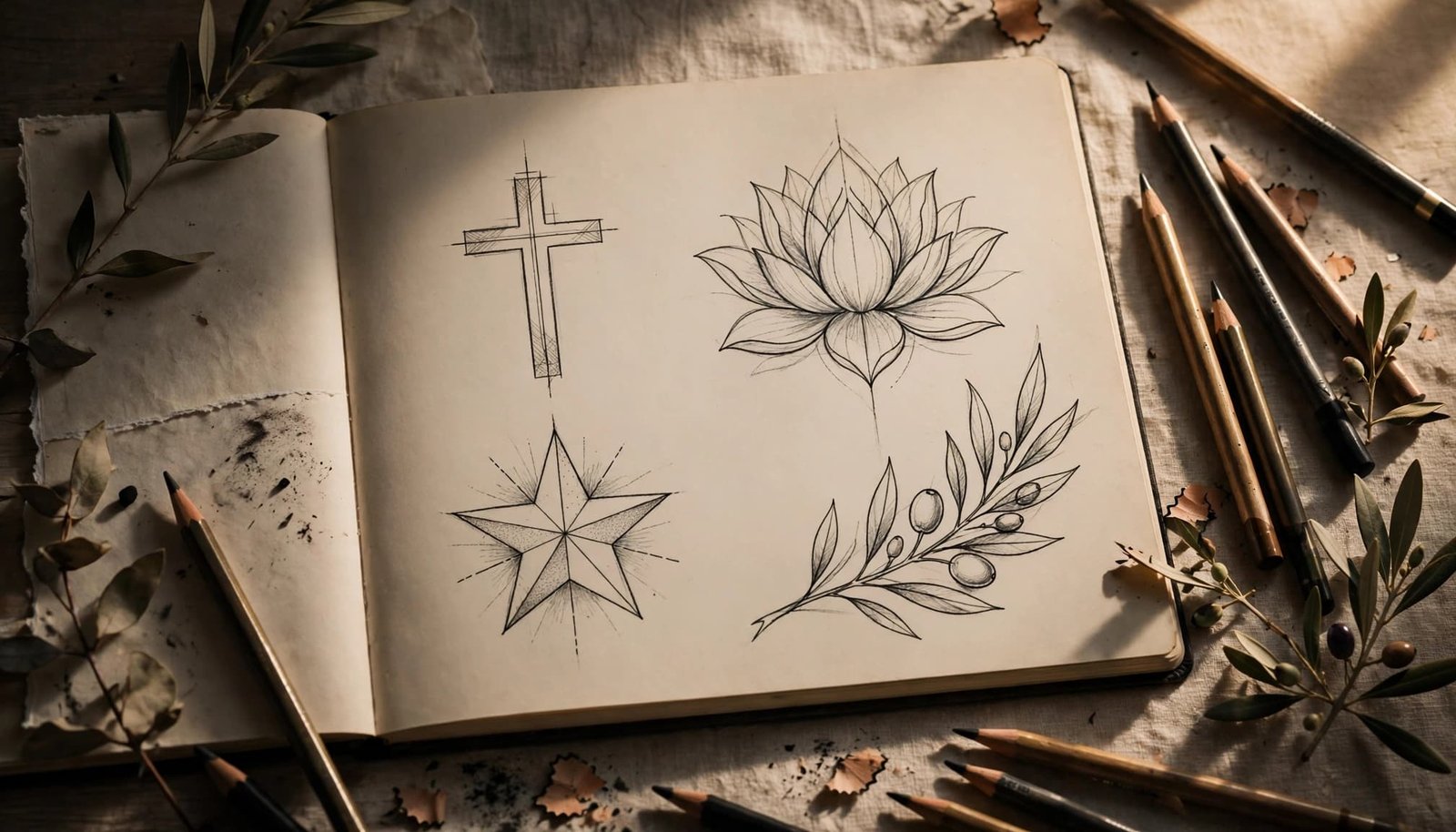
Start With the Memory, Belief, or Promise Behind the Design
Ask yourself what you want to carry each day. Your answer might involve daily faith, protection, recovery, remembrance, family heritage, hope, or gratitude. Write the meaning in one sentence before searching for images, such as, “This tattoo reminds me to stay hopeful after recovery.”
That sentence gives your artist a clear emotional direction. It also prevents a beautiful symbol from feeling like a copied flash design a few months later. A personal story gives the image roots.
The same religious symbol can take many forms without becoming crowded. Personalize it with one carefully chosen detail, such as:
- A meaningful date can honor a baptism, recovery, birth, or loss.
- Initials can connect the design to a family member or loved one.
- A birth flower can add tenderness to a cross, angel, lotus, or star.
- A geographic detail, such as a mountain outline or hometown coordinates, can tie faith to a specific place.
- One muted color can separate a meaningful element without overwhelming the linework.
Choose only the details that strengthen the story. A tiny cross with an olive branch may say more than a large composition filled with unrelated symbols.
Match the Symbol to a Tattoo Style You Will Enjoy for Years
Style controls how the religious imagery feels on your skin. Fine-line and minimalist work suit tiny crosses, stars, prayer beads, simple lotuses, and small geometric symbols. Script needs enough space to remain readable, while portraits of Jesus, angels, or spiritual teachers usually need black-and-gray realism or illustrative shading.
Ornamental and geometric styles can give a sacred symbol structure. Traditional tattooing adds bold outlines and lasting contrast, while watercolor creates a softer, more painterly effect. However, very small text and dense details may blur as the tattoo ages. Delicate white ink can fade faster and may shift toward a yellow, beige, or scar-like appearance.
Ask to see the artist’s healed work, not only fresh photographs. Placement matters too, since sun exposure and friction affect fine-line tattoos. A reputable artist can help adjust the size, spacing, and contrast before the stencil touches your skin. You can also review guidance on religious tattoo design before your consultation.
Check Meaning, Translation, and Cultural Fit Before Booking
Religious imagery carries context that an attractive reference photo may not show. Before booking, complete this short research checklist:
- Confirm the symbol’s origin and the meaning attached to its specific form.
- Have a trusted fluent speaker check every translation, spelling mark, script direction, and verse reference.
- Ask whether the image is restricted, reserved for initiates, or tied to a particular ritual.
- Learn whether the proposed placement could be viewed as disrespectful within that tradition.
- Avoid combining sacred symbols from unrelated faiths simply because their shapes balance well together.
Bring the exact text and translation notes to your consultation. A respectful conversation with a knowledgeable religious teacher or community member can prevent a permanent spelling, symbolism, or cultural mistake.
Before you commit, ask whether the tattoo still fits your faith connection, long-term taste, size, budget, and work or family setting. If the answer is yes, choose the simplest design that carries the full meaning.
The Best Placement and Size for Aesthetic Religious Tattoos
Placement changes more than visibility. It affects how a religious tattoo ages, how much detail the artist can include, how comfortable the appointment feels, and whether the symbol becomes a public statement or a private reminder. Choose the location alongside the design, not after it.
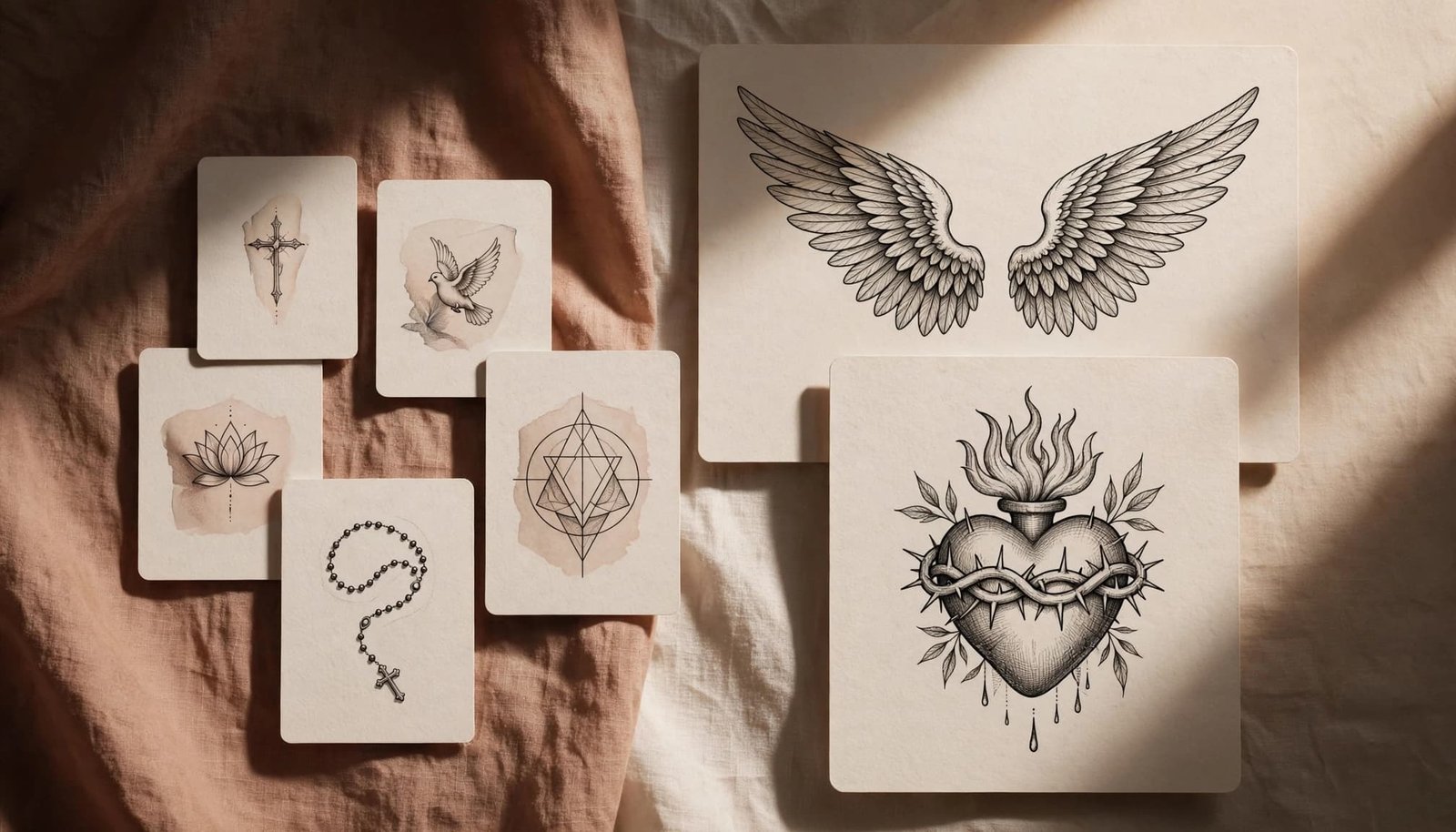
Small Religious Tattoos for Subtle, Everyday Meaning
Compact designs suit tiny crosses, stars, doves, Om symbols, lotus flowers, and simple geometric faith marks. The wrist and inner forearm keep a symbol within your view, while the ankle offers a softer, more discreet placement. Behind the ear feels personal and delicate, although the small surface may limit detail. A side-of-finger tattoo is easy to hide, and a collarbone design can look elegant beneath an open neckline.
Small tattoos need enough contrast and spacing to remain readable. A design that looks crisp at eight millimeters may blur when reduced to five. Ask your artist how the lines may age, especially if you want a miniature rosary, script, or detailed sacred symbol.
Finger and hand tattoos face frequent washing, sun exposure, movement, and friction. As a result, they often fade or become patchy sooner than tattoos on less active areas. Discuss healing, realistic retention, and possible touch-ups with your artist, then follow professional aftercare instructions. For general guidance, the Cleveland Clinic’s tattoo aftercare advice recommends protecting healing skin and keeping finished tattoos shielded from the sun.
Larger Designs That Give Sacred Imagery Room to Breathe
Larger religious tattoos need open skin around the main image. The forearm and upper arm work well for rosaries, angel wings, Sacred Hearts, script, and illustrative crosses because their shape gives the composition a natural vertical flow. Shoulders can hold rounded mandalas, floral halos, or wings that follow the body’s curve.
The thigh offers generous space for portrait-style designs, detailed lotus flowers, and layered symbols. Backs and chests can support wider compositions, while the ribs suit long scripture, prayer, or botanical arrangements. Leave breathing room between lines, beads, letters, and ornamental details. Crowding may look dramatic when fresh, but clear spacing helps the tattoo remain legible as the skin changes.
Comfort varies by location. Rib and chest tattoos are often more sensitive, particularly over bone or areas with little padding. Upper-arm and thigh placements usually provide more working room and easier clothing coverage during healing. Your artist can also adjust the stencil so a Sacred Heart, angel, or mandala follows your natural movement instead of appearing flat or cramped.
Visible Versus Private Placement for a Faith-Based Tattoo
A forearm or hand tattoo can invite conversation at work, school, family gatherings, or within your faith community. That visibility may feel right if you want your symbol to be part of your everyday expression. However, workplace policies, uniforms, cultural expectations, and future career plans deserve consideration before you choose an exposed location.
The ribs, back, hip, and upper thigh keep the meaning closer to you. These placements can suit a memorial cross, private scripture, or symbol connected to a personal promise. A shoulder or upper arm offers middle ground because clothing can reveal or cover it with little effort.
No placement is spiritually correct for everyone. Your choice should fit your comfort, culture, profession, family setting, and relationship with the symbol. Ask yourself whether you want the tattoo to begin conversations or accompany you without explanation. That answer can guide both its size and its position.
How to Keep Religious Tattoo Choices Respectful and Accurate
A religious tattoo carries more than visual appeal. Sacred imagery connects to real people, living communities, texts, rituals, and histories, so it shouldn’t become a random aesthetic accessory. Research gives your design a stronger foundation and helps you show appreciation without borrowing a symbol you don’t understand.
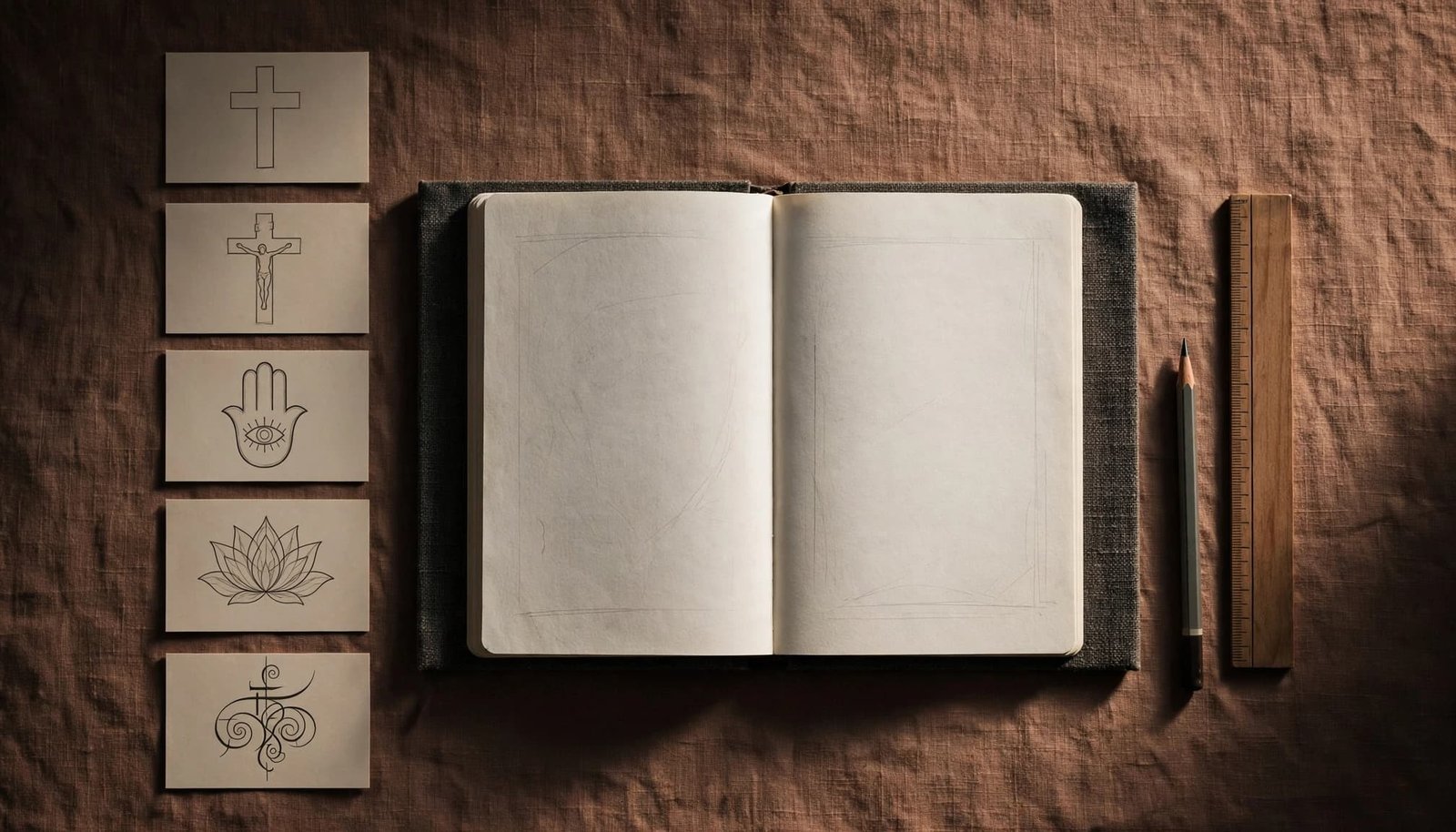
Research the Symbol Before You Turn It Into Permanent Art
Start with reputable religious or cultural sources, then speak with a knowledgeable person from the relevant tradition. A religious studies professor, clergy member, cultural practitioner, or trusted community representative may explain details that a quick image search misses. UNESCO’s intangible cultural heritage guidance also offers useful context on how communities connect identity, knowledge, symbols, and practices.
Common images can carry different meanings across denominations, regions, and communities. A plain cross and a crucifix are both Christian symbols, yet they may communicate different theological and devotional ideas. Likewise, Hamsa designs vary in hand shape, finger position, eye details, and use across Jewish, Muslim, and broader Middle Eastern communities. Even a familiar geometric mark may have a different history than you expect.
The same care applies to script and sacred symbols. Compare the exact form used by the community you want to honor, rather than combining details from unrelated references. Save screenshots, book pages, translations, and approved reference images in one folder. Bring that material to your tattoo consultation so the artist works from verified information instead of memory or a generic online stencil.
Treat Sacred Text and Calligraphy With Extra Care
Hebrew, Arabic, Sanskrit, and other sacred writing require proofreading by a fluent speaker or qualified scholar. A tattoo artist can reproduce beautiful lettering, but artistic skill doesn’t replace language knowledge. Check spelling, reading direction, accents, letterforms, grammar, and spacing before the design reaches your skin.
Sacred names and verses also deserve a suitability check. Some readers may feel comfortable tattooing a short passage, while others may prefer a personal word, a meaningful chapter-and-verse citation, or an image connected to the text. A trusted source can explain whether a phrase carries a devotional use or a restriction you hadn’t considered. Practical tattoo guidance also recommends checking sacred lettering and symbol accuracy before committing.
Give your artist the original wording, a verified translation, and any pronunciation or formatting notes. Don’t rely on a social media caption or an automatic translator. If the lettering feels too risky, a reference such as “Psalm 23” or a non-sacred personal word can preserve your connection without placing an error-prone verse on your body.
Avoid Designs That Mix Symbols or Meanings Without Context
Combining unrelated symbols may look thoughtful to you but confusing or offensive to people who recognize their religious meaning. Keep separate traditions visually distinct unless you have a clear personal and cultural reason to place them together. A cross, Om, Hamsa, and Dharma wheel shouldn’t become a decorative collage simply because their shapes balance well.
Also avoid parody, distorted sacred figures, casual alterations, or placement that conflicts with a community’s customs. When a symbol belongs to a living tradition, ask whether its size, orientation, clothing, or location could appear dismissive.
Respect doesn’t require you to abandon meaningful religious art. It asks you to make each choice intentional. When appreciation grows from understanding, your tattoo can honor its source while still carrying your own story.
Tattoo Safety and Aftercare for Clean, Long-Lasting Results
A meaningful religious tattoo deserves the same care as the design itself. Choose a licensed, hygienic studio where possible, confirm that the artist uses fresh needles and clean, disposable supplies, and follow the studio’s written aftercare instructions. Most tattoos heal in roughly one to three weeks, although larger pieces, dense shading, placement, and your skin’s response can change the timeline.
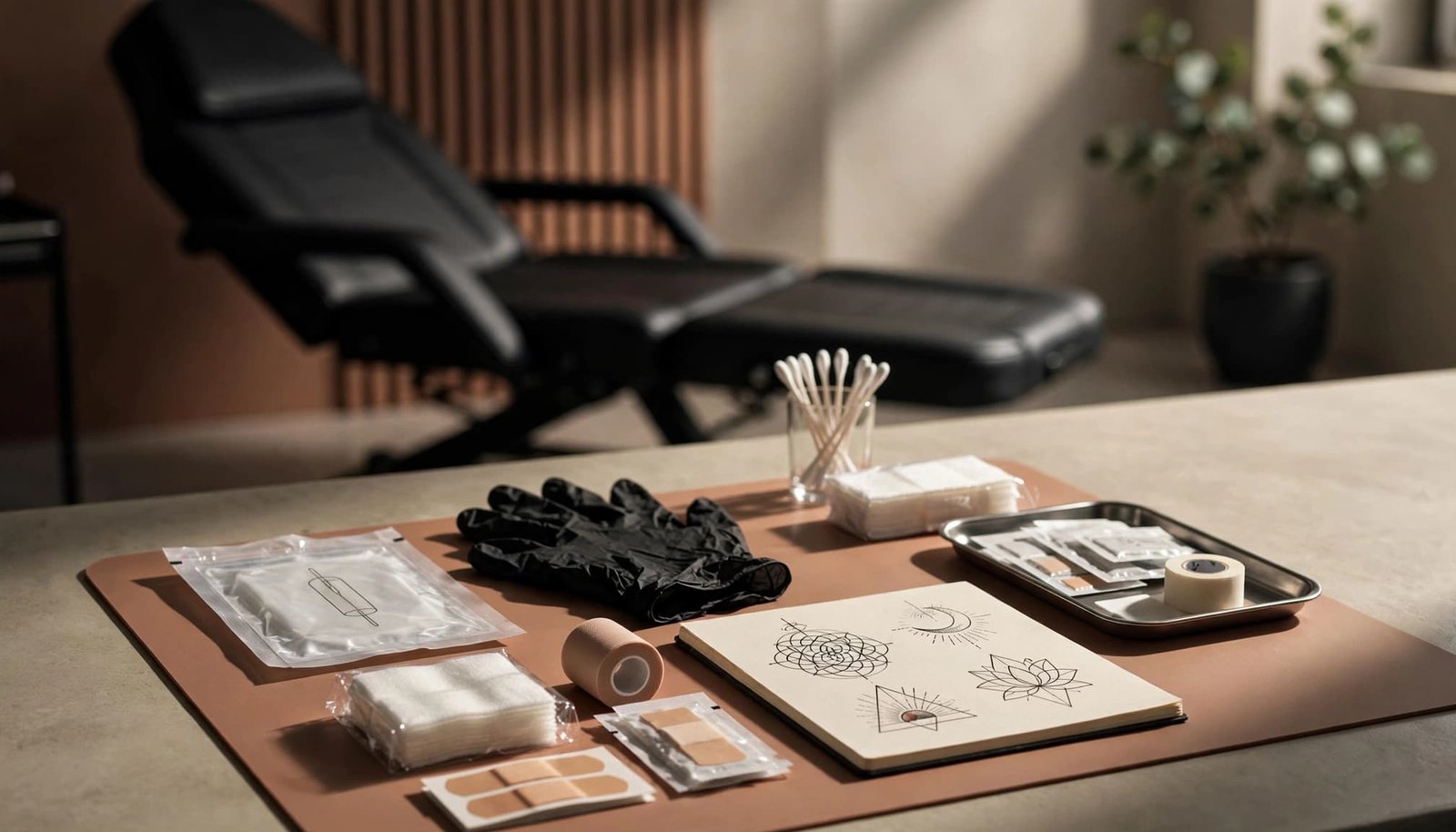
What to Ask a Tattoo Artist Before the Appointment
A consultation gives you time to check both artistic skill and safety practices. Ask questions such as:
- How much experience do you have with fine-line religious tattoos and small sacred symbols?
- Can I see healed examples of your fine-line work, not only fresh tattoos?
- Who will verify the spelling, translation, script direction, and lettering style?
- Will this design remain readable at the size and placement I want?
- How might friction, sun exposure, or movement affect this location?
- What inks do you use, and what should I do if I have known ink or adhesive allergies?
- Can I request stencil changes after seeing the design on my skin?
- How do you handle touch-ups, and is a follow-up appointment included?
- How do you sterilize equipment, and will you open a fresh needle in front of me?
- What discomfort, bleeding, swelling, and healing changes should I expect?
- Which healing steps should I follow, and when should I contact you or a health professional?
Bring a clear reference, your verified text, and notes about the meaning behind the tattoo. Ask the artist to create an original drawing rather than copying another person’s tattoo exactly. A good artist can preserve the feeling you love while adjusting the composition to fit your body and story.
Simple Healing Steps for a Fresh Religious Tattoo
Follow your artist’s bandage instructions first, since coverings vary. Then keep the routine simple:
- Wash your hands before touching the tattoo.
- Remove or change the bandage only as directed by your artist.
- Gently wash the area with lukewarm water and mild, fragrance-free soap.
- Pat the tattoo dry with a clean paper towel. Don’t rub it.
- Apply only a thin layer of the recommended fragrance-free moisturizer.
- Wear loose, clean clothing that won’t scrape or trap heat against the tattoo.
Some tenderness, mild redness, clear fluid, flaking, itching, and light scabbing can occur during normal healing. Leave peeling skin and scabs alone, because scratching or picking can remove pigment, irritate the wound, and increase the chance of scarring.
Avoid hydrogen peroxide, rubbing alcohol, swimming, baths, hot tubs, and other soaking until the tattoo has fully healed. Keep strong sun off fresh ink as well. After the skin closes completely, protect the design with shade, clothing, and broad-spectrum SPF 30 or higher. The American Academy of Dermatology’s tattoo skin guidance recommends sunscreen as part of long-term tattoo protection.
Warning Signs That Need Medical Attention
Normal healing should gradually improve. Redness, swelling, or soreness that persists or worsens after the first few days needs attention, especially when the area becomes hot or increasingly painful.
Contact a health care professional if you notice:
- Redness or swelling spreading beyond the tattoo.
- A rash, persistent bumps, or intense itching.
- Fever, chills, or flu-like symptoms.
- Pus or foul-smelling drainage.
- Severe pain, red streaks, or worsening tenderness.
- Skin that remains open or fails to heal.
An allergic reaction can appear as a rash or bumps, sometimes even after the tattoo seems healed. The FDA advises contacting both a health professional and the tattooist when a reaction occurs. The artist may need to identify the ink’s brand, color, and lot number so that the product can be avoided later. Read the FDA’s tattoo safety guidance and seek care promptly when symptoms are spreading, severe, or accompanied by fever.
Conclusion
The best aesthetic religious tattoo brings personal meaning and visual simplicity into the same design. Whether you choose a fine-line cross, sacred phrase, lotus, star, angel, or another faith-inspired image, the symbol should connect to your beliefs, memories, or values. A thoughtful tattoo feels personal because every detail has a reason.
Take your time before making the design permanent. Check cultural meaning, spelling, translation, script direction, and religious context. Then consider visibility, movement, healing, long-term comfort, and the way the tattoo may age. Ask informed questions during your consultation, review the stencil carefully, and choose an artist who welcomes collaboration instead of rushing your decision.
A small religious tattoo can become a steady daily reminder of what matters to you. Its beauty may come from fine lines, balanced spacing, soft botanical details, or restrained shading, but its lasting value comes from care. When the design honors its source and carries a story that belongs to you, even a modest mark can hold faith, hope, remembrance, or love for years to come.
Save the pin for later

- 30 Trendy Tattoo Ideas for 2026: Styles and Placement - September 27, 2026
- 30 Gorgeous Fine Line Tattoo Ideas to Try - September 27, 2026
- 25 Fine Line Tattoo Ideas for Women With Meaning - September 22, 2026
Leave a Reply