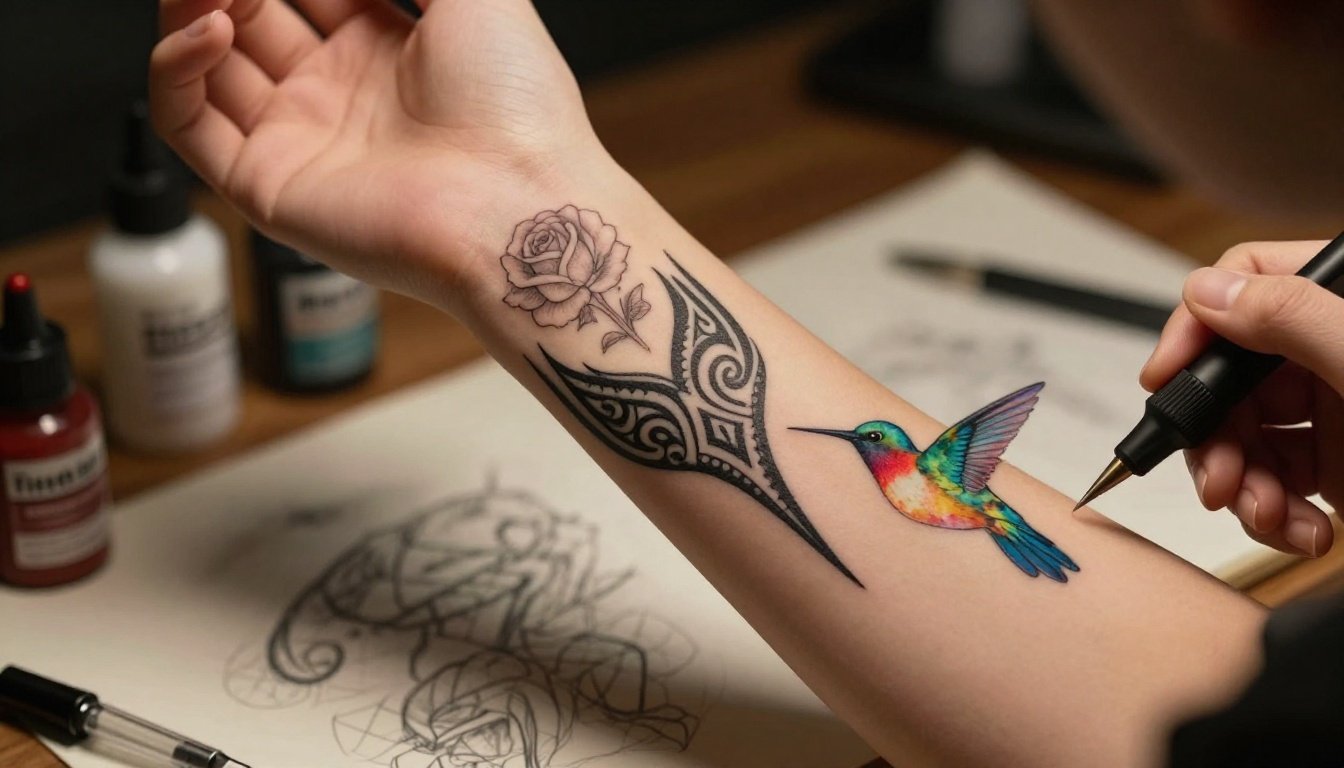
30 Unique Tattoo Ideas for Every Style and Story
A tattoo can carry the warmth of a family memory, the shape of a belief, the initials of someone you love, or a style that feels unmistakably yours. The most memorable unique tattoo ideas don’t need to be strange or extreme; personal details, thoughtful symbolism, and a design that suits your body can make even a simple image feel one of a kind.
The 30 ideas ahead include delicate nature tattoos, meaningful symbols, minimalist designs, bold artwork, and modern styles, so you’ll find inspiration whether you prefer fine lines, rich color, or striking blackwork. You’ll also see how to choose a concept that still feels right years from now, match it with a practical placement, estimate the size and detail, and discuss your vision with a skilled tattoo artist.
Before you book an appointment, you’ll learn what to consider about studio hygiene, sterile single-use needles, and fresh-ink care, including gentle washing, moisturizer, and avoiding swimming or sun exposure while the tattoo heals. Start with the ideas below, then narrow your favorites into a design that feels personal, wearable, and ready to make your own.
Key Takeaways
- Choose a tattoo idea that connects with your story, style, and future self, whether you prefer fine-line nature, meaningful symbols, geometric art, or bold blackwork.
- Match the design’s size, detail, and placement with your lifestyle, skin, and comfort level before booking an appointment.
- Share clear references with your artist, then ask for original adjustments that make the concept personal instead of copying another tattoo.
- Prioritize a clean studio, sterile equipment, and clear aftercare instructions. Review the FDA’s tattoo safety guidance, especially if redness, bumps, fever, or poor healing develops.
Unique Tattoo Ideas You’ll Love for Every Style and Story
The best unique tattoo ideas begin with a detail that belongs to you. A favorite trail, birth month, family memory, or private date can shape the design without making it feel overly literal. Each concept below can change through size, color, line weight, shading, and placement, so use the ideas as starting points rather than finished templates.
Nature Tattoos That Feel Personal and Alive
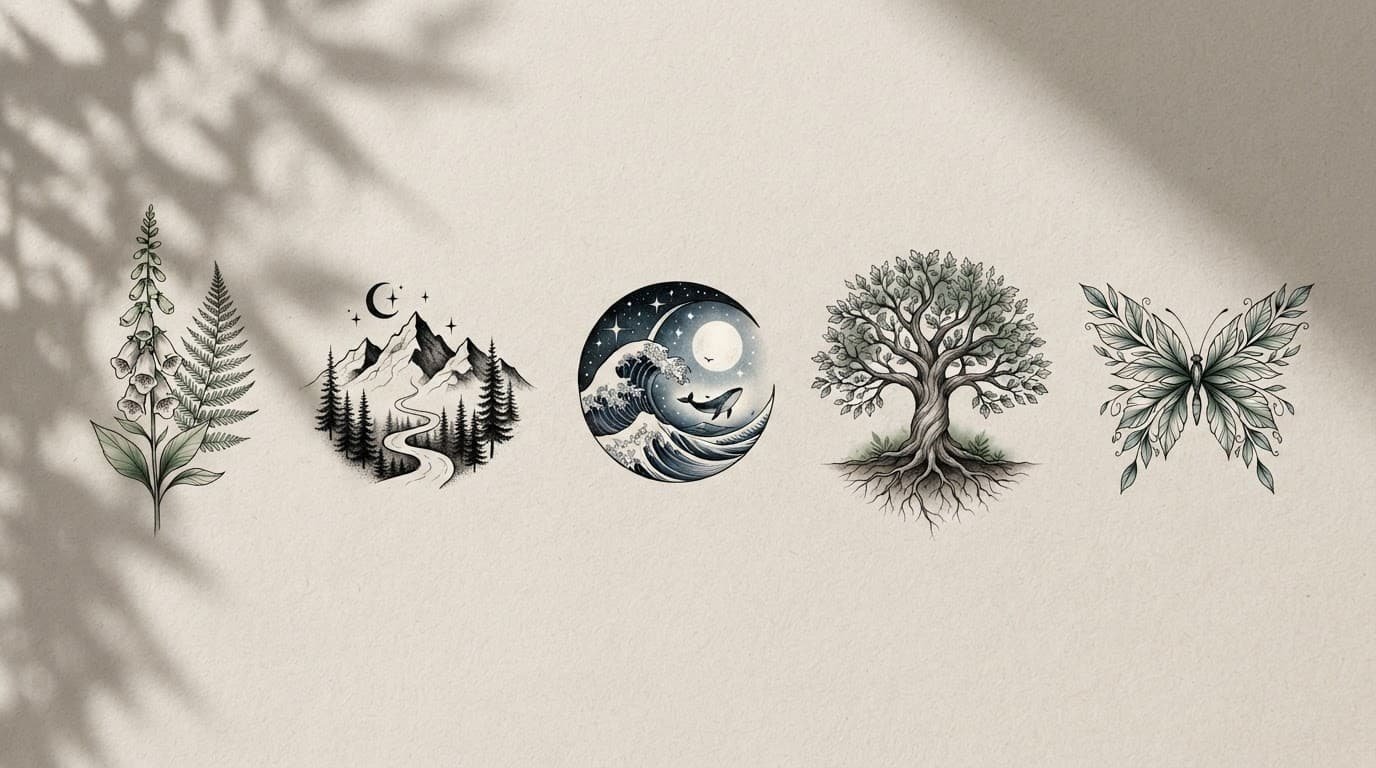
Nature tattoos can feel soft, wild, or quietly dramatic depending on the technique. A single-stem wildflower tied to your birth month, a hometown, or a place you once felt at peace can carry personal meaning without needing a large composition.
Fine-line petals keep it delicate, while botanical blackwork gives the same flower a stronger, more graphic mood. The forearm or ankle works well for a narrow stem, but leave enough room for small details to age clearly.
A tiny mountain range with a hidden trail can suggest a meaningful trip, a private goal, or a path only you recognize. Add a small coordinate set, a distinctive ridge, or a break in the line to make it your own. The shoulder blade and upper arm offer more space than the ankle, especially if the trail needs to remain visible over time.
For a moonlit ocean wave, soft gray shading can create a calm, reflective feeling, while limited blue color adds a cool nighttime accent. You might shape the wave around a coastline you remember or include a small moon phase from a significant date. The ribcage gives the design a flowing vertical space, although its sensitivity makes placement worth discussing with your artist.
A tree with roots shaped like handwritten initials turns a familiar image into a private family or relationship tattoo. Use your actual handwriting as a reference, then ask the artist to simplify the strokes so they remain readable as the tattoo settles. The upper arm or shoulder blade can hold the trunk, branches, and roots without crowding them.
A butterfly formed from leaves combines a light silhouette with seasonal detail. Fine-line veins make it airy, while muted green or brown creates a natural, grounded mood. Because narrow wings and tiny leaf marks can blur when packed too closely, choose a size that gives each shape breathing room. For healing and skin-care information, review the American Academy of Dermatology’s tattoo guidance.
Animal Tattoos With Strength, Protection, or Spirit
Animal tattoos can express adaptability, freedom, loyalty, renewal, or courage, but no meaning is universal. Your own relationship with the animal matters more than a standard symbolism list.
A fine-line fox with a botanical tail can pair a recognizable animal with flowers, herbs, or leaves linked to your story. A micro-realistic bird carrying a small branch may suggest freedom, home, or a message you still carry. Keep the branch simple if the tattoo is small, and choose the forearm or ankle for a clean, readable silhouette.
A wolf blended with a star map can connect loyalty and protection with a particular night sky. Use stars from a meaningful date instead of a generic constellation. A phoenix made from loose sketch lines offers a less polished, more personal feeling, especially when broken strokes suggest change and renewal. The shoulder or upper arm gives those lines enough room to breathe.
For a geometric animal portrait, select an animal whose shape already appeals to you, then add triangles, circles, or unusual negative space. Realistic portraits need a skilled artist and adequate room for facial features, fur, and shading. The chest, thigh, shoulder, and upper arm usually hold these designs better than very small placements.
Celestial and Landscape Designs With Hidden Details
Celestial tattoos become more personal when their details connect to a real memory. A star map can show the sky above a birth, move, reunion, or turning point. A sun and moon sharing one orbit can suggest balance, partnership, or two sides of your identity, while initials or a special date can stay hidden in the orbit line.
A tiny planet with a ring of meaningful words works best when the phrase is short enough to remain legible. You could use a private motto, a family name, or a single important word. A landscape inside a crescent moon can hold a favorite desert, lake, forest, or city skyline. Dotwork adds texture to stars and terrain; minimalist linework keeps the image clean, while black-and-gray shading creates more depth.
Finally, connect a constellation to a loved one’s birth date, then alter the line pattern so it doesn’t resemble a stock chart. The inner forearm suits compact designs, the collarbone favors horizontal compositions, and the calf accommodates wider scenes. Spine tattoos can follow a vertical crescent or constellation, while the back of the arm works well for slim, restrained linework.
Meaningful Tattoo Ideas for Memories, Identity, and Connection
The most personal tattoo ideas often use small clues instead of obvious pictures. A private symbol, familiar handwriting sample, or carefully chosen date can hold a full story while leaving room for others to see only the design.
Small Symbols That Say More Than They Show
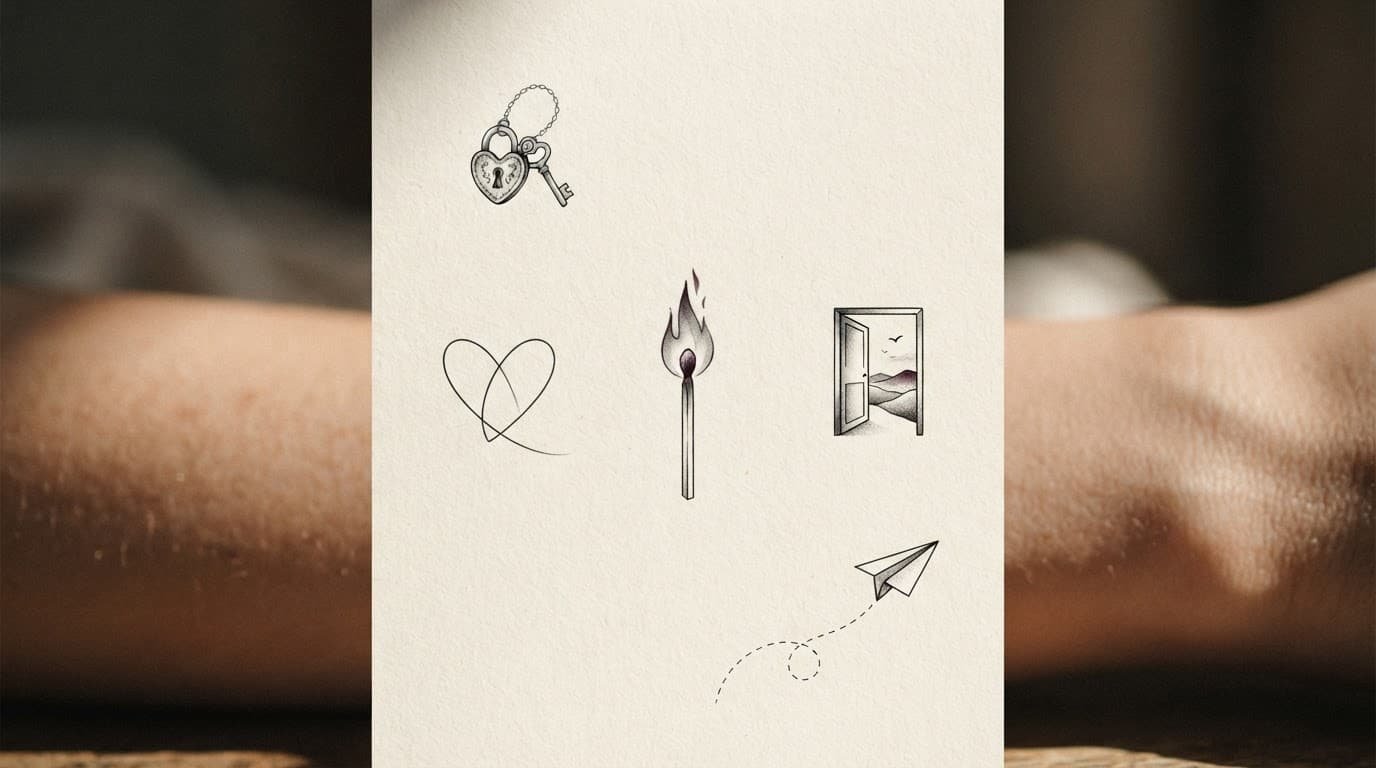
A tiny lock and key can suggest trust, commitment, or a bond shared with one person. Give each design a separate detail, such as a birthstone color, a short initial, or a shape from a favorite place. A heart made from two intersecting lines offers a simple image for love, friendship, or two paths meeting.
For a turning point, consider a small match with a flame. The image might recall bravery, a new ambition, or the moment you finally chose yourself. An open door with a landscape beyond it can point to a fresh start, a move, or a future you are still building. A paper airplane following a dotted path can carry ideas of freedom, travel, childhood, or taking a chance.
The meaning belongs to you, so you don’t need to follow a standard symbolism guide. These designs suit the wrist, ankle, behind the ear, upper arm, or shoulder. However, tiny tattoos need breathing room. An artist may simplify a lock, reduce the flame, or widen the dotted path so the details stay clear as the ink ages.
Handwriting, Dates, and Personal Memory Tattoos
Handwriting can turn a familiar phrase into a tattoo no one else could own. Use a loved one’s note, a handwritten recipe ingredient, or a family saying copied from an original page. A meaningful date in Roman numerals can stay discreet, while a sound-wave line from a recorded message can preserve the shape of someone’s voice without printing the entire sentence.
A small memorial flower paired with initials offers another personal option. Choose a flower connected to a person, season, or shared memory, then keep the initials subtle within the stem or leaves.
Bring the original image to your consultation. Your artist can preserve the character of the handwriting while improving spacing, punctuation, and readability. Script that looks beautiful on paper can blur when it is too small, so ask the artist to recommend a suitable size and placement. The inner forearm, ribs, chest, and upper back usually provide more room than the wrist or ankle.
Before booking, check every detail twice:
- Confirm the spelling, punctuation, language, and translation with a trusted source.
- Compare the tattoo date with the original record, especially when converting it to Roman numerals.
- Review the final reference image in its exact orientation and ask how the artist will adapt it to your skin.
Because tattoo reactions can appear immediately or years later, review the FDA’s tattoo safety guidance and seek medical advice if the area develops a spreading rash, worsening redness, bumps, fever, or delayed healing.
Identity and Self-Expression With a Personal Twist
Identity tattoos become more meaningful when the design comes from your own visual language. A mirror with a different reflection can show growth, hidden strength, or the version of yourself you are choosing to become. A self-portrait reduced to one continuous line can feel intimate without looking like a conventional portrait.
You could weave a birth flower through a favorite quote, opening the lettering so stems and leaves shape the words. A mask opening to reveal stars may express privacy, imagination, or a life that includes more than people first see. A custom symbol built from your initials and meaningful shapes can become a personal emblem with no fixed definition.
Linework, color, negative space, and abstract forms all change the mood. Bring sketches, journal notes, old photographs, or reference images to your consultation. Your artist can combine those clues into an original design that feels like your story rather than a copied symbol.
Bold and Modern Tattoo Designs for a Standout Look
Modern tattoo ideas can feel graphic, playful, dramatic, or personal without copying a design exactly. The artist’s job is to adapt the style to your body, skin, and preferred level of detail, so treat each concept as a starting point rather than a template.
Geometric, Abstract, and Optical Ideas
A geometric animal built from overlapping triangles, circles, and angled planes can turn a familiar subject into sharp, modern artwork. Keep the structure symmetrical for a calm, polished look, or break the balance with open spaces and uneven shapes for more movement. Dotwork can add soft shading without heavy blocks of ink.
An abstract face made with flowing lines creates a softer contrast. One continuous curve might suggest the brow, nose, and lips, while selective breaks keep the portrait open and airy. A sacred-geometry-inspired flower can also become a personal pattern when you build it around initials, a birth date, or shapes connected to your story.
However, sacred geometry may carry cultural or spiritual meaning. Research the symbol’s origin and ask whether its use is appropriate before turning it into permanent body art. The Smithsonian’s history of tattoos offers useful context on how tattoo meanings differ across cultures.
For a design about healing, consider a broken circle repaired with gold-style color or a strip of untouched skin. The contrast between the damaged section and the restored line makes the idea easy to read without adding a long caption. A topographic line design based on a favorite trail, hometown, or coastline adds another personal layer. Closely spaced lines feel dense and technical, while wider spacing looks cleaner as the tattoo ages.
The forearm, calf, shoulder, chest, and upper back provide enough room for clean geometry. Ask your artist to check the design while your body is relaxed and moving, especially if the lines cross a joint or curve around muscle.
Playful Sketches, Doodles, and Patchwork Pieces
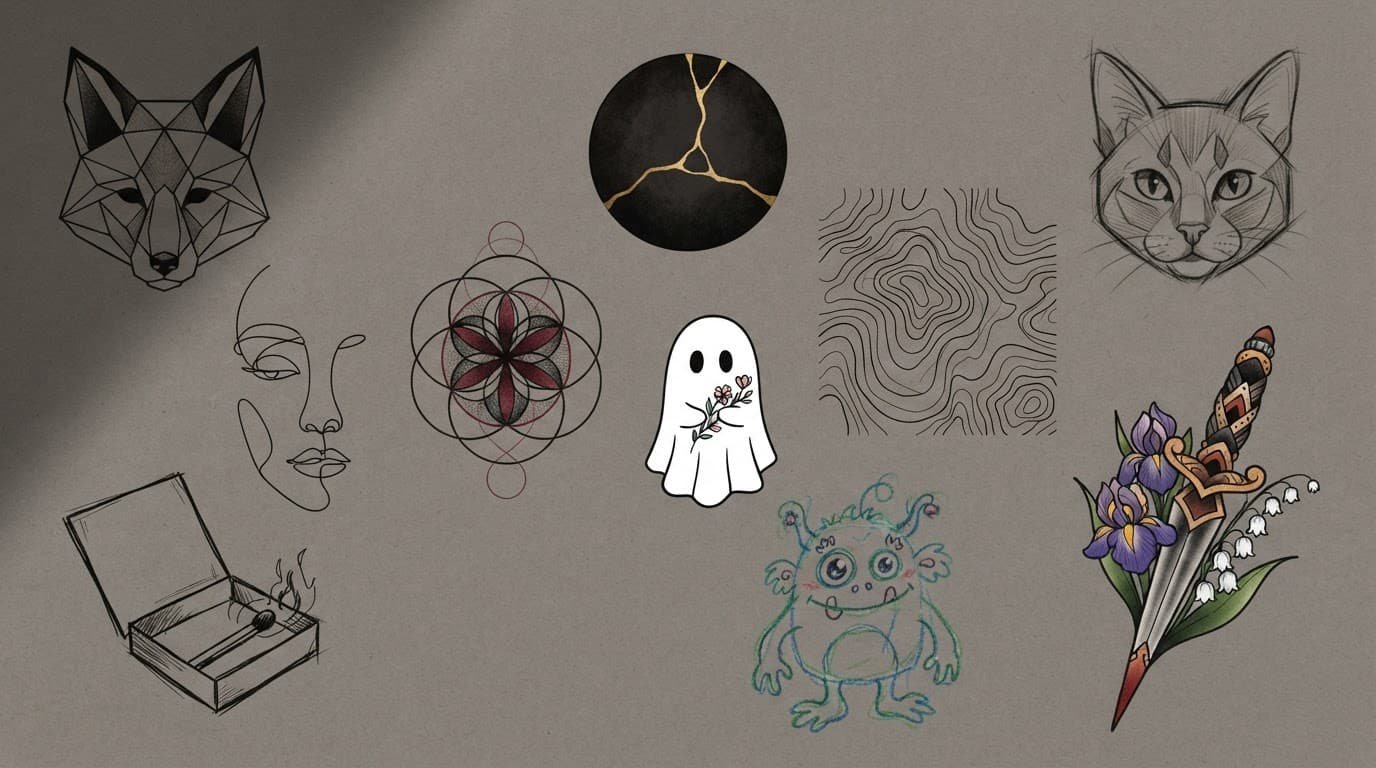
A doodled matchbook can hold tiny objects that feel ordinary to everyone else but familiar to you. Add a coffee cup, house key, flower, pet toy, or favorite snack as loose sketches inside the design. A hand-drawn ghost holding a flower gives the tattoo a tender, humorous mood, while a rough pencil-style portrait preserves the personality of a beloved pet through imperfect lines.
You could also combine favorite childhood drawings into one whimsical creature. A crooked wing, oversized eye, or strange little foot may look charming when the artist keeps the original spirit instead of correcting every detail. Uneven lines look intentional when the artist understands sketchwork and controls the composition. Random wobble, however, can make the tattoo appear unfinished, so choose someone whose portfolio shows this style clearly.
Patchwork tattoos grow with you. Start with a few unrelated mini symbols, then add new pieces after meaningful events, trips, or changes in your life. Consistent spacing keeps the collection balanced, while varied scale prevents every tattoo from competing for attention. Leave room around larger pieces and repeat one visual detail, such as fine lines or a limited accent color, to give the group a connected feeling.
The wrist, lower arm, thigh, shoulder, and calf work well for separate small pieces. Before booking, map possible additions on a photo or temporary tattoo sheet. That simple step helps you avoid crowding a favorite design later.
Colorful and Style-Driven Tattoos With Character
A neo-traditional dagger wrapped in your birth flower can combine bold outlines, saturated color, and a clear central shape. An anime-inspired eye may feel more personal with a custom reflection, such as a home, constellation, or object tied to a memory. Both concepts need strong contrast so the main image remains readable after fine details soften.
A fluid abstract ribbon can follow the body’s movement around the upper arm, ribs, thigh, or calf. Use black outlines for a graphic look, or let sections dissolve into negative space for a lighter finish. You might redesign a cyber-sigilism-inspired symbol with shapes from your own sketches instead of borrowing a popular online motif. The result should still feel right without the trend label.
Micro-realism works best when you choose one compact object, such as a seashell, match, key, or gemstone. Fine detail can create an impressive first impression, but the artist may need to enlarge or simplify tiny textures for long-term clarity. Bold color, black outlines, delicate shading, and open skin each create a different mood.
Before choosing a popular style, ask yourself whether you would still want the image if nobody called it trendy. A personal reference, adjusted proportions, and a placement that suits your body will give the tattoo a longer life than an exact copy of a viral design.
How to Choose a Unique Tattoo Idea You’ll Still Love Years From Now
Choosing one design from 30 unique tattoo ideas takes more than picking the prettiest image. Start with the story, then decide how you want that story to look, where it should live, and how often you want to see it. A tattoo can be personal without being obvious, but it should still fit your body, routine, budget, and future plans.
Match the Design to Your Body and Daily Life
A good tattoo follows the body’s shape instead of fighting it. Curved designs suit the shoulder, hip, ribs, and calf, while narrow artwork often works well along the inner arm, ankle, spine, or behind the ear. Consider movement, too. A design crossing the wrist, elbow, knee, or fingers may stretch, bend, and experience more friction.
Discreet placements, including the inner arm, ribcage, ankle, and behind the ear, are easier to hide with ordinary clothing or hair. Visible areas such as the hand, fingers, neck, and forearm make a stronger style statement, but they can affect workplace options. Check your employer’s tattoo policy before choosing a placement you cannot easily cover.
Hands and fingers receive frequent washing, sun exposure, and friction, so their tattoos often fade faster and may need touch-ups. Ribs, ankles, sternum, and other bony areas can feel sharper during a session because they have less padding. If pain concerns you, the outer upper arm, thigh, or calf may offer a more comfortable starting point.
Sun exposure and clothing also shape long-term maintenance. A tattoo beneath short sleeves may receive more ultraviolet exposure than one covered by a shirt, while tight waistbands, shoes, or watchbands can rub healing skin. Before booking, ask yourself:
- Do you need to hide the tattoo at work or during formal events?
- Will your daily clothing or equipment rub against it?
- Can you protect the area from direct sun?
- Do you have space for future tattoos nearby?
Turn Inspiration Into an Artist-Ready Design
Save a small collection of references, then write down what each image gives you. You may like the calm mood of one tattoo, the line flow of another, and the color treatment of a third. Your artist can combine those preferences into an original composition instead of copying another person’s work.
Bring these details to your consultation:
- Explain the memory, belief, person, or experience behind the idea.
- Share your preferred size, placement, color range, and level of privacy.
- Disclose existing tattoos, scars, stretch marks, or changes in the skin.
- Ask how the design may soften, spread, or lose detail as it ages.
- Review healed tattoos by the same artist, ideally in your preferred style and placement.
Fresh tattoos often look exceptionally crisp because the ink and skin are still new. Healed photographs reveal line stability, color retention, and how the artist handles real skin. A first-time tattoo guide can also help you prepare practical questions about the appointment and aftercare.
Your visual language matters. Fine-line tattoos feel delicate but need enough spacing; minimalist designs use restraint and negative space. Blackwork creates strong contrast, realism depends on detail and skilled shading, and color tattoos require thoughtful contrast for lasting clarity. Geometric work needs accurate placement around curves, traditional tattoos rely on bold outlines and familiar visual structure, while handpoke tattoos offer a slower, dot-by-dot process.
Skin tone, body movement, work visibility, pain tolerance, and budget should guide those choices. A detailed realism piece usually needs more time and money than a small minimalist tattoo. Also, leave room for future additions if you hope to build a sleeve, patchwork collection, or connected back piece.
AI-generated reference art can help you show an artist a mood, silhouette, or composition. Treat it as a sketch, not a tattoo template. Your artist should redraw the concept for your anatomy, skin, line flow, technical limits, and originality.

Take extra time with names, portraits, scripts, and highly visible placements. Save the idea, revisit it after several weeks, and book only when the meaning and design still feel right.
Plan the Cost, Safety, and Aftercare Before Getting Inked
A unique tattoo should fit your budget, body, and daily life before the needle touches your skin. Take time to discuss the design, studio practices, ink, healing process, and possible future touch-ups during your consultation. Good planning protects both the artwork and your health.
Know When a Unique Design Needs More Size or Simplicity
A tattoo is a permanent image on changing skin, not a tiny printed illustration. Fine details, closely packed lines, small script, and miniature realism can blur as ink settles and skin ages. A design that looks sharp on a phone screen may need more room on your body.
Your artist might simplify a crowded concept, increase the line weight, widen the spacing, or use negative space to keep each element readable. For example, a small botanical tattoo may need fewer leaves, while miniature lettering may require a larger placement than you first expected. Originality should never come at the cost of clarity, healing, or long-term appearance.
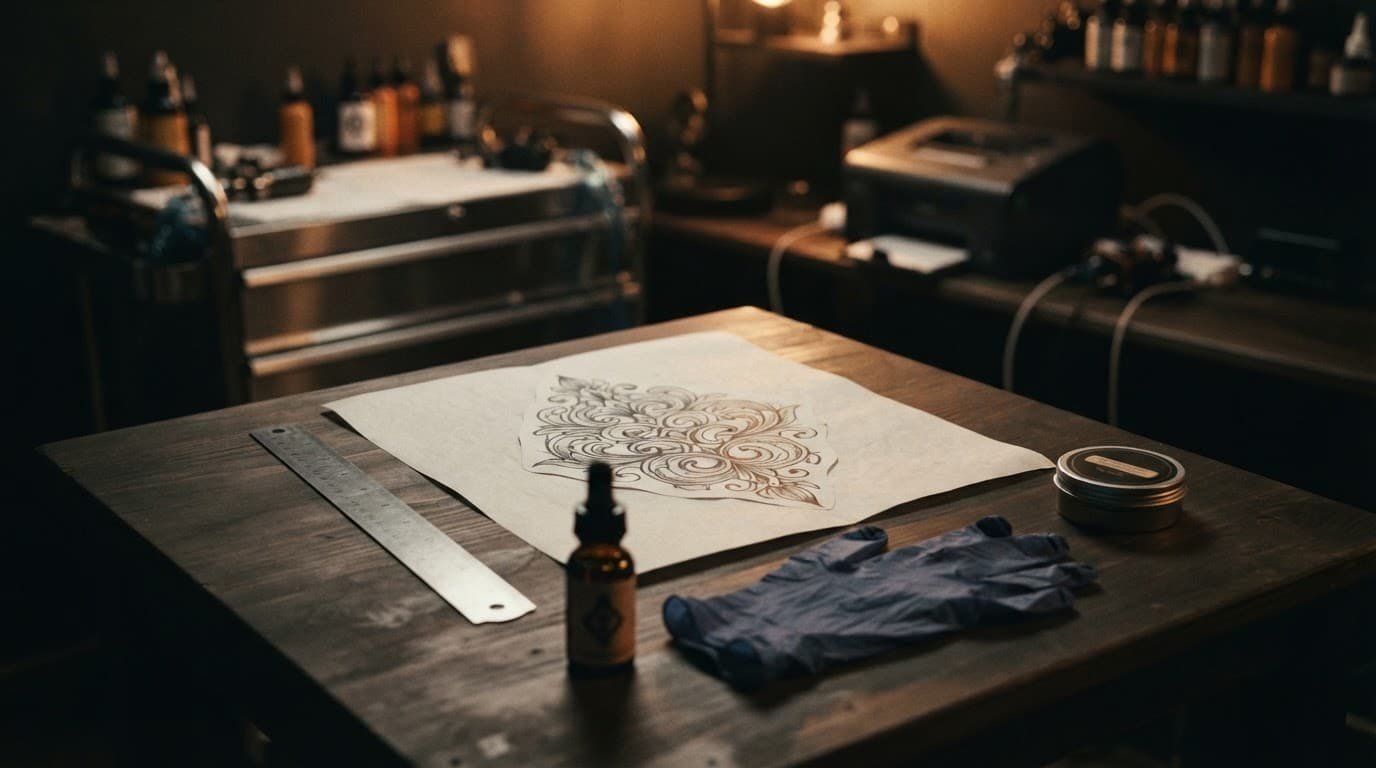
Ask your artist to create a stencil before tattooing. You can then see how the design sits on your actual body, how large it appears beside nearby features, and whether curves or joints distort the composition. Move around while viewing it, especially if the tattoo crosses your wrist, elbow, knee, ribs, or another active area.
Tattoo prices vary by the artist’s hourly rate, minimum charge, size, placement, color, complexity, session time, and number of touch-ups. Request a written or clearly explained quote during your consultation, and ask whether the estimate includes design time or a later touch-up.
Choose a licensed studio, or one that follows the legal requirements in your area. Look for clean equipment, single-use needles, fresh gloves, proper surface disinfection, and clear consent procedures. The FDA warns that contaminated ink can cause infections even when an artist follows careful hygiene practices. You can review its tattoo safety guidance before your appointment, then ask the studio about its ink brand, color, and lot information.
After the appointment, follow the artist’s written instructions because bandage types and products vary. In general, wash your hands before touching the tattoo, clean it gently, pat it dry, and apply only the recommended thin layer of aftercare product. Avoid soaking the area in pools, baths, hot tubs, or open water while it heals. Limit excessive sun exposure, and don’t pick scabs or scratch peeling skin.
Discuss specialty or experimental inks carefully before agreeing to them. Ask what they contain and check reliable health guidance, especially if you have allergies or sensitive skin. Seek medical care for spreading redness, worsening pain, pus, fever, red streaks, increasing warmth, or swelling. A beautiful design deserves careful protection after the appointment, too.
Conclusion
The best unique tattoo ideas begin with something that already belongs to you. Quiet botanical symbols, private handwriting, meaningful dates, and small memories can carry as much feeling as bold geometric, colorful, or abstract work. The strongest design is the one that fits your story, personal style, body, and future self.
Save the ideas that spark a real feeling, then refine one with a trusted tattoo artist. Share your references, discuss the size and placement, and confirm the studio’s hygiene practices and aftercare instructions before making a permanent choice. Give yourself time to revisit the design, especially if it includes names, portraits, script, or a highly visible placement.
An unusual image may catch attention online, but personal meaning gives a tattoo staying power. Choose artwork that feels true to the person wearing it, then let the final tattoo carry a story that becomes more meaningful with time.
Save the pin for later

- 30 Trendy Tattoo Ideas for 2026: Styles and Placement - September 27, 2026
- 30 Gorgeous Fine Line Tattoo Ideas to Try - September 27, 2026
- 25 Fine Line Tattoo Ideas for Women With Meaning - September 22, 2026
Leave a Reply