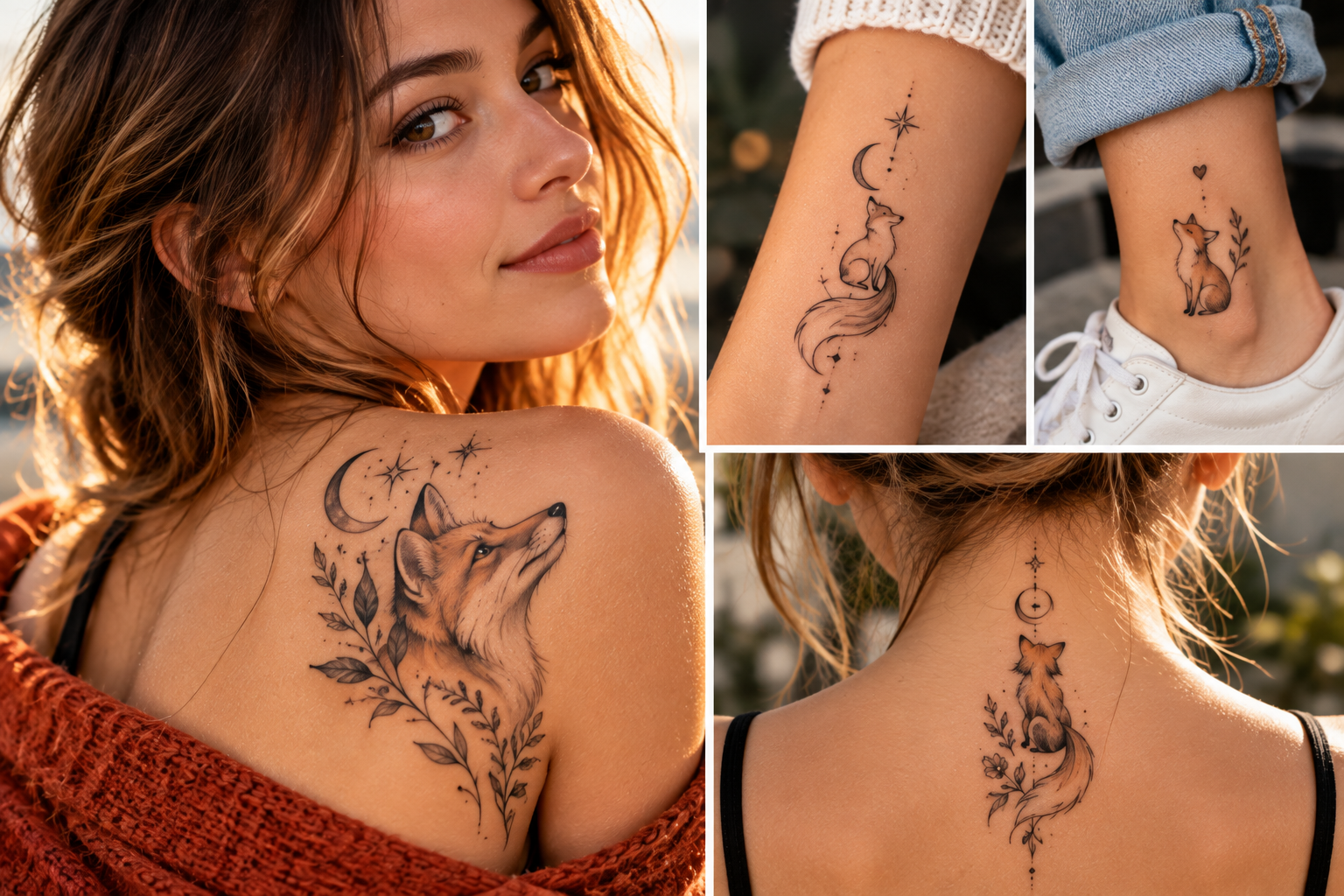
25 Cute Little Fox Tattoo Ideas for Girls, Plus Placement, Pain, and Cost
A small fox tattoo might be the sweetest way to wear something a little wild. Foxes blend cuteness with cleverness and a hint of mischief, which makes them perfect for a design that feels playful but still means something.
They’re also practical. A tiny fox on your wrist, ankle, or shoulder blade is easy to hide for work and show off everywhere else, and small pieces usually cost less and heal faster than bigger ones.
Below you’ll find 25 cute little fox tattoo ideas, plus what foxes symbolize, the best placements, what to expect for pain and price, and how to care for your ink afterward.
What a Fox Tattoo Really Means (And Why Girls Love It)
A fox tattoo carries more personality per square inch than almost any other small design. The fox shows up in folklore all over the world as a trickster, a guide, and a shape-shifter, so wearing one says you’ve got a sharp mind and a streak of independence. Here’s what the symbolism actually covers.
Cleverness, Playfulness, and Independence
The core fox meaning is intelligence. Foxes survive by outsmarting, not overpowering, so the tattoo works like a quiet badge for anyone who solves problems her own way. Add in their curiosity and playfulness, and you get a design that feels lighthearted without being shallow.
There’s also the free-spirit angle. A fox answers to nobody, wanders where it likes, and stays charming while doing it. That mix of mischief and self-sufficiency is exactly why so many girls pick a fox over a prettier-but-meaningless design. It’s a tattoo with a wink in it.
Fox Meaning in Japanese, Celtic, and Native Traditions
In Japanese folklore, the kitsune is a magical fox that can shape-shift, sometimes into a human, and grows wiser with every century of life. Kitsune are messengers of the deity Inari, so they carry both cleverness and protection.
Celtic legends treat the fox as a guide through the unknown. Because foxes know their forests so well, stories cast them as companions for people finding their way through uncertain times.
In many Native American traditions, the fox appears as a clever problem-solver and, in some nations’ stories, a healer or teacher who gets what it needs through wit rather than force.
Whichever tradition you connect with, the throughline is the same: a fox tattoo means brains, adaptability, and a bit of beautiful trouble.
25 Adorable Small Fox Tattoo Ideas for Girls
This is the fun part. Each idea below works well at small sizes, so you can mix and match until one feels like yours. Some are barely an inch across, others stretch a little longer along an arm or ankle.
Minimalist Line and Geometric Foxes
If it’s your first tattoo or you want something easy to hide, minimalist styles are the safest bet. Fine lines heal quickly, cost less, and age well.
- Single-line fox: the whole design drawn in one continuous stroke, head to tail. It looks elegant on a wrist or forearm.
- Fox silhouette outline: just the shape, no interior detail. Great for an ankle or behind the ear.
- Geometric fox: the face built from triangles and straight edges. Clean, modern, and striking even at an inch wide.
- Origami fox: folded-paper angles forming the body. A fresh twist on the geometric look.
- Minimal fox head: two ears, a pointed snout, and nothing else. Barely bigger than a coin.
- Line fox with tail wrap: the tail curls around the body like a spiral, which suits a calf or inner arm.
- Constellation-style fox: the outline dotted with tiny points, like a star map. Subtle and personal.
These styles also suit small spaces like fingers, collarbones, and ribs, where detailed designs would blur over time.
Sleeping, Sitting, and Curled Fox Designs
Poses make a fox feel alive, and the cozier the pose, the cuter the result. These read as the most adorable small fox tattoo options of the bunch.
- Curled sleeping fox: tail wrapped around itself like a fluffy donut. Honestly the softest option on this list.
- Sitting fox with big fluffy tail: ears perked, tail wrapped around its paws. A classic that works anywhere.
- Sleeping fox draped on a branch: perfect for a shoulder or collarbone, since the branch follows your body’s line.
- Playful pouncing fox: mid-hop with the tail flying up. More energy than the sleepy ones but still small.
- Tiny curled fox with closed eyes: just a face, whiskers, and a smile. Fits a wrist like a sticker.
Watercolor and Color Fox Tattoos
Color is where foxes shine, because their natural palette is already so pretty. A watercolor splash behind a black fox outline gives you contrast and softness at once.
- Classic orange and white fox: the realistic version, with that rust-orange coat and white belly.
- Watercolor splash fox: bright orange and pink bleeding out behind a simple outline.
- Pastel fox: peach, cream, and soft pink tones for a dreamier feel.
- Blue or purple fox: a fantasy color for anyone who wants her fox to feel magical.
- Watercolor fox in misty blues and greys: moody, painterly, and very wearable with any outfit.
Keep in mind that color fades faster than black ink and may need touch-ups, so colored pieces often cost a bit more upfront and over the years.
Cute Details: Flowers, Moons, and Tiny Faces
Pairings and extra details make a fox feel personal instead of generic. This is where you can sneak in meaning: your birth flower, your zodiac moon, or a style that matches your sense of humor.
- Fox with flowers: a small fox nuzzled into wildflowers or peonies.
- Fox and crescent moon: the fox curled beside a thin crescent, ideal for a night-sky vibe.
- Fox and stars: tiny stars scattered around the design, maybe with a shooting star.
- Chibi fox face: a cartoon-style face with big eyes and round cheeks, straight out of a kawaii drawing.
- Fox and cherry blossoms: a Japanese-inspired pairing that nods to kitsune folklore.
- Fox with autumn leaves: warm oranges and browns, perfect for the season it calls home.
- Two tiny foxes: a pair curled together, sweet for sisters, best friends, or mothers and daughters.
- Fox with a heart-tipped tail: the tail ends in a little heart. It’s a subtle way to keep the design playful.
Whichever idea catches your eye, screenshot a few options before your appointment. Artists appreciate clear references, and the mix of styles you save often reveals exactly which fox feels like you.
Best Placement Ideas for a Small Fox Tattoo
A great design only works if it lands in the right spot. Placement changes everything: how big the fox can be, how much it hurts, and whether coworkers see it at your next meeting. Think about three things before you commit: size, visibility, and your pain tolerance. A tiny line fox fits almost anywhere, while a watercolor piece with detail needs a bit more room to breathe.
Wrist, Ankle, and Behind the Ear
These dainty spots are the classic homes for a small fox. The wrist gives you a piece you’ll see every day, which many people love as a daily reminder of what the design means to them. The ankle suits a sitting or curled fox, since the shape follows the bone nicely. Behind the ear is the most hidden of the three; it only shows with your hair up, so it works for strict school or office rules.
Keep in mind that these areas heal fast but fade a little quicker too, because hands and feet get a lot of sun and friction. For care basics, the American Academy of Dermatology has a helpful guide to caring for new tattoos that covers the healing window well.
Shoulder, Forearm, and Ribcage Options
If you want slightly more detail, move up the body. The outer shoulder is one of the least painful spots and hides easily under a t-shirt, which makes it a favorite for first tattoos. The forearm shows more often but covers with a sleeve or cardigan, giving you the best of both worlds. A fox draped over a collarbone or shoulder blade also looks natural because the design follows your body’s curve.
The ribcage is a different story. The skin sits right over bone with little padding, so it hurts noticeably more than the shoulder or forearm. It also hides almost completely under clothing, so choose it if privacy matters more than comfort. Pair your spot choice with one of the design ideas from earlier, and you’ll have a piece that fits your body and your life instead of fighting both.

How Much Does a Small Fox Tattoo Cost (And Does It Hurt?)
Budget matters just as much as design, so let’s talk real numbers. A small fox tattoo typically runs $50 to $200 in the US, though 2026 pricing varies quite a bit by city and artist experience. A minimalist line fox in a smaller town might land near $60, while a detailed watercolor piece at a busy studio in Los Angeles or New York can push past $150 easily.
Why Shops Have Minimums
Here’s the part that surprises first-timers: almost every shop charges a shop minimum, usually $50 to $100, no matter how tiny your tattoo is. That’s not the artist being greedy. The minimum covers setup costs that stay the same for every client, including sterile needles, fresh ink, gloves, sanitizer, and the time spent prepping your design.
So that coin-sized fox face on your wrist? It costs nearly the same as a design twice its size, because the setup is identical. If you’re getting quoted a minimum, it can actually be smart to bump up your design slightly and get more for the same money.
A few things nudge the price up:
- Color and shading, which take longer than plain linework
- Detail-heavy styles like watercolor splashes or geometric patterns
- A well-known artist whose books fill months in advance
- High-cost cities, where rents push studio rates higher
Honest Pain Rundown by Placement
Does it hurt? Yes, a little. Tattoos involve needles, so some discomfort is unavoidable, but a small fox is a short session, often 30 minutes or less. Pain depends heavily on where you put it.
| Placement | Pain Level | What It Feels Like |
|---|---|---|
| Outer shoulder | Low | Mild scratching, very manageable |
| Forearm | Low to medium | Nearer the wrist bone stings more |
| Wrist | Medium | Sharpish on the bone, over fast |
| Ankle | Medium to high | Thin skin over bone, brief but spicy |
| Behind the ear | Medium | Odd vibration, tender area |
| Ribcage | High | Bony with no padding, the toughest spot |
If this is your first tattoo, start somewhere padded like the outer shoulder or upper forearm. Save the ribs and ankle for a second round once you know how your body handles it. Most people describe small tattoos as annoying rather than agonizing, and the quick session helps a lot. Afterward, keep healing simple by following solid tattoo aftercare guidance from dermatologists so your fox stays crisp as it settles.
Getting It Right: Artist Choice, Aftercare, and Mistakes to Avoid
The design you picked matters less than who draws it and how you treat it afterward. Plenty of cute fox ideas end up blurred or patchy for reasons that have nothing to do with the artwork itself. A little diligence on both fronts keeps your tiny fox looking fresh for years.
How to Pick an Artist for Fine-Line Work
Fine-line tattoos live or die by steady hands. A wobbly line at two inches wide becomes twice as obvious, so look for proof an artist handles small work well.
Start with portfolios, and zoom in on the healed photos if they post them. You want crisp, consistent lines in tiny designs, not just big bold pieces. An artist who mainly does large traditional work may struggle with a coin-sized fox face, even if their portfolio looks impressive overall.
Reviews help too. Check Google and Instagram for comments on how clean their studio is, how they communicate, and whether clients return. Then book a quick consult before committing. A good artist will talk through sizing, placement, and how your chosen fox will age on your skin. If they brush off your questions or push you to book immediately, walk away.
One warning worth repeating: never choose on price alone. The cheapest quote often comes from the least experienced artist, and fixing a bad fine-line tattoo costs far more than doing it right the first time. Fine lines are especially hard to cover up.
Aftercare Basics and Mistakes That Ruin Small Tattoos
You can have a perfect tattoo ruined in two weeks by careless healing. Keep it simple and follow your artist’s instructions first, since they may adjust for your skin.
The general routine looks like this:
- Wash gently with lukewarm water and unscented soap a few hours after your session, then pat dry with a clean paper towel.
- Apply a thin layer of unscented moisturizer two to three times daily. Thin is key; smothering the tattoo suffocates the skin.
- Stay out of pools, lakes, hot tubs, and direct sun for at least two to three weeks.
- Never pick or scratch scabs and flaking skin, even when it itches. Picking pulls ink out and leaves pale spots.
Fine-line work is especially unforgiving here. Because the lines are so thin, sloppy aftercare or sun exposure can blur them quickly, turning a sharp little fox into a soft smudge. Keep sunscreen on it once it’s healed, and your fox stays as sharp as the day you got it.
Conclusion
A cute little fox tattoo works because it means something. Pick the symbolism that fits you best, whether that’s cleverness, independence, or a nod to kitsune folklore, and let it guide the design.
Match the style and placement to your real life. A tiny line fox on the wrist hides easily at work, while a watercolor piece on the shoulder has room to shine. Budget $50 to $200, remember the shop minimum, and choose an artist with proven fine-line work over the cheapest quote.
Then protect it: gentle washing, thin moisturizer, and sunscreen keep those thin lines crisp for years.
Start a folder of your favorite fox ideas now, and book a consult with an artist you trust. Your little fox is closer than you think.
Save pin for later


- How to Design Your Own Tattoo Without Regret: A Step-by-Step Guide - September 23, 2026
- 20 Daisy Tattoo Design Ideas With Meanings, Placements, and Style Tips - September 23, 2026
- 20 First Tattoo Ideas for Women: Beginner-Friendly Designs You’ll Still Love in 10 Years - September 23, 2026
Leave a Reply