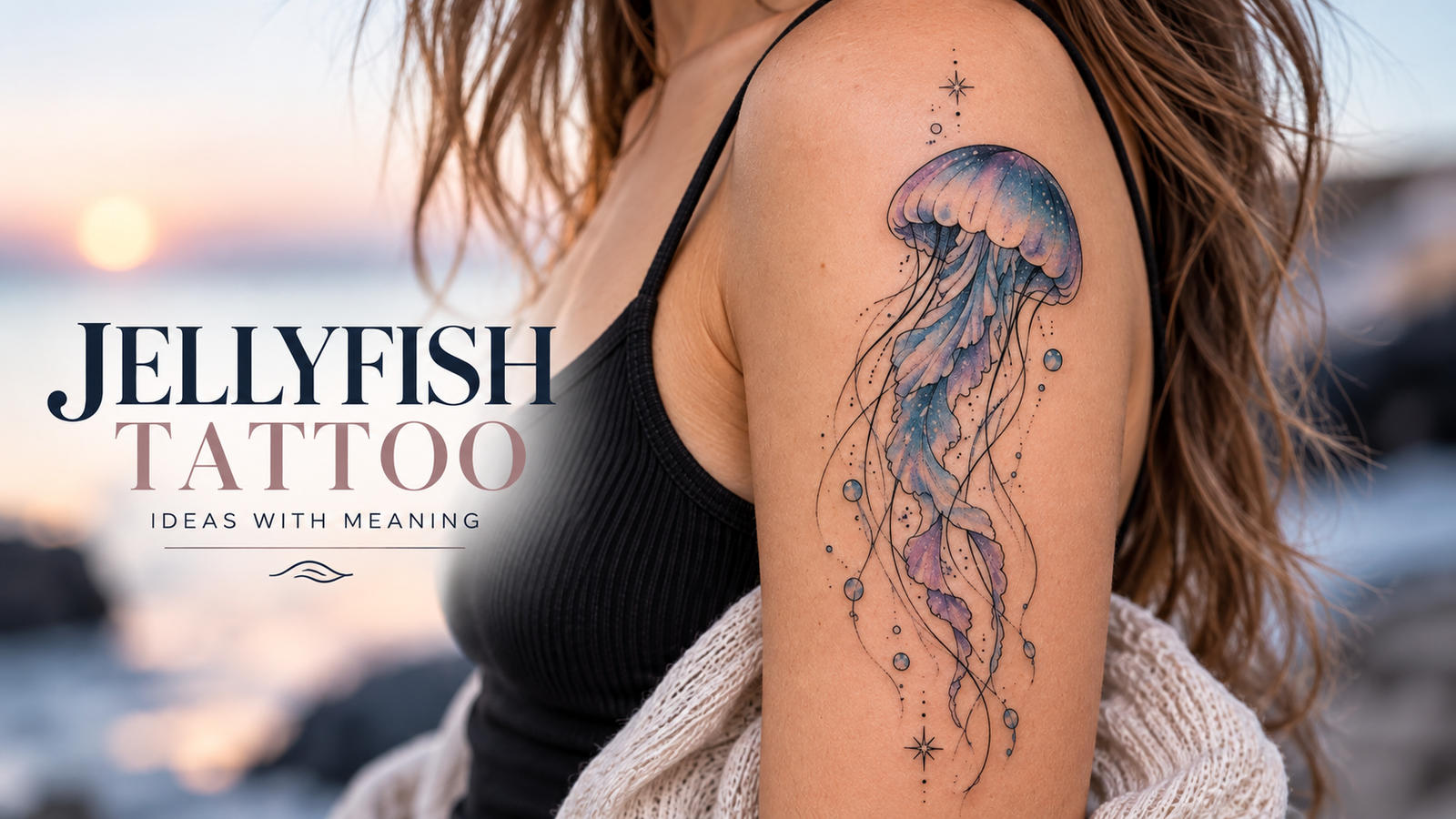
15 Stunning Jellyfish Tattoo Ideas for Meaning, Style, and Placement
Jellyfish tattoos might be the most beautiful designs in body art right now. Their flowing tentacles and glowing, translucent bodies lend themselves to everything from delicate fine-line work to bold, colorful watercolor pieces.
But there’s more to them than looks. A jellyfish carries rich symbolism: grace, resilience, and the quiet power of going with the flow instead of fighting every current. It has survived on this planet for over 500 million years without a brain, a heart, or bones, which says something about adapting and enduring.
That mix of beauty and meaning is exactly why so many people are drawn to them.
In this post, you’ll find 15 stunning jellyfish tattoo ideas, plus what different designs mean, which styles work best, where to place them, and how to pick the right one for you. Let’s start with the designs themselves.
Why Jellyfish Tattoos Are So Popular Right Now
Scroll through any tattoo hashtag on Instagram or TikTok and you’ll spot them: glowing jellyfish drifting down spines, wrapping around forearms, and blooming across shoulders in watercolor pinks and blues. Jellyfish designs have exploded on social media over the past few years, and it’s easy to see why. They photograph beautifully, they move with the body in a way few designs can, and they carry meaning without shouting about it.
Built to Flow With the Body
A jellyfish tattoo isn’t a flat image sitting on your skin. The bell sits wherever you place it, and the tentacles trail along your natural curves and lines. On a forearm, they follow the muscle. Down the spine, they stretch and elongate. That makes every piece look a little custom, even when two people pick similar designs.
A Design That Fits Almost Any Style
Part of the appeal is versatility. The same jellyfish concept works across wildly different aesthetics:
- Fine line for something delicate and minimal
- Watercolor for that translucent, glowing look
- Traditional with bold outlines and saturated color
- Blackwork or geometric for a darker, modern edge
Few subjects bend that easily. A rose or a skull has conventions; a jellyfish is whatever you make it.
The Meaning Behind the Trend
There’s also a deeper pull. Jellyfish have drifted through the oceans for over 500 million years, surviving without a brain, heart, or bones. People connect with that. In a culture that often glorifies hustle and control, a creature that succeeds by going with the current feels like a quiet statement of its own. Adaptability, calm, and resilience all ride along under the surface, which makes the design feel personal long after the trend fades.
What a Jellyfish Tattoo Really Means
A jellyfish looks fragile, yet it has outlasted almost everything else in the ocean. That contrast is the heart of its symbolism, and it’s why the meaning shifts depending on who’s wearing it.
Grace, Flow, and Letting Go
A jellyfish has no muscles for fighting the tide. It moves by pulsing gently and trusting the water around it, which makes it a natural symbol for acceptance and trust in the process. People choose this meaning when they’re tired of white-knuckling life. Someone recovering from a controlling relationship, leaving a career that never fit, or learning to parent without a script might see their own story in a creature that drifts instead of gripping. A jellyfish tattoo can be a daily reminder that surrender is sometimes a strategy, not a defeat. If your personal story involves control, healing, and money stress after a big life change, rebuilding financial confidence step by step often runs on the same principle: stop thrashing, start moving with the current.
Resilience, Survival, and Quiet Strength
Here’s the part that surprises most people: jellyfish have survived for over 500 million years, longer than dinosaurs, trees, or sharks, all without a brain, heart, or bones. Softness won. Anything rigid got crushed or fossilized; the jellyfish simply bent and kept drifting. That’s why the design resonates with people walking through grief, chronic illness, addiction recovery, or any season where simply continuing feels like the whole job. The tattoo says I am still here, without needing to explain the storm. It’s a badge for survivors who never got a trophy. Pairing the jellyfish with waves, a moon, or anchors in the deep can sharpen that story, and later sections cover exactly which design combinations do it justice.
Best Jellyfish Tattoo Ideas and Design Styles
The beauty of jellyfish tattoo ideas is that the same subject works in almost every style. The design you pick changes the entire mood of the piece, from dreamy and ethereal to bold and graphic. Here are the five styles that suit jellyfish best, plus what each one actually looks like on skin.
Realistic and Bioluminescent Jellyfish Tattoos
Realistic jellyfish tattoos aim to capture the animal exactly as it looks underwater: translucent bell, fine trailing tentacles, and that soft glow from within. Artists build the effect through layered color blending, usually deep blues and purples fading into pale pinks or whites. The best pieces use white ink highlights to fake light passing through the body, so the jellyfish looks like it’s lit from the inside.
Bioluminescent versions push this further. Think neon teals, electric blues, and glowing edges against a dark background, like something you’d see on a night dive. These designs need a large canvas, usually a forearm, thigh, or full shoulder, because the shading takes space to breathe.
Fine Line and Minimalist Jellyfish Designs
On the other end of the spectrum, fine line work strips the jellyfish down to its essentials. A single-needle artist draws the bell as a few curved strokes and lets thin tentacles trail off in delicate lines. The result looks almost like a pen sketch.
These small designs shine in tight spots: the inner wrist, ankle, behind the ear, or along the collarbone. They heal fast, hurt less, and stay subtle at work. If this is your first tattoo, a minimal jellyfish is a smart starting point, since it’s easy to expand later if you catch the tattoo bug.
Watercolor Jellyfish Tattoos
Watercolor jellyfish tattoos are the showstoppers of the bunch. The artist splashes purple, blue, pink, and teal pigment around the body so the ink looks like it’s dissolving in water, no hard outlines needed. Tentacles often fade into loose color streaks, which gives the piece a dreamlike, unfinished-in-a-good-way quality.
One honest caveat: this style lives and dies by the artist. Look for someone with a strong watercolor portfolio, because sloppy color placement turns muddy over time. Watercolor pigment also fades faster than solid black linework, so expect a touch-up every few years to keep it bright.
Geometric and Dotwork Jellyfish Tattoos
If you want something more structured, geometric jellyfish designs rebuild the animal from clean lines, triangles, and mandala-style patterns in the bell. Dotwork shading adds depth through thousands of tiny stippled dots instead of smooth gradients, creating a soft, almost ancient texture.
The contrast works beautifully: a rigid, patterned bell with flowing tentacles beneath it. These pieces suit people who want a modern, symmetrical look, and they age well because dotwork and linework hold their shape for decades.
Traditional, Blackwork, and Surreal Jellyfish Tattoos
American traditional jellyfish swap realism for punch. Bold black outlines, saturated reds and greens, and a simplified bell make these designs read clearly from across the room, and they age remarkably well.
Blackwork goes darker and heavier, using solid black shapes and dense pattern work for a striking, almost graphic look. Then there’s the surreal route, which is where jellyfish get weird in the best way. Artists blend them with galaxies, melting clocks, or blooming flowers, so tentacles dissolve into starlight or petals. If you want a design nobody else at the shop will have, this is the lane to explore.
Where to Place a Jellyfish Tattoo (and Why It Matters)
Placement can make or break a jellyfish tattoo. Unlike a star or a word, this design has moving parts: a bell up top and tentacles that need room to trail. Squeeze it into the wrong spot and the flow disappears. Pick the right one and the design moves with your body like it belongs there.
Large, Flowing Placements
Big, detailed pieces need space, and a few areas deliver it consistently.
- Forearm: The classic choice. The bell sits near the elbow or wrist while tentacles wrap with your muscle line. Highly visible, moderate pain, and it ages beautifully.
- Thigh: Plenty of room for bioluminescent or watercolor work with full tentacle trails. Low pain since the muscle pads the bone, though it’s easy to keep private.
- Back or spine: A jellyfish drifting down the spine looks elongated and elegant. Pain is mild along the shoulder blades but sharper over the spine itself.
- Ribs: Great for a vertical design that follows your torso’s curve. Fair warning, rib tattoos rank high on the pain scale because the skin sits right over bone.
Small, Minimal Placements
Fine line and minimalist jellyfish shine in compact spots where a simple design still reads clearly.
- Ankle: A tiny bell with two or three trailing lines works well here. Bony, so expect a sharp sting.
- Wrist: Visible daily and quick to heal. Moderate pain over the tendons.
- Behind the ear or collarbone: Delicate and easy to hide, but these spots are sensitive.
The rule of thumb: match the canvas to the detail. A realistic piece with white ink highlights collapses into mush on a wrist, while a single-needle jellyfish gets lost on a thigh. Tell your artist what you love about the design first, then let them suggest the spot that protects it. If you’re planning your first tattoo and budgeting for it, our guide to affording your first tattoo covers the money side so you can focus on the design.
How to Choose the Right Jellyfish Design for You
With 15 styles and placements on the table, the choice can feel overwhelming. The trick is to work backwards from your own life. A jellyfish design should match both the story you want it to tell and the way you actually live day to day.
Matching the Style to Your Personality and Story
Start with a simple question: what does the jellyfish represent for you? If it’s a quiet reminder to let go of control, a minimalist fine line piece on your wrist says that softly, and subtle people usually prefer designs that whisper rather than announce. If the jellyfish marks a creative chapter or a love of the ocean’s dreamier side, watercolor fits that energy. For survival stories and hard-won resilience, blackwork or geometric designs make a bold, unmissable statement. Write down one sentence about what the tattoo means to you, then bring it to your artist. That sentence will steer every decision that follows.
Color Choices and What They Change About the Design
Color is where a jellyfish either glows or grounds itself. Black and gray versions age the best and suit darker, moodier designs; full color captures the bioluminescent look people fall in love with. Popular palettes lean toward purple and blue for that deep-sea glow, teal for a tropical feel, and pink or orange for a warmer, sunset tone.
Deeper skin tones carry saturated purples, teals, and oranges better than pale pastels, which can wash out. On fair skin, cool blues and violets pop. One more thing to know: all bright pigment softens over the years, so watercolor-heavy pieces need touch-ups while black and gray holds steady.
Picking an Artist and Preparing for Your Session
Choose an artist whose portfolio shows the exact style you want, not just any jellyfish work. A realism specialist and a fine line artist produce completely different results from the same reference photo. Check their healed tattoo photos too, since fresh ink always looks better than healed work.
Before your consultation, bring a few reference images, your meaning sentence, and questions about placement. Reputable studios follow strict hygiene standards, so don’t hesitate to ask about their sterilization practices; you can review the CDC’s tattoo safety recommendations beforehand so you know what to expect.
Aftercare is simple but matters. Wash gently, moisturize with unscented lotion, and stay out of pools and direct sun for a few weeks. Keep it protected from UV long-term, and your jellyfish will keep drifting beautifully for decades.
Conclusion
A jellyfish tattoo works because it can be almost anything you need it to be: a soft reminder to let go, a quiet badge of survival, or a showpiece of glowing color across your forearm or spine. Few designs carry this much meaning while still fitting so many styles, from single-needle minimalism to full watercolor.
The two decisions that matter most are personal meaning and artist choice. Know what story your jellyfish tells before you sit in the chair, then find an artist whose healed work proves they can render it well.
So, which jellyfish speaks to you? Is it the drifting minimalist, the bioluminescent showstopper, or something surreal nobody else will have? Start collecting reference images and bring your meaning sentence to a consultation. The ocean has been making this design perfect for 500 million years; all you have to do is claim your version of it.
Save pin for later


- Skull Tattoo Designs for Men That Stay Bold Over Time - September 25, 2026
- 30 Tips to Find Your Perfect Tattoo Style and Artist - September 25, 2026
- Saniderm Healing: Wear Time, Fluid, and Aftercare - September 25, 2026
Leave a Reply