10 Manly Sun Tattoo Ideas for Men: Designs, Placement, and Cost
A sun tattoo is one of the few designs that works on nearly every man. Across cultures, the sun stands for power, life, and rebirth, which is why warriors, sailors, and kings have worn it for centuries. It’s also a design with clean geometry that holds its shape whether it’s the size of a coin or covering your whole shoulder.
Lately, sun tattoos for men have surged in popularity for exactly that reason: bold symbolism without fuss. You can go tribal, geometric, or minimalist and still end up with something that reads as masculine.
Below, you’ll find the meaning behind the sun, more than 10 design ideas worth stealing, the best placement spots, how size and style change the final look, and what you should expect to pay.
What a Sun Tattoo Really Means for Men
The sun is the most direct power symbol you can put on your body. It gives life to everything on the planet, it never begs for attention, and it rises again no matter how bad yesterday was. For a lot of men, that’s the appeal: a sun tattoo says you provide, you endure, and you rebuild. It’s a quieter flex than a skull or a dragon, but it hits harder the longer you sit with it.
Power, Rebirth, and Masculine Energy
In modern tattoo culture, the sun carries three ideas at once. Strength, because it’s the center of everything and nothing outranks it. Renewal, because it dies into darkness every night and comes back anyway. And leadership, because ancient rulers borrowed the sun’s image to say “I’m the one things revolve around.” Put those together and you get a design that suits a guy building something, recovering from something, or simply refusing to stay down.
Sun Symbols Across Ancient Cultures
The meaning isn’t modern; nearly every civilization claimed the sun as theirs. The Egyptians worshipped Ra, the sun god who sailed the sky and ruled the afterlife. Norse myths gave the sun a feminine role, yet warriors still wore sun runes for victory. In Japan, the sun goddess Amaterasu is tied directly to the imperial family, which is why the rising sun still carries weight there. Aztec warriors honored Tonatiuh, the fierce sun deity who demanded sacrifice. Polynesian sailors used sun motifs in tribal tattoos to mark navigation and status.
Those traditions map straight onto today’s popular styles: Egyptian and Japanese sun imagery works in blackwork and neotraditional pieces, while Polynesian patterns drive most tribal sun designs. Pick the lineage that matches your own story and the meaning sharpens.
10 Manly Sun Tattoo Ideas That Look Sharp
The best sun tattoo ideas for men fall into three camps: heavy and cultural, clean and quiet, or big and cinematic. Each style changes the vibe completely, so pick the one that matches how you want the design to read from across a room.
Bold Designs: Tribal, Aztec, and Japanese Suns
The tribal sun is the classic masculine take. It swaps realistic detail for thick black lines and Polynesian patterns, with tapered rays that wrap around the muscle of your shoulder or chest. Because the ink is solid blackwork, it ages well and stays visible from across a room. This one suits guys who want heritage and strength in one design, especially if you have ties to Pacific island ancestry.
The Aztec sun stone goes even heavier on history. Based on Tonatiuh, the Aztec sun god, it packs a fierce central face, carved rays, and concentric rings of glyphs into a circular frame. It’s dense, detailed, and demands a decent amount of skin, so it shines on the upper arm, calf, or back. Men with Mexican heritage often choose it as a badge of warrior lineage.
Then there’s the Japanese irezumi sun, usually built into a larger piece with waves, koi, or a dragon coiling around it. The sun itself is often a simple solid red or black circle, but the surrounding elements give it drama. Hikae-style placements, meaning the chest and upper arm, let the composition flow with your body. If you want a full sleeve eventually, this is the smart starting point.
Clean and Minimal: Geometric and Rising Sun Ideas
Not every man wants a sleeve. The rising sun with rays keeps things simple: a half circle breaking over a horizon line with long, even rays. On a forearm or wrist, it reads as quiet optimism and fresh starts, and it pairs well with a compass if you want the “find my way” message.
The minimalist geometric sun is a single outline or dotwork circle with clean triangular rays. Fine lines mean less pain and faster healing, and the design stays sharp for decades if you keep it small. This suits first-timers and guys in conservative workplaces who need something coverable.
Both of these styles cost less too, since a small piece might take 20 minutes. If you’re browsing tattoo ideas for men before committing to something larger, start here and see how the design wears on you.
Statement Pieces: Sun and Moon, Lions, and Realistic Suns
Some designs demand attention. The sun and moon pairing is the most popular: one circle radiating light, the other dark and cratered, often touching. It’s about balance, opposites, and duality, and it looks sharp as a blackwork half-sleeve.
Animal pairings crank up the aggression. A lion with a sun behind its mane plays on the “king” symbolism, while an eagle rising toward the sun signals freedom and ambition. Both suit chest or shoulder placements where the animal has room to move.
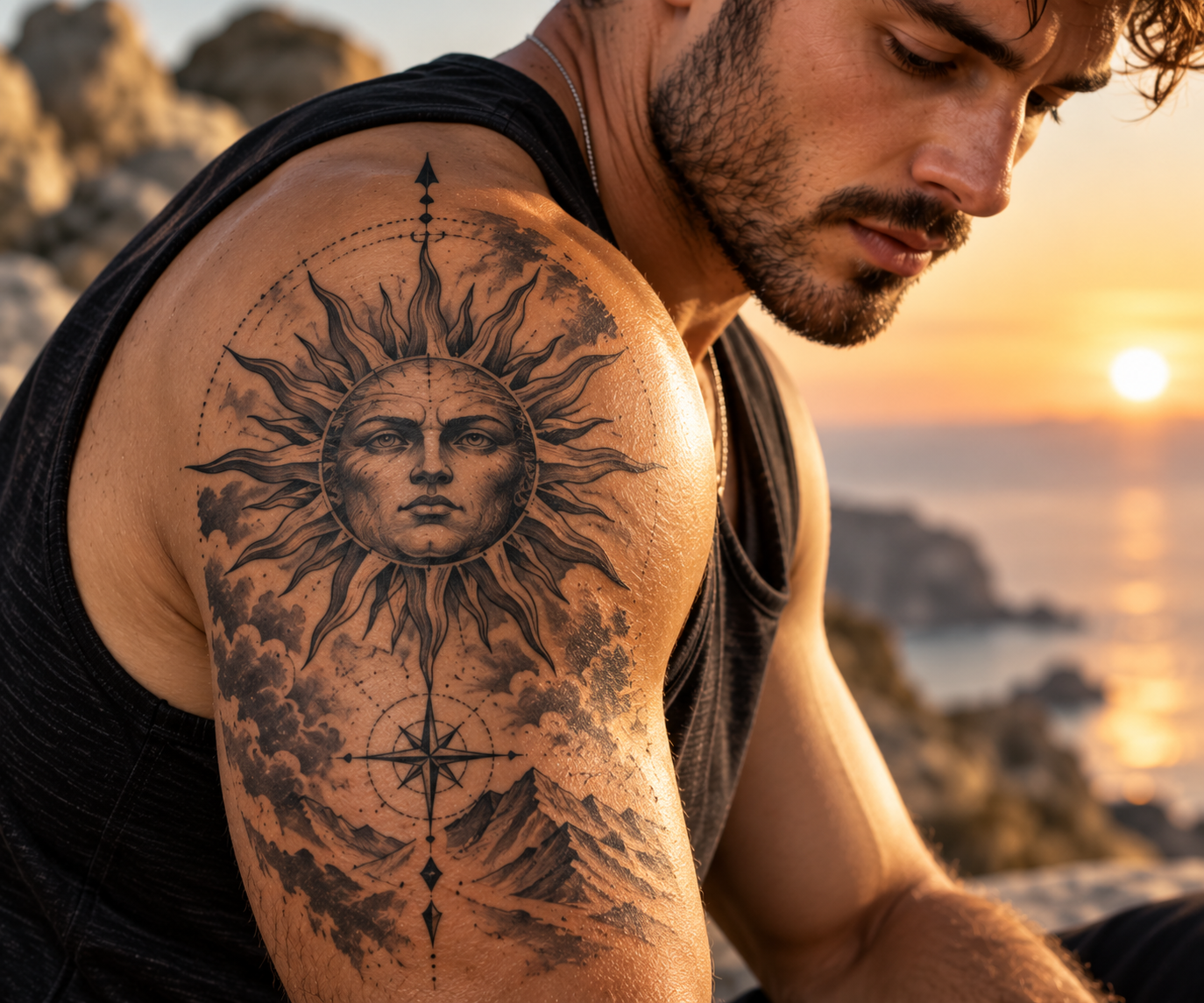
For pure craftsmanship, the black and grey realistic sun renders the surface with shading and texture like a photograph. Finally, the warrior holding the sun is the boldest of all: a mythic figure lifting the sun overhead, symbolizing responsibility and endurance. It takes multiple sessions, but nothing else tells a story that big.
Best Placement for a Sun Tattoo
Placement makes or breaks a sun tattoo. The design is circular and radiating, so it needs room to breathe; cram a detailed sun onto a skinny wrist and the rays blur together within a few years. Placement also decides how much the session hurts, because areas with thin skin or bone underneath sting far more than meaty muscle. Before you commit, think about two things: how big the design needs to be, and who you want to see it.
Chest, Shoulder, and Back for Big Sun Designs
Large, flat canvases are where detailed sun tattoos earn their keep. Your chest, shoulder cap, and upper back give an artist space to render every ray, glyph, or tribal pattern without shrinking the details into mush. Flat muscle also holds line work better over time, since these areas don’t stretch or wrinkle as fast as joints do.
The chest is the power move of the three. A sun centered over the heart reads as bold and deliberate, and it sits close to the classic hikae placement used in Japanese body suits. Expect the pain to climb near the collarbone and sternum, where skin sits thin over bone. The shoulder hurts less, and a round sun following the deltoid’s curve looks like it was designed for that spot. The back is the least painful of the three and fits a rising sun with rays spreading wide across the shoulder blades.
Forearm, Wrist, and Neck for Visible Ink
Smaller suns shine in high-visibility spots. The outer forearm is the sweet spot: enough room for a medium design, moderate pain, and easy covering with a long sleeve when work demands it. A rising sun with rays that wrap partway around the arm adds dimension as you move.
The wrist suits minimalist circles and thin-line suns, though the pain runs sharper there because tendons sit close to the surface. The neck is the boldest visible choice, and it hurts. Keep one rule in mind: if your workplace leans conservative, placements you can hide under a shirt will save you headaches, and a small tattoo placement guide can help you weigh visibility against flexibility before the needle starts.
How to Pick the Right Style, Size, and Artist
A great sun tattoo comes down to three decisions made before the needle touches skin: the style, the size, and the person holding the machine. Get these right and the design will look sharp for decades. Rush them, and even the coolest concept turns into regret.
Black and Grey vs. Color Sun Tattoos
Blackwork is the safer bet for most men. Solid black holds its density for years, reads as bold from a distance, and hides healing inconsistencies better than any color palette. It also pairs naturally with tribal, Aztec, and geometric suns, where contrast does the heavy lifting. Color, on the other hand, pops harder on day one. A red Japanese sun or a golden realistic piece turns heads in a way grey ink can’t. The tradeoff is maintenance: colored ink fades faster, especially on sun-exposed spots like forearms, so expect touch-ups every few years. If you want toughness and longevity, go black and grey. If you want drama and don’t mind upkeep, color earns its keep.
Matching the Design to Your Story
A sun with personal weight beats a sun copied off a Pinterest board every time. Before settling on a design, ask yourself a few questions:
- Does a specific sunrise mark something in your life, like a deployment morning or the day your kid was born?
- Do you have heritage ties to Aztec, Polynesian, or Japanese sun imagery?
- Did athletics or military service shape you? A rising sun over a horizon fits both.
- Are you marking a rebuild, like sobriety or recovery from a low point?
Write your answers down and bring them to your artist. A custom design built from your story will always outshine a flash sheet pick.
Finding an Artist Who Nails Bold Designs
Not every artist handles heavy blackwork well. Scroll portfolios and look specifically for bold, saturated pieces with clean healed photos, not just fresh ones. Artists who specialize in tribal or Japanese work are your best bet for sun designs with strong line weight. Before booking, ask two things: whether they’ll show you a stencil preview on skin before tattooing, and how they approach ink saturation on large black areas. A confident answer to both is a green flag. If you’re still weighing designs, browsing different sun tattoo styles for men alongside portfolio work helps you narrow the shortlist faster.
What a Sun Tattoo Costs and How to Care for It
Budget matters as much as design. A sun tattoo’s price depends on size, detail, and your artist’s hourly rate, which in 2026 typically runs $100 to $300 per hour in most US cities. Here’s what to expect at each tier.
Realistic Pricing in 2026
- Small and minimal (under 3 inches): A simple geometric or rising sun takes 20 to 45 minutes and costs $100 to $300, often at a shop minimum.
- Medium designs (3 to 6 inches): Tribal, Aztec, or sun-and-moon pieces with real detail run $300 to $800 in a single session.
- Large custom work: Chest pieces, half-sleeves, or realistic black-and-grey suns start at $1,000 and can climb to $3,000 or more across multiple sessions.
Custom work costs more than flash because the artist spends unpaid hours drawing your design. Big cities like New York or Los Angeles push every price band 20 to 40 percent higher. Tip well too; 20 percent is standard.
Aftercare Basics That Protect Your Ink
The first two weeks decide how your tattoo looks for the next twenty. Follow your artist’s instructions, but the core routine stays the same. Wash gently with fragrance-free soap two or three times a day, pat it dry with a clean paper towel, and apply a thin layer of unscented moisturizer like Aquaphor. Skip gym sessions for a few days, don’t soak it in baths or pools, and never pick the flaking skin.
Here’s the irony worth a laugh: the design that symbolizes the sun needs to be kept out of the sun. UV light fades fresh ink fast, so cover it with clothing for the first month. Once it’s fully healed, sunscreen becomes your tattoo’s best friend. Healed ink exposed to regular sun without SPF 30 or higher will blur and dull within a few years, especially colored pieces.
A fresh tattoo is an open wound, so treat it like one. Redness that spreads, pus, or fever means a trip to a doctor, not more ointment.
The Bottom Line on Cost and Care
Set a realistic budget before you walk in, then protect the investment. A $400 sun tattoo that heals poorly is money burned, while a $150 minimalist piece cared for properly stays sharp for decades. Wash it, moisturize it, and shield it from the very thing it depicts, and your ink will outlast the trends that made you want it.
Conclusion
A sun tattoo carries some of the oldest masculine symbolism there is: strength, renewal, and quiet authority. Whether you go heavy with a tribal or Aztec piece, dramatic with a realistic sun and moon half-sleeve, or clean with a minimalist geometric design, there’s a version of this tattoo that fits your style and your story.
The design matters, but so do the decisions around it. Match the placement to the size, choose black and grey if you want longevity, and find an artist whose portfolio proves they can handle bold work. Budget honestly, follow the aftercare, and the ink will hold up for decades.
Now it’s your turn. Pick a design from the list above, find an artist who specializes in that style, and book a consultation. Bring your story, ask for a stencil preview, and get the sun tattoo you’ll still be proud of twenty years from now.
Save pin for later

- How to Design Your Own Tattoo Without Regret: A Step-by-Step Guide - September 23, 2026
- 20 Daisy Tattoo Design Ideas With Meanings, Placements, and Style Tips - September 23, 2026
- 20 First Tattoo Ideas for Women: Beginner-Friendly Designs You’ll Still Love in 10 Years - September 23, 2026
Leave a Reply