
Dangerous-Looking Tattoo Inspiration for Women
Fierce, mysterious, or rebellious tattoos can make a bold statement, but their meaning is yours to choose. A coiling snake, a sharp dagger, or dark floral art can feel dangerous without telling anyone else how to read it.
Explore ideas for style, placement, and planning so you can shape a design that fits your taste and feels right on your body. For more tattoo inspiration and body art ideas, browse the motifs ahead, starting with rose-and-dagger tattoo designs.
Dangerous Looking Tattoo Inspiration for Women: Designs with an Edge
Dark tattoo designs can feel fierce through shape, contrast, and placement, without needing graphic detail. Snakes, daggers, skulls, spiders, and shadowy flowers give you plenty to work with. Their meanings vary by culture and wearer, so treat common symbolism as inspiration, not a fixed definition.
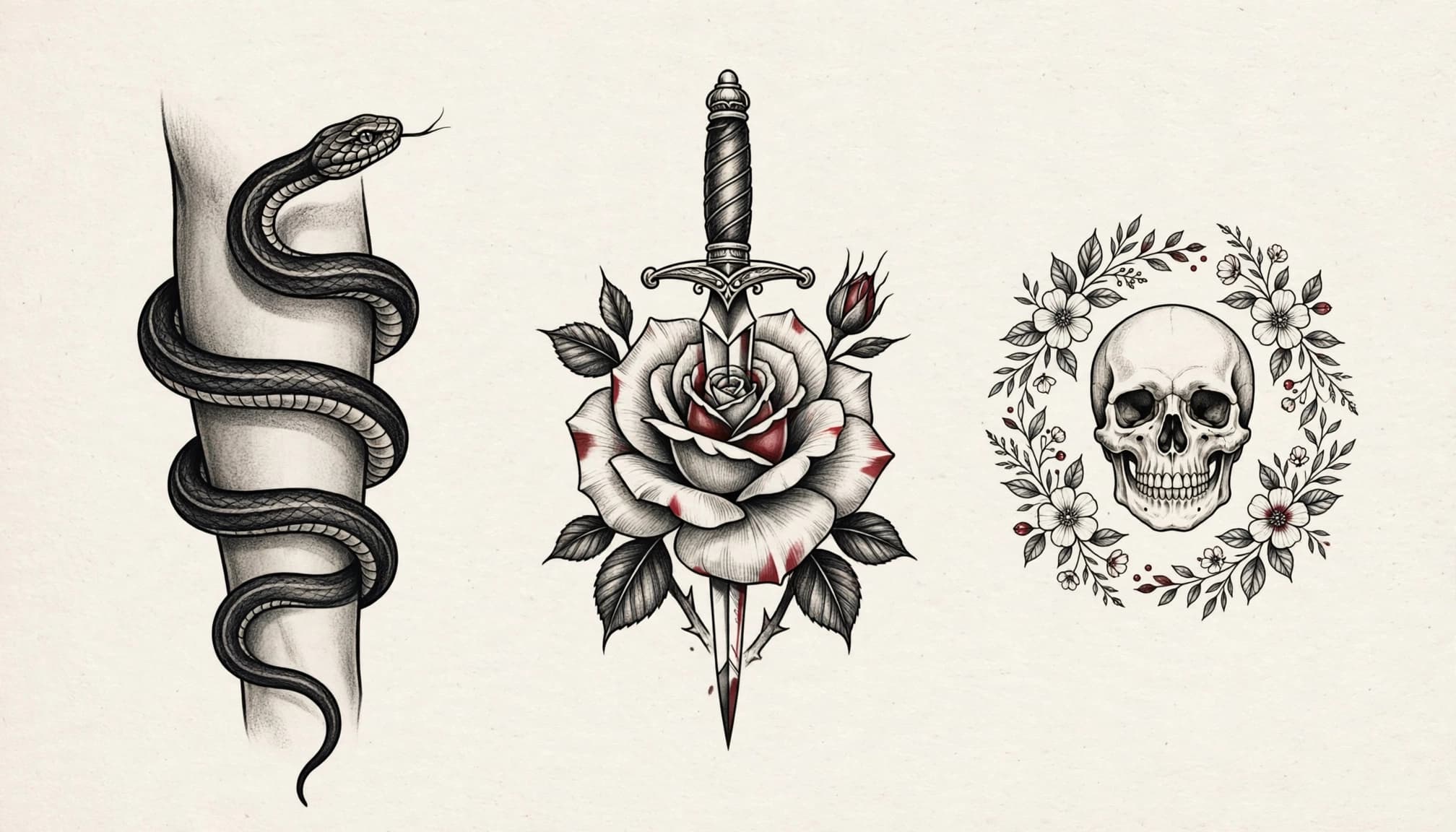
Snakes, daggers, and skulls make classic dark motifs
A snake coiled around the forearm can follow the arm’s shape, with its scales and tapered tail creating movement. Depending on its cultural context and your own story, a snake may suggest transformation, healing, danger, or protection. A dagger through a rose adds a sharp visual contrast, while a small skull framed by flowers can balance mortality with beauty or remembrance.
These images don’t come with one universal meaning. Tattoos have carried different roles across cultures, including decoration, group identity, and protection, as Britannica’s tattoo history overview explains. Choose an interpretation that fits your life, or let the design be purely aesthetic.
Spiders, thorns, and dark florals add a more eerie mood
A spider and web can curve around an elbow or shoulder, using the body’s contours to shape the web. However, spider-web tattoos can carry specific associations in some subcultures and settings, so research the design before choosing that placement. A thorny vine wrapping the upper arm or ankle offers a less literal alternative, with fine lines that can look delicate from a distance and sharp up close.
For a gothic mood, try black roses, drooping petals, or flowers paired with thorns and small blades. Dark florals feel dramatic without relying on weapons or gore. You can also keep the palette mostly black and gray, then use a restrained accent color to draw attention to one detail.
Combine symbols to make the design feel personal
Pairing motifs lets you shape the story instead of relying on a symbol alone. A snake winding through a flower can place renewal beside vulnerability; a dagger paired with your birth flower can connect a classic dark image to a personal date or memory. A skull with a favorite bloom may feel commemorative rather than threatening.
Keep the main image easy to recognize, especially if the tattoo will be small. Too many fine details can blur together over time, so prioritize a clear outline and leave some open skin around the design. Before booking, ask your artist to adapt the composition to your chosen placement and scale.
Choose a tattoo style that sets the right kind of danger
The same snake, dagger, or thorned rose can feel sleek, ominous, romantic, or ferocious depending on its line weight, contrast, and ornament. Choose a style based on the mood you want, then work with your tattoo artist to keep the main shapes clear at your intended size.
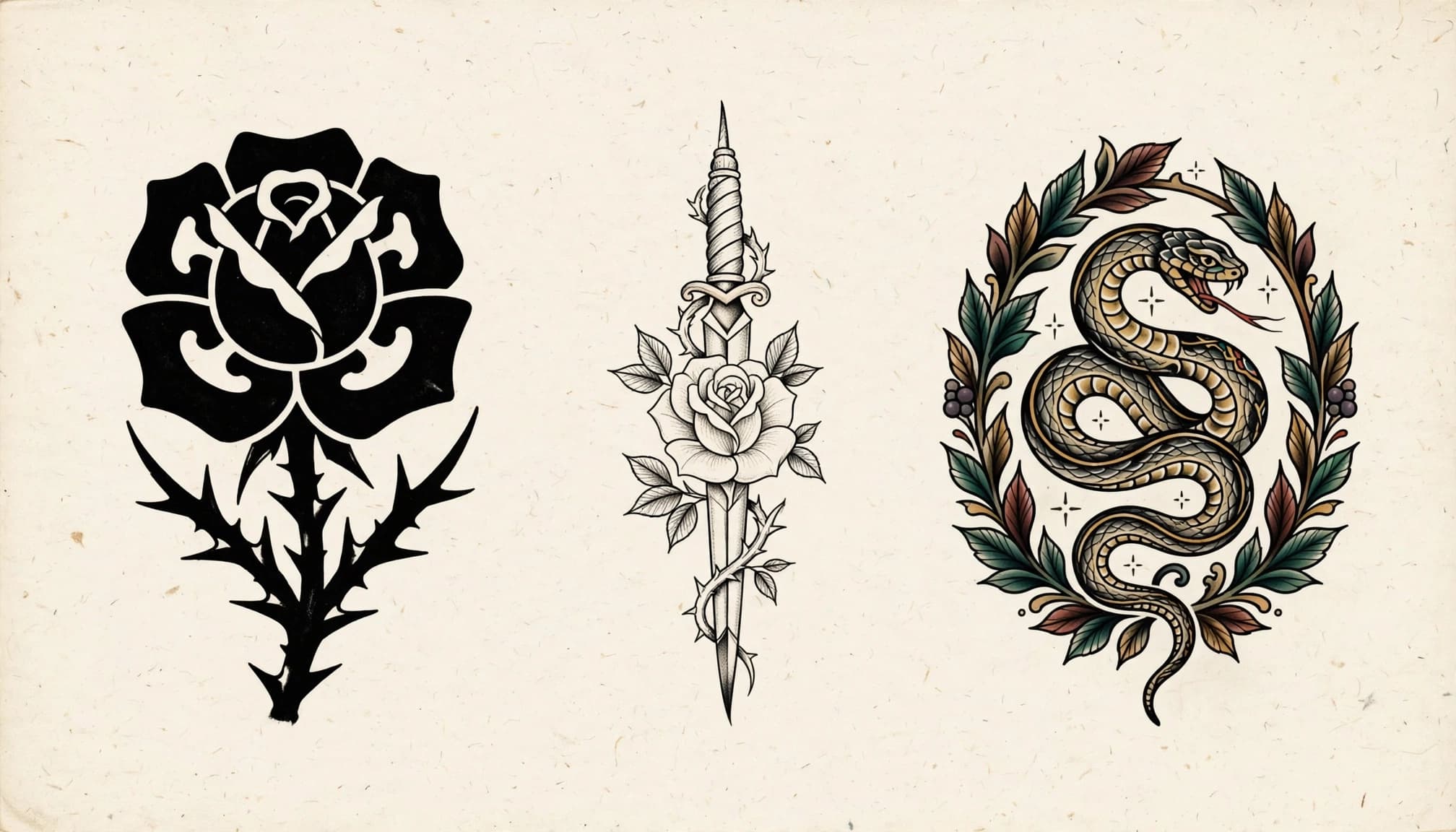
Blackwork creates a bold, graphic statement
Blackwork uses solid black areas, strong outlines, and uninked skin to build contrast. A black rose can look severe with dark, filled petals, while deliberate gaps create the shape of a thorn or the curve of a stem. That open skin, called negative space, keeps a design from reading as one dense patch.
For a dangerous motif, favor a few large, readable shapes over tightly packed details. A dagger with a crisp silhouette may hold its form better than one covered in tiny engravings, especially as the tattoo ages. Fine details can soften, so ask your artist to leave enough space between lines and make the key features easy to recognize. You can also review how fine-line tattoos may change over time before settling on a small, highly detailed design.
Fine-line and neo-traditional designs balance edge with detail
Fine-line work gives a motif a lighter, more delicate feel. Thin contours and restrained shading can make a small snake look elegant or a dagger feel almost like an illustration. However, crowded details may blur together over time, so this style benefits from a simple composition and breathing room.
Neo-traditional takes a bolder route. It pairs strong outlines with richer color, varied line weights, and decorative details, giving a skull or serpent a vintage, tattoo-flash feel. Those heavy contours can make the image more intense, while muted colors and softer shading temper the mood. If you want danger with a polished, decorative finish, this style offers more visual weight than fine-line work.
Gothic and ornamental details can soften or sharpen the mood
Filigree, lace-like patterns, crescent shapes, and decorative framing can turn a dark motif into something romantic and mysterious. For example, a dagger surrounded by curling ornament feels more ceremonial than aggressive; a crescent moon tucked behind a black rose adds a quiet, gothic note.
To make the same image more severe, use sharper angles, darker shading, and less delicate framing. A thorned vine with pointed leaves feels harsher than one with looping, lace-like stems. Keep the ornament secondary to the main motif, though. When the central image stays clear, small decorative touches add atmosphere without competing for attention.
Find a placement that fits the design and your comfort level
The best tattoo placement depends on the design, its size, how your body moves, and how visible you want it to be in daily life. A bold image needs room to stay readable, while a small, exposed tattoo may call for extra thought about work, clothing, and long-term upkeep. Use placement as part of the design, not as an afterthought.
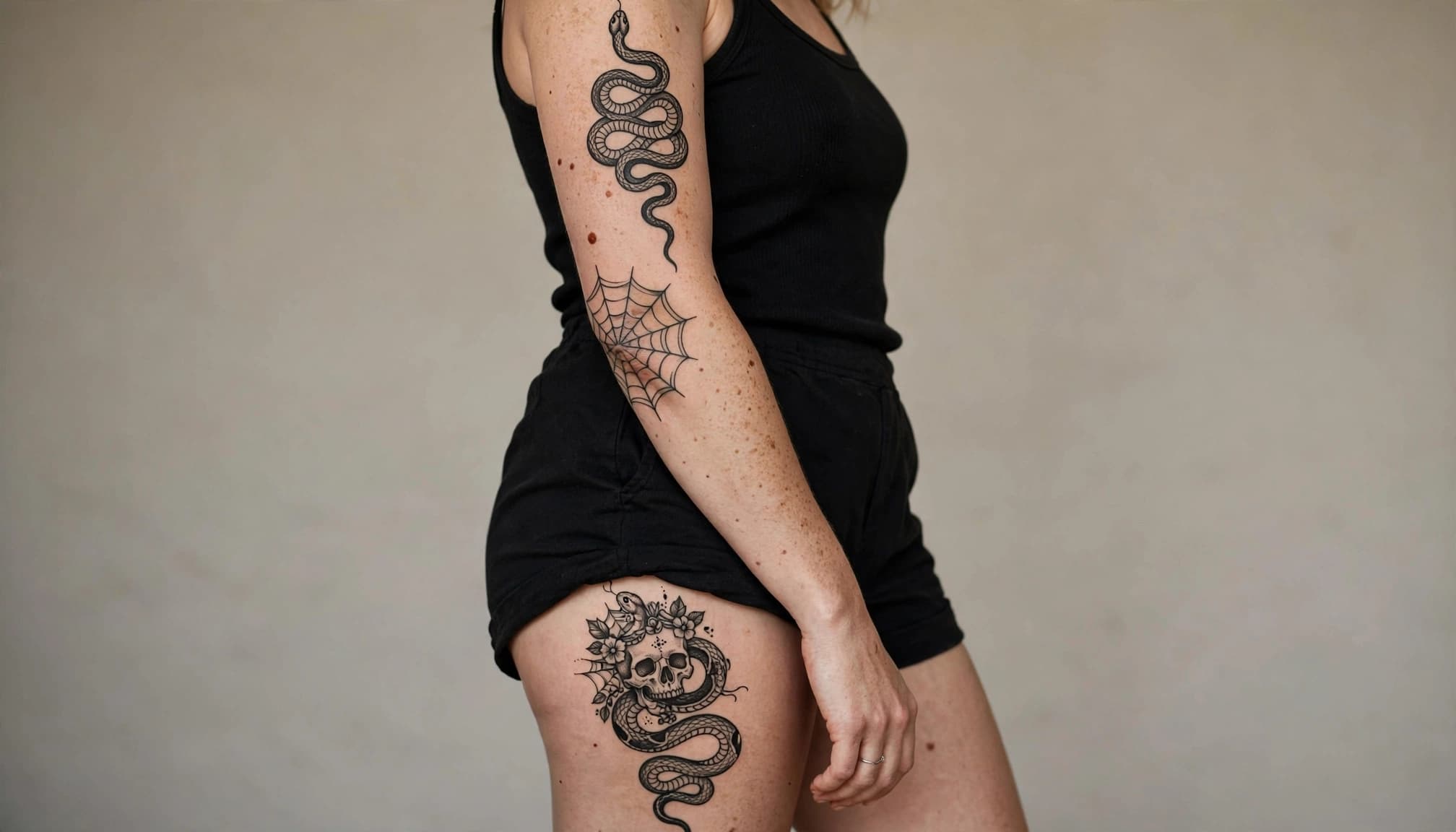
Use arms, legs, and back for designs that need room
Forearms and outer upper arms suit visible designs with clear outlines, such as a dagger, thorned flower, or medium-length snake. You can show the tattoo with short sleeves, or cover it more easily than a hand or neck piece.
For larger snakes, skulls, or layered compositions, consider the thigh, calf, ribs, or back. These areas offer more space for details and contrast, helping the main shapes remain distinct instead of crowding together. Your artist can also adjust the scale to work with the area’s width and contours. For more factors to weigh, see this tattoo placement guide.
Think carefully before choosing hands, neck, or other highly visible spots
Hands, fingers, and the neck are difficult to conceal, so consider how often you want your tattoo in view. A visible placement may affect your comfort at work or in social settings, even if you love the design. Clothing, dress codes, and your own preference for privacy all matter.
Movement and friction matter too. Fingers and joints bend often, and small areas can be challenging places for dense detail. Hands and fingers also get frequent washing and sun exposure, which can contribute to fading. Before choosing one of these spots, ask an experienced artist how the design may age and whether touch-ups are likely.
Match the shape of the tattoo to the body’s natural lines
A coiled snake can follow the length of an arm or leg, with its curves drawing the eye along the limb. A spider web can spread around an elbow or shoulder, using the joint as part of the composition. These placements can make a familiar motif feel designed for your body rather than simply placed on it.
Bring reference images to your appointment, but treat them as a starting point. A design that fits someone else’s proportions may need changes in scale, angle, or detail to suit yours. Ask your artist to position a stencil and check it while you stand and move naturally. That way, you can judge how the tattoo looks in motion as well as at rest.
Make a dangerous-looking tattoo feel like your own
A fierce tattoo feels more personal when its details come from your taste, memories, or sense of style. Before settling on a snake, dagger, skull, or dark flower, decide what you want the image to communicate, then shape its symbols, scale, and visual focus around that idea.
Decide what the tattoo should say before choosing the details
Ask yourself whether you want the design to suggest strength, change, protection, or grief. You might also love the dark aesthetic without attaching a personal story to it. Meaning is optional, and no symbol has one universal interpretation.
Once you know the mood, choose details that make the motif yours. A snake might curl around a meaningful flower, while a dagger could include an ornamental handle inspired by jewelry you wear. A small personal reference can carry more weight than several symbols crowded into one design.
Build a clear reference board and collaborate with an artist
Collect images that show the mood, line weight, placement, and color you like. You might save a bold silhouette, a particular shading style, and an example of how a design follows an arm or leg. Then explain what appeals to you rather than asking an artist to copy a tattoo exactly.
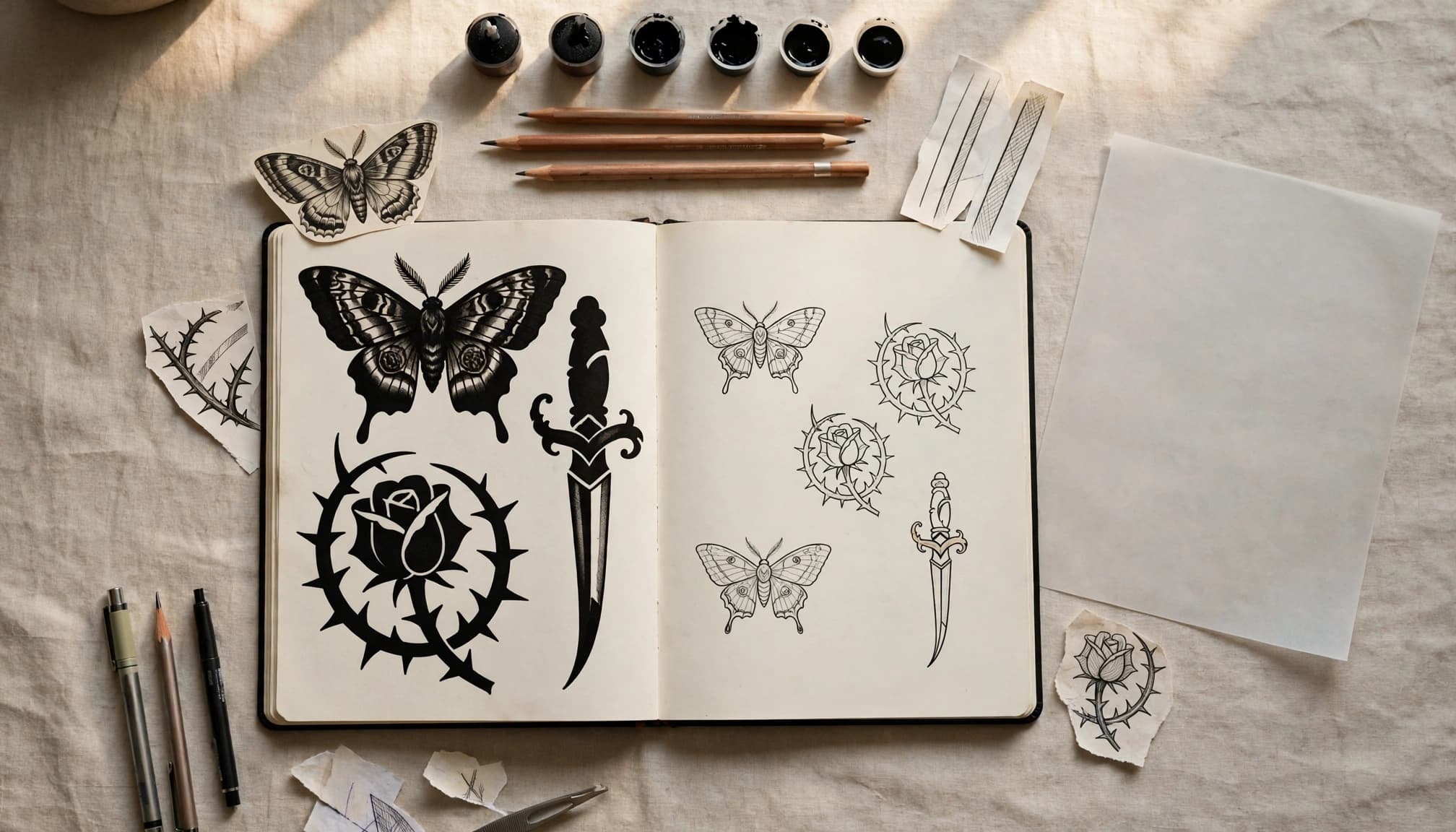
Your artist can combine those preferences into an original composition suited to your body. Respect the work behind another artist’s design, too. The U.S. Copyright Office’s guidance for visual artists explains how copyright can apply to original artwork.
Before booking, review the artist’s portfolio for consistent work in your chosen style and ask to see healed tattoos. Fresh photos can look crisp, but healed examples give you a better sense of how lines and shading settle. Check for work with a similar level of detail and placement to yours.
Keep contrast and detail readable over time
A small tattoo has less room for fine lines, tiny scales, or intricate ornament. If details sit too close together, they may become harder to distinguish as the tattoo ages. Negative space, strong silhouettes, and clear contrast help the main image stay recognizable.
Ask your artist whether the design needs more room or fewer details. For example, simplifying a spider’s legs or leaving open space between a dagger and its decorative frame can make the overall shape easier to read. A slightly larger design may preserve the features you care about, while a simpler version can keep a small placement clear.
Plan the tattoo safely, from the studio to aftercare
A striking design deserves careful planning beyond its appearance. Before booking, check how the studio handles hygiene and sterile supplies; afterward, follow clear care instructions while your skin heals.
Check studio hygiene before booking
Look for a clean, organized work area and ask how the artist prepares it between clients. They should wash their hands, wear fresh disposable gloves, and use sterile, single-use needles and other disposable supplies. Reusable equipment should be sterilized properly. If the setup looks questionable or the artist dismisses your concerns, choose another studio.

Ask what ink the artist uses and whether it is made for tattooing. Ink should not be diluted with tap water; any dilution or rinsing should use sterile water. The FDA warns that tattoo ink can contain harmful microorganisms even when its container is sealed, so clean technique matters, but it cannot guarantee ink is uncontaminated. Read the FDA’s tattoo safety guidance before your appointment if you want to understand the risks.
Rules for tattoo businesses vary by state and locality. Check that the studio follows your local requirements, and ask to see its license or inspection information when applicable. A reputable artist should answer practical questions without pressure.
Protect healing skin and watch for warning signs
Many tattoos take about two weeks to heal, although timing varies with the tattoo and your skin. Follow your artist’s instructions, since bandage timing and recommended products can differ. In general, wash your hands before touching the tattoo, clean it gently with mild soap and water, and pat it dry. Apply moisturizer as directed, and don’t scratch or pick at scabs.
While the skin heals, avoid swimming, soaking in hot tubs, and direct sun exposure. Friction from tight clothing can also irritate a fresh tattoo, so choose loose garments that won’t rub the area.
Some tenderness and mild redness can occur at first, but symptoms should improve rather than worsen. Contact a health professional if redness or swelling spreads, pus appears, a rash develops, or you have a fever. Seek advice as well if pain increases or the area isn’t healing.
Before committing, use this quick safety check:
- Choose a clean studio with an artist who follows local rules.
- Ask whether needles and other supplies are sterile and single-use, and whether the ink is made for tattooing.
- Follow the artist’s aftercare instructions and avoid picking at healing skin.
- Get medical advice for persistent or worsening problems.
Conclusion
A dangerous-looking tattoo can be dark, elegant, symbolic, or purely decorative. Its mood comes from the imagery and style you choose, not from a fixed meaning or a statement about who you are.
Choose your design, scale, and placement with care, then work with a skilled tattoo artist to shape a composition that feels personal and stays readable. The strongest tattoo is one whose edge still feels like your own.
Save pin for later


- Iconic Traditional Tattoos: Meanings Behind 8 Classic Designs - September 26, 2026
- Dangerous-Looking Tattoo Inspiration for Women - September 26, 2026
- 30 Red and Black Tattoo Ideas for Women, by Style - September 26, 2026
Leave a Reply