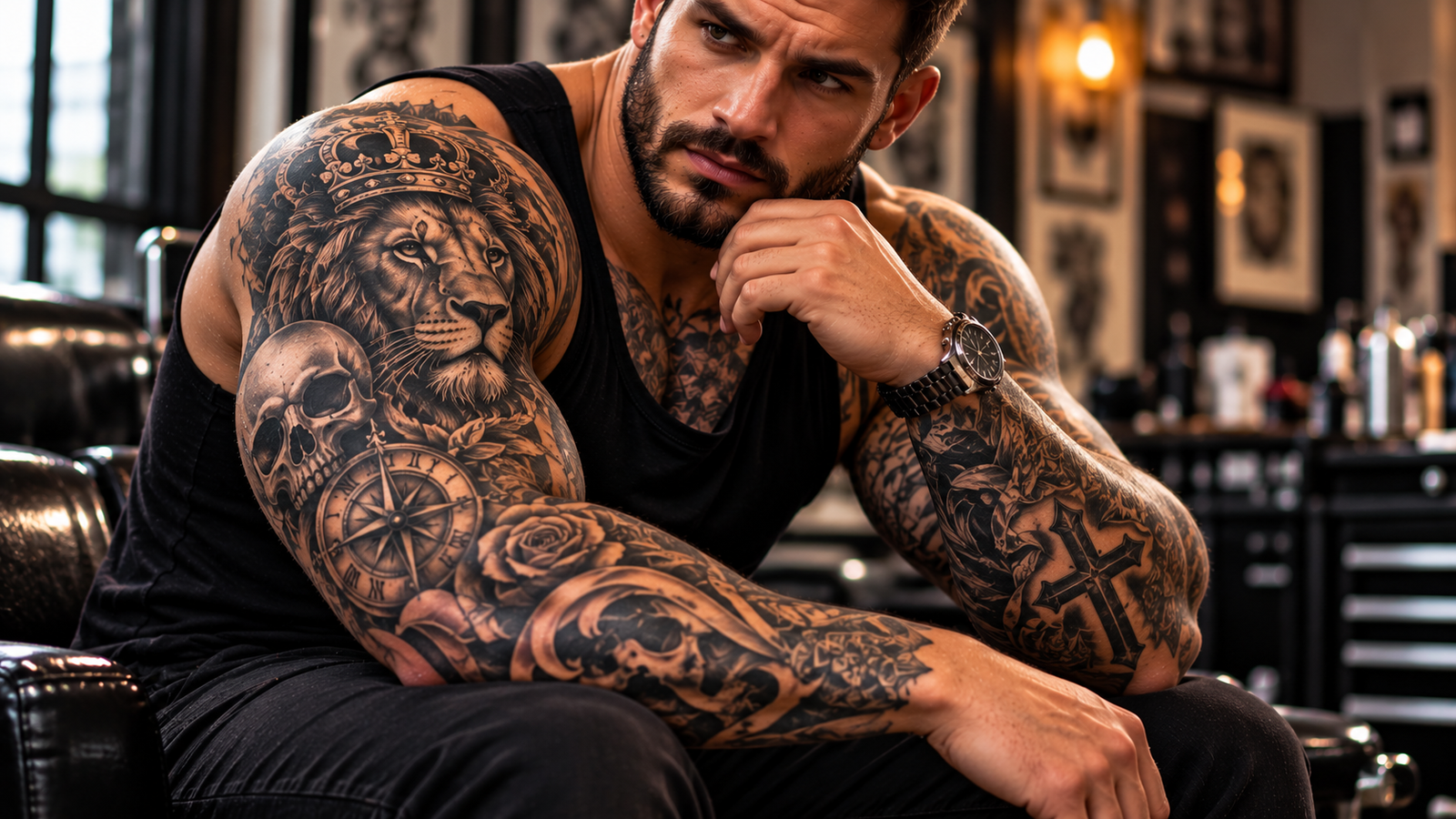
12 Bold Men’s Tattoo Ideas That Stand Out, With Placement Tips
A tattoo looks bold when strong contrast, clear shapes, and thoughtful placement make the design easy to read. The right scale matters too, since a design should work with the shape of your arm, chest, back, or leg.
Explore 12 distinct men’s tattoo ideas, from blackwork to realism, plus practical tips for choosing a design and artist. For a visual reference, check out this blackwork tattoo design video, then find an idea that fits your style and placement.
12 Bold-Looking Men’s Tattoo Ideas That Stand Out
Graphic tattoos make a strong impression through contrast, deliberate linework, and shapes that hold their form at a glance. These first four ideas use dark ink and clear structure, with room to personalize each design around your body and taste.
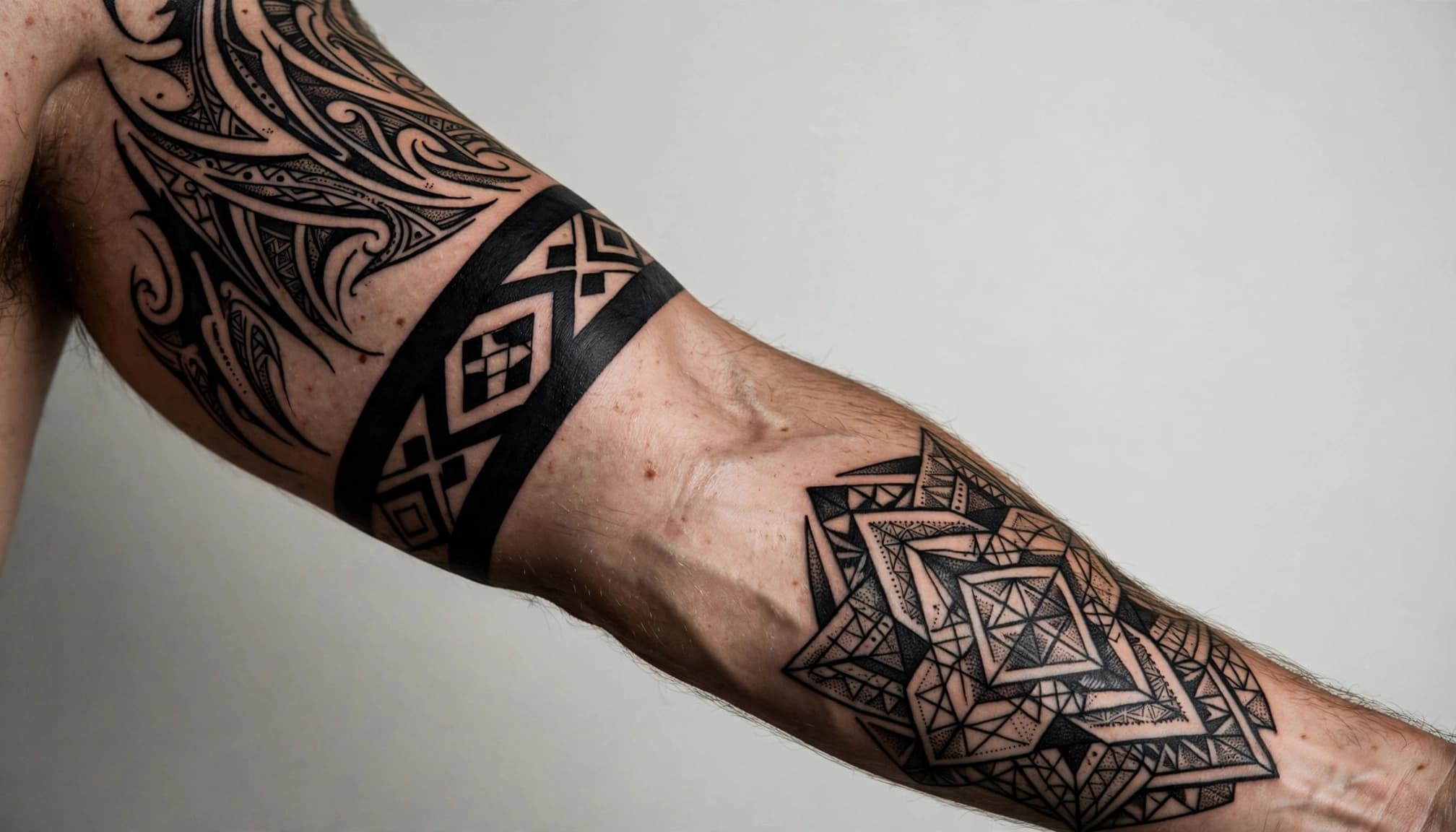
Blackwork geometric forearm panel
Sharp triangles, curved bands, and solid black blocks give this forearm design a crisp, graphic look. Dotwork shading can soften transitions between dark areas and bare skin, adding texture without competing with the main shapes.
The forearm offers a long, visible canvas, so the pattern can follow its natural lines. Keep the layout clean and the shapes well spaced; that helps the design stay easy to read as your arm moves. Make it personal with a small symbol or a repeating shape tied to an interest or memory.
Blackout tattoo with negative-space details
A blackout tattoo covers a broad area in solid black, while untouched skin creates the image within it. That contrast can form a simple emblem, a narrow geometric pattern, or a band that winds around the arm.
Because every open space must be planned against the dark field, placement and proportions matter. The forearm or calf can provide a defined area, while a larger panel suits a more complex motif. Choose an artist with a strong portfolio in blackout work, and discuss how the design will look once healed before committing to a large area of solid ink.
Neo-tribal shoulder-to-bicep wrap
Thick, flowing shapes can curve over the shoulder and continue down the bicep, giving the tattoo a sense of movement. The upper arm works well for a wrap because the design can follow the muscle instead of sitting like a flat panel.
Before choosing motifs, research their origins and meanings. Traditional tattoo patterns can carry cultural significance, so avoid copying symbols without understanding their context. The Smithsonian’s overview of tattoo history offers broader background on how tattoos have held different meanings across cultures. To make the piece personal, collaborate with an artist on original shapes that reflect your own story without borrowing culturally specific imagery.
Geometric sleeve with dotwork shading
Repeated circles, angular panels, and precise lines can connect into a half sleeve or full sleeve. Dotwork adds depth and gradual shading, while consistent line weight keeps the design from feeling like separate pieces placed side by side.
Plan the whole composition before the first session, even if you build it over time. That lets the artist map how patterns flow around the elbow and connect at the shoulder or wrist. You can personalize the sleeve with a chosen motif or an intentional shift in pattern density, while keeping the overall geometry cohesive.
Realistic Men’s Tattoos With Powerful Imagery
Animal portraits and personal likenesses can turn a tattoo into a bold focal point. For realistic men’s tattoos, contrast and scale matter as much as the subject: fine details need enough space, and an experienced artist must translate the reference into shading that stays clear on skin.
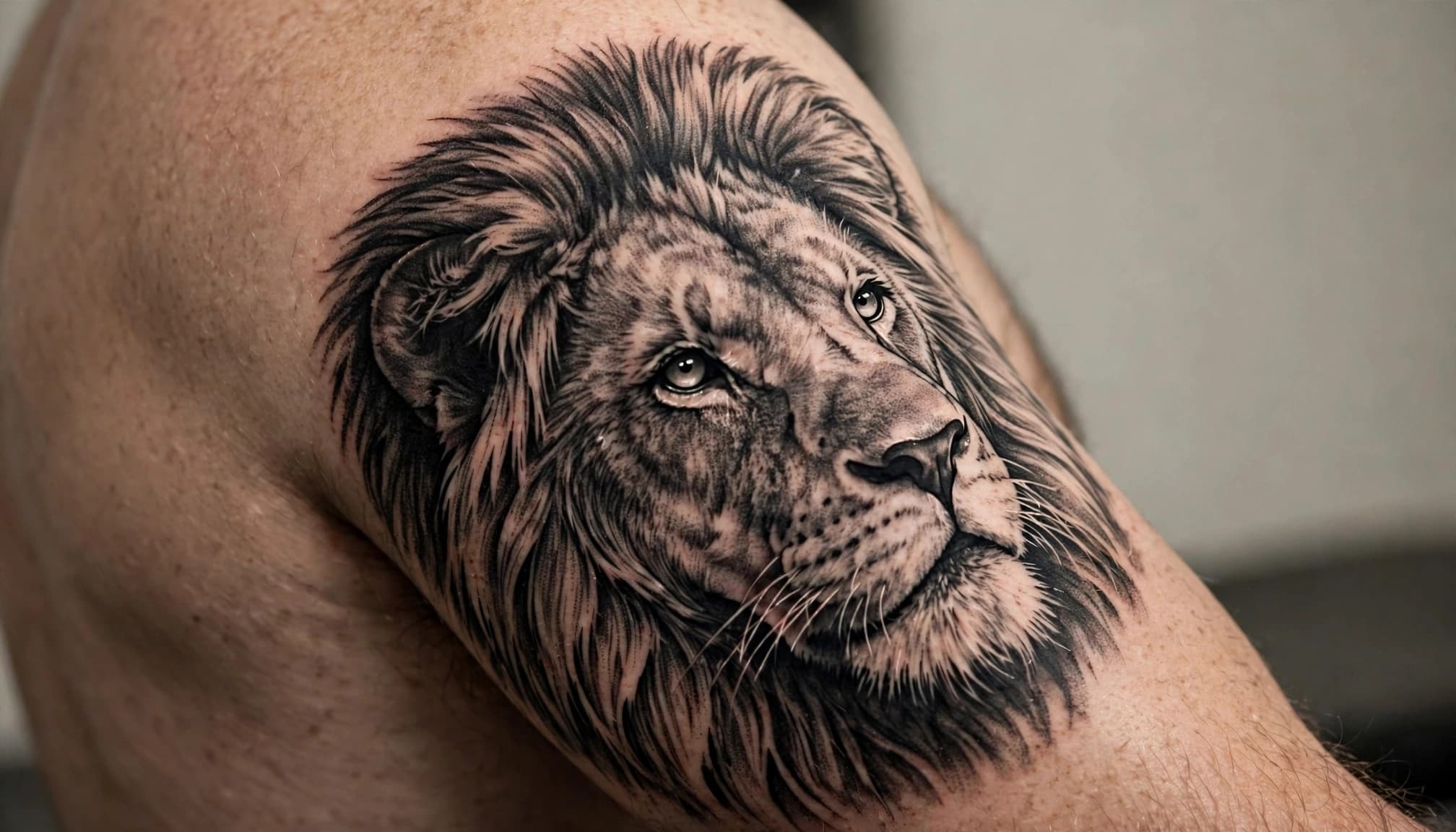
Lion head in black-and-gray realism
A close-up lion head makes the eyes, muzzle, and mane the center of attention. Deep shadows can give the face weight, while lighter areas preserve the detail that keeps the expression readable. The upper arm or chest gives the portrait room to breathe; shrinking it too much can crowd the fur and facial features.
Ask your artist how the design will follow your body’s contours, especially if the mane extends around the arm. A clear reference image also helps the artist plan the light and shadow before tattooing.
Wolf portrait with high-contrast shading
A wolf portrait can draw the eye through sharp focus on its eyes, textured fur, and a strong outer silhouette. High contrast separates the face from darker background elements, so the image doesn’t blur into one mass of ink. The forearm or calf offers a naturally vertical canvas for a head-on or three-quarter view.
Bring a strong reference image with clear lighting and visible facial features. Then work with an artist who can simplify small details without losing the wolf’s expression, since skin has less room for fine lines than a photograph.
Black panther with bold neo-traditional lines
A black panther can combine solid dark shapes with clean outlines and small areas of color or untouched skin. Those breaks create definition across the body and help the animal remain legible against its black fill. On the shoulder or upper arm, the design can curve with the muscle and suggest the panther’s movement.
Keep the pose and major shapes readable before adding smaller details. A skilled artist can balance dense black areas with enough open skin to preserve the form as the tattoo ages.
Personal portrait in black-and-gray ink
A portrait of a family member or pet can carry personal meaning, but likeness depends on careful shading and proportion. Choose a photo with clear facial features and even lighting, then give the artist enough room to render them. The upper arm, chest, or calf can suit a larger portrait better than a small, narrow area.
Before booking, review the artist’s healed portrait work, not only fresh tattoos. Look for recognizable features and smooth transitions after the skin has recovered. Also discuss studio hygiene and ink safety; the FDA’s tattoo safety guidance outlines risks such as infection and contaminated ink.
Classic Bold Tattoo Designs for Arms, Chest, and Calf
Classic tattoo imagery gives you a recognizable starting point, while changes to color, scale, and detail make the design your own. Placement matters just as much: the right size lets each image read clearly without crowding nearby ink.
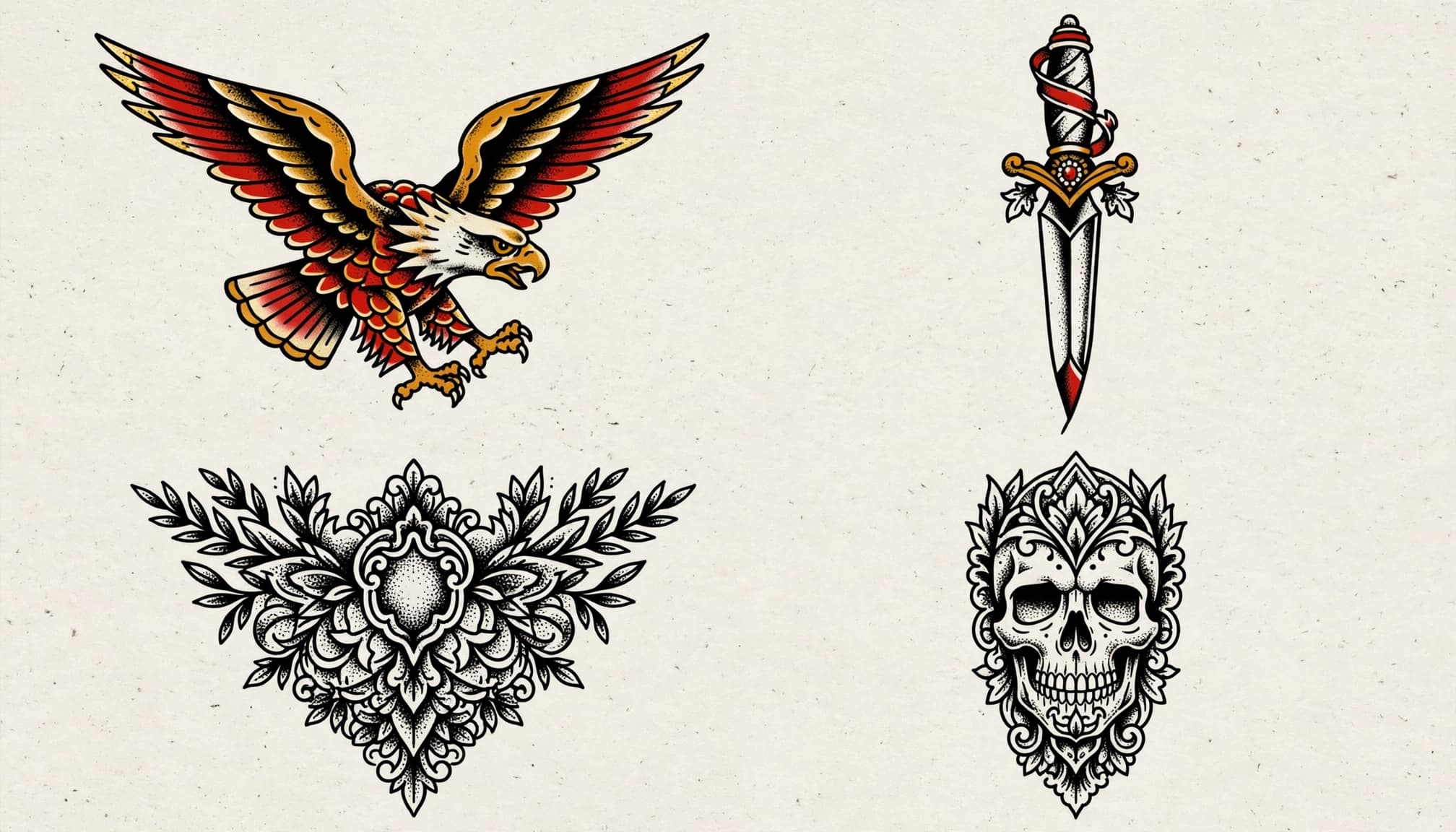
Traditional eagle with strong color and outlines
An American traditional eagle relies on a clear silhouette, sturdy feathers, and bold outlines. Red, yellow, and blue can add punch, while strong black lines keep the bird recognizable from a distance. The upper arm or shoulder gives its wings space to spread; a forearm placement can suit a tighter, more vertical pose.
A skilled artist can adapt the palette, feather details, and expression to your taste without muddying the design. Keep the main shape easy to read, especially if the eagle will sit near other tattoos.
Traditional dagger with a custom focal detail
A dagger has a tall, direct shape that fits the forearm or calf naturally. Its blade creates a clean vertical line, while the handle gives the artist room to add a small personal symbol, such as a flower, star, or meaningful pattern.
Keep the supporting details restrained. A simple ornamental accent can make the design feel personal, but extra banners, background elements, and decorative flourishes may compete with the dagger itself. Leave enough clear skin around the piece so its outline stays distinct beside existing tattoos.
Symmetrical blackwork chest piece
A blackwork chest design can follow the body’s natural shape, with balanced forms extending from the center toward each shoulder. Bold curves or angular panels create a strong frame across the chest, while open-skin breaks keep larger areas of black from feeling heavy.
Before tattooing, ask your artist to apply a stencil and check it from several angles. Your chest moves as you breathe, and the design should look balanced when you stand naturally, not only when you face a mirror. Adjust the width and shoulder reach before the session begins.
Vertical skull or mask tattoo for the calf
A skull or mask makes a striking calf tattoo when the composition runs vertically. A clear outer outline and deep shadows help define the face, while a few open areas preserve separation between the eyes, nose, and jaw. The shin can also work for a narrower design with a strong central shape.
Have your artist assess the placement while you stand and move. The calf changes shape as your leg flexes, so details that look aligned while seated may shift in motion. Choose a scale that fills the available space without running too close to neighboring tattoos.
Choose a Bold Tattoo Design and Placement That Fit You
A standout tattoo should suit your taste, your body, and how visible you want it to be. Before settling on one of these ideas, consider what the image means to you, how it fits your proportions, and whether it leaves room for future tattoos. Also think about work dress codes: a forearm tattoo is easy to show, while a chest or back piece stays covered by most shirts.
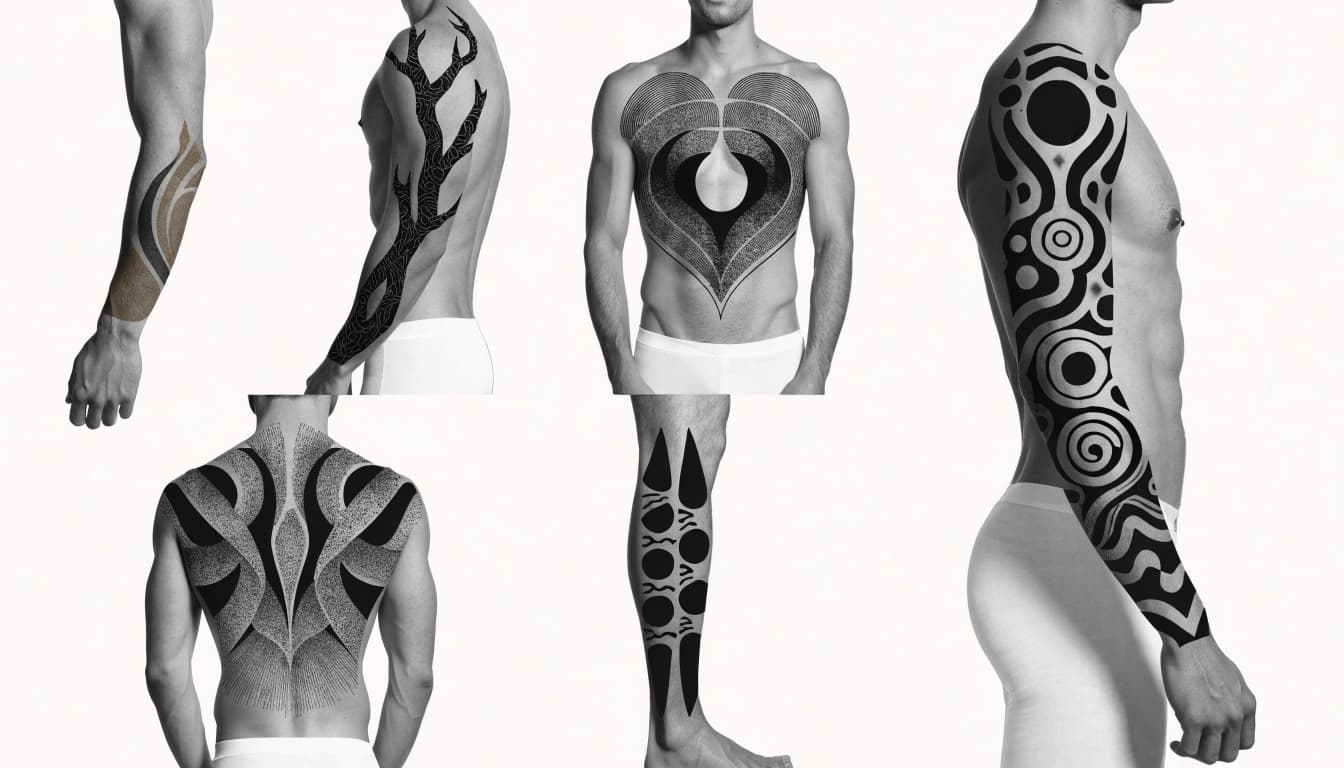
Match the design to the body area
Each placement changes how a bold design reads. A forearm gives a vertical image strong visibility, while the upper arm can support a piece that wraps around the muscle. Chest tattoos suit broad, balanced compositions; the back offers the most room for large scenes and fine detail. A calf works well for tall designs, and a sleeve connects multiple images across the arm.
Because curved areas shift as you move, a pattern that looks straight on a screen may bend around the elbow or shoulder. Ask to see the artwork mapped to your body, and check the stencil while standing naturally. Larger images need enough space for their details to remain clear, so avoid squeezing a complex portrait or geometric layout into a narrow area. If you plan more ink later, leave space for the next piece or ask the artist to design a composition that can expand.
Check the artist’s style and healed work
Choose an artist whose portfolio matches the style you want. Blackwork depends on confident dark fills and clean negative space; realism calls for convincing shading and proportions. Geometric designs need precise lines, while traditional tattoos rely on strong outlines and clear shapes.
Review healed examples as well as fresh work. Healed tattoos show how the artist’s lines and contrast settle after the skin recovers. During a consultation, discuss the final size, exact placement, estimated session length, and any changes you want to the draft. A custom stencil gives you a chance to assess scale and alignment before the needle touches your skin.
Also confirm that the artist and studio follow local health requirements, since rules vary by location. The FDA’s tattoo safety guidance explains infection risks linked to unhygienic practices and nonsterile equipment.
Plan the Tattoo Budget and Protect the Finished Design
A bold tattoo is a long-term purchase, so budget for the finished piece rather than only the first session. The design, artist, placement, and aftercare all affect what you spend and how well the tattoo holds up.
Set a realistic tattoo budget
In the US, tattoos can range from roughly $70 to more than $5,000. A small, simple design may cost close to a shop minimum, while large pieces often run hundreds to thousands of dollars. Established artists may charge by the hour, and their rates can vary widely.
The final quote depends on the tattoo’s size, detail, placement, and the artist’s experience. A detailed sleeve or portrait takes more time than a small flash design; areas that are difficult to tattoo may also affect the price. During your consultation, ask for an estimate that covers the full project, including how many sessions it may require. If you have a firm spending limit, tell the artist before finalizing the design so you can adjust the size or scope together.
Set aside a little extra for costs beyond the quoted tattoo price, and avoid choosing an artist based on price alone. A beginner’s guide to budgeting can help you plan for the expense without disrupting other priorities.
Follow aftercare to preserve the ink
Once the tattoo is finished, follow your artist’s specific aftercare instructions. While the skin heals, avoid prolonged sun exposure and keep the tattoo out of pools, hot tubs, baths, and other soaking water. Wait until it is fully healed before applying sunscreen.
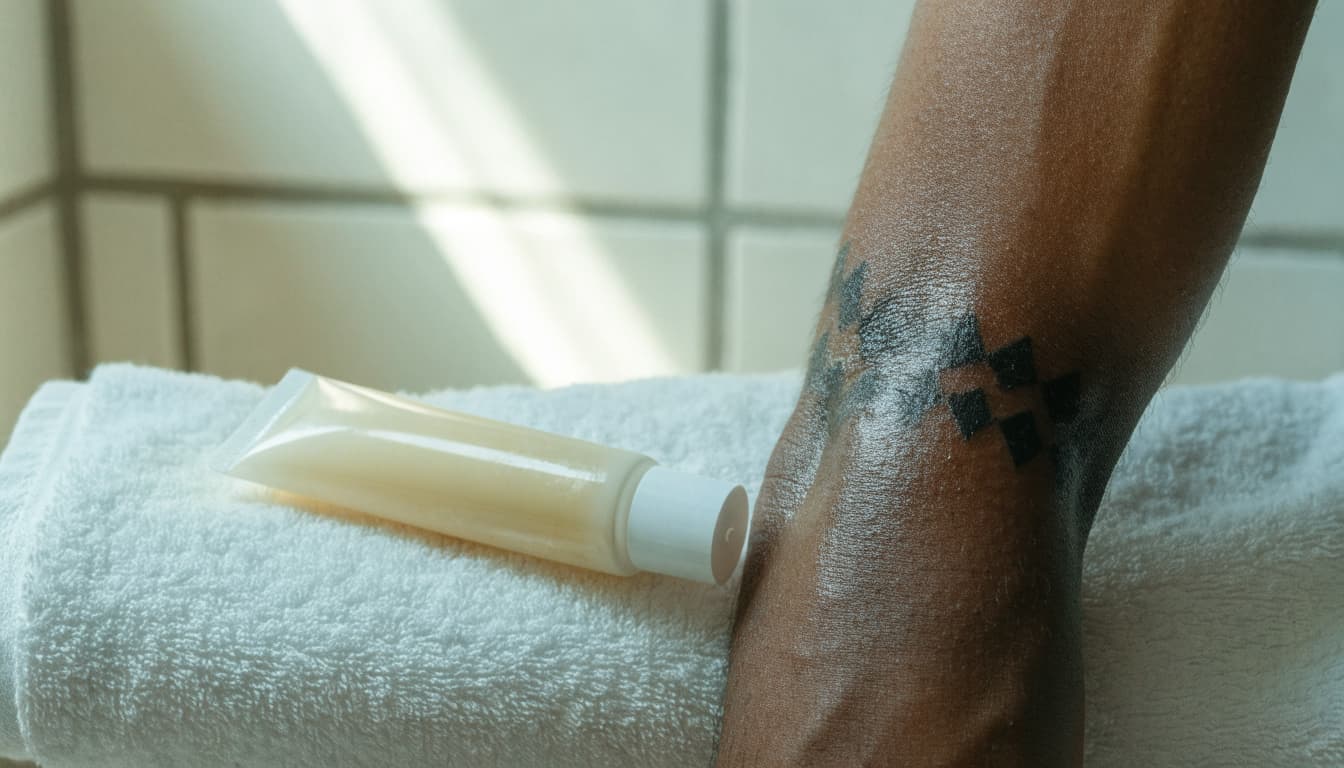
After healing, protect exposed ink with broad-spectrum, water-resistant SPF 30 or higher, as recommended in the American Academy of Dermatology’s tattoo care guidance. Reapply sunscreen as directed, especially after swimming or sweating. These habits help protect your skin and keep the design looking clear over time.
Conclusion
A bold men’s tattoo stands out when strong contrast and clear shapes work with your taste and the body area you choose. The best design also fits your budget, so consider the full project before you commit.
Save a few ideas that match your style, then consult an artist whose portfolio suits the look you want. Plan for proper aftercare, too, so the finished tattoo gets the attention it needs as it heals and over time. A standout tattoo should feel like yours and make sense for the way you want to wear it.
Save pin for later

- Iconic Traditional Tattoos: Meanings Behind 8 Classic Designs - September 26, 2026
- Dangerous-Looking Tattoo Inspiration for Women - September 26, 2026
- 30 Red and Black Tattoo Ideas for Women, by Style - September 26, 2026
Leave a Reply