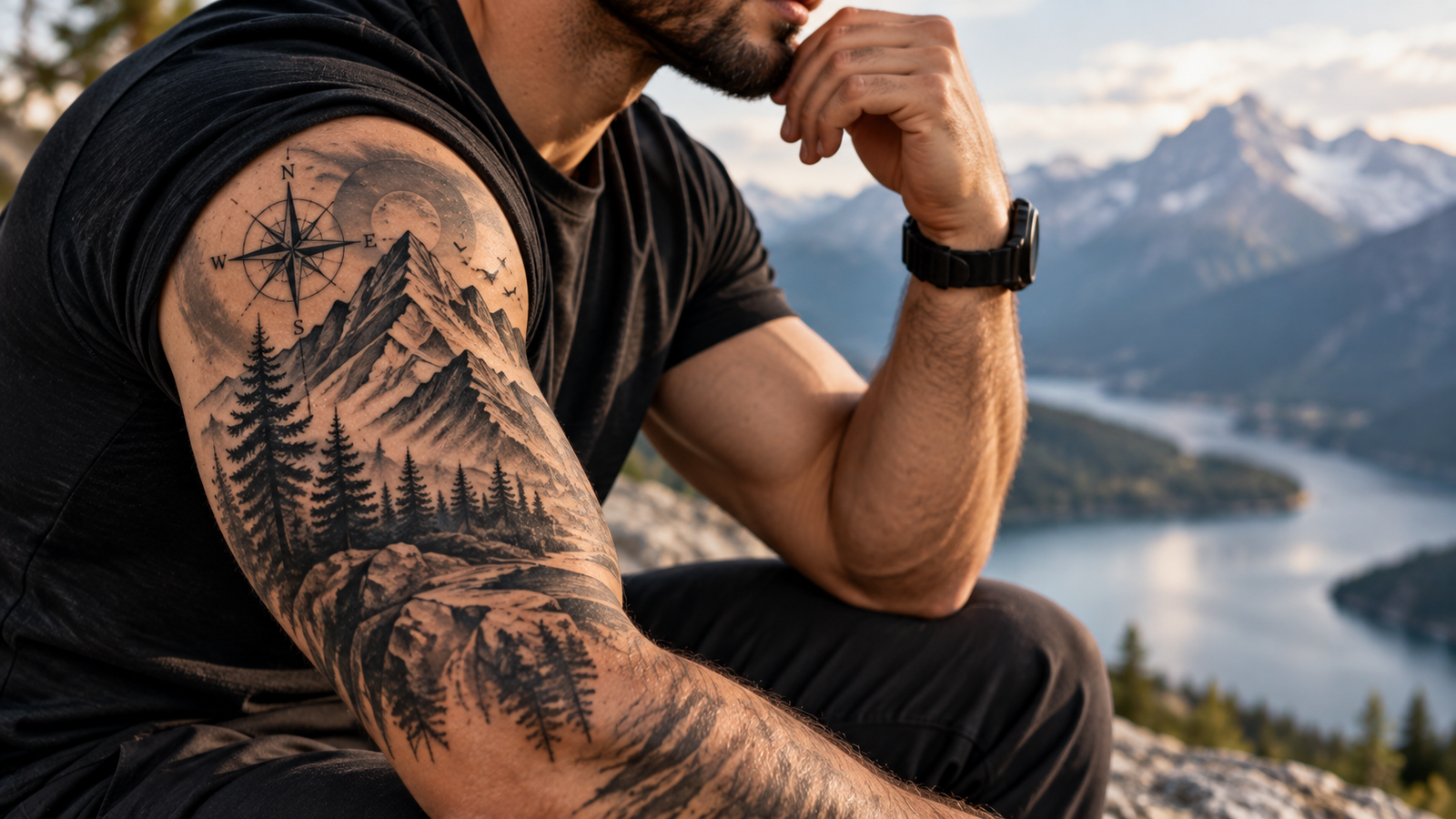
Outdoor Tree Tattoo Designs for Men: Meanings, Placement, and Ideas
A tree tattoo is one of the oldest designs in the book, and it’s still showing up on forearms, chests, and backs for a reason. Roots, rings, branches, changing seasons: every part of a tree maps onto something real in a man’s life. Where you came from, what you’ve weathered, what you’re still growing toward.
That’s why these designs hit harder for guys who feel most at home outside. A tree isn’t just a cool image on skin; it’s a record of your story, inked in a symbol that has meant endurance for as long as people have been telling stories.
In this guide, you’ll find the meanings behind the most popular tree designs, placement ideas that actually work, customization tips, and what to expect on cost and aftercare. By the end, you’ll know exactly how to make a tree tattoo yours.
Why Tree Tattoos Hit Different for Men Who Love the Outdoors
There’s a reason guys who’d rather be in the woods than in an office keep coming back to tree tattoos. A tree grows slowly, takes every storm head-on, and never moves from where it’s planted. That’s a kind of quiet strength a lot of men want to carry with them, and skin is the one place it never gets taken down.
Tree Tattoo Meanings: What Your Choice Says About You
Every part of a tree carries its own meaning, so the design you pick says something specific about your story. The most common symbolism breaks down like this:
- Roots stand for family, heritage, and where you came from. They’re a nod to the people and places that raised you.
- Rings record time and growth, especially growth that came through hard seasons. Each ring on a real tree marks a year it survived.
- Branches point to direction and ambition, the paths you’re still chasing.
- Evergreens signal persistence, because they hold their color when everything else drops its leaves.
- Willows carry a double meaning of flexibility and grief, bending without breaking.
- Cherry blossoms remind you how fast life moves, since they bloom brilliantly and fall within days.
Then there’s rebirth. A charred or cut tree sprouting new shoots is one of the most powerful images in nature, and it hits hard for men who rebuilt their lives after a rough chapter. If that’s you, a tree rising from a stump might say more than a thousand words of ink detail ever could.
Turning Roots, Rings, and Branches Into Chapters of Your Life
Here’s a simple exercise before you commit to any design. Map your life onto the anatomy of a tree and see what surfaces.
Your roots can stand for your hometown or the people who raised you. The trunk holds your core values, the stuff that doesn’t bend. A broken branch can mark a loss you survived, while new growth at the tip represents the fresh start that followed. Rings hidden inside the trunk can count the hard years you made it through, one by one.
Grab a notebook and write down two or three memories that shaped you most. Then sketch which part of the tree each one belongs to. Once those connections are on paper, the design basically builds itself, and you’ll never have to explain what your tattoo means to anyone who asks.
Outdoor Tree Tattoo Designs That Tell Your Story
Every memorable tree tattoo comes down to three decisions: which species you ink, which style you use, and what surrounds it. Get those three right and the design stops being generic art and starts being a scene pulled straight from your life. This section walks through each choice so you can build a tattoo that actually means something.
Matching the Tree Species to Your Story: Oak, Pine, Willow, and More
Each species carries its own personality, so start with the tree that matches your chapter. An oak is the classic pick for strength and endurance, built for guys who see themselves as the steady one everyone leans on. A pine or other evergreen suits mountain men and anyone who feels most alive in winter, since it holds its color when the rest of the forest goes bare.
A willow fits riverside memories, and it also handles grief better than almost any other symbol, bending in the wind instead of snapping. Cherry blossoms work for men who lost someone young or learned the hard way to enjoy the moment, because the blooms last days and then fall. If you want a cleaner, more minimal look, a birch with its simple pale bark strips down nicely.
Then there’s the comeback tree: a charred trunk or cut stump with new shoots climbing out of it. For anyone who rebuilt after addiction, divorce, injury, or a lost career, this one says more than a full sleeve of detail ever could.
One tip that separates good tattoos from great ones: pick the species that actually grew where your story happened. The oak from your grandfather’s farm beats a generic oak every time.
Choosing a Style: Realistic, Geometric, Silhouette, or Fine Line
Species is the what; style is the how. Black and grey realism delivers photo-level bark texture and depth, and it’s the right call if you want the tree to look like it could shed leaves on your arm. Geometric designs wrap the tree in circles, triangles, or tree-of-life patterns for a structured, almost sacred look.
A bold black silhouette against a sun or moon gives you maximum contrast from across the room. Fine line single-needle work stays subtle, the kind of tattoo only visible up close, while watercolor adds color and motion for guys who want softness in the piece.
One honest note on aging: this choice is a 30-year decision, not a 30-day one. Bold lines and solid black hold up for decades, while very fine lines tend to blur and spread as skin ages. If you love fine line work, go slightly larger than feels necessary so the detail survives the years.
Adding Outdoor Elements: Mountains, Rivers, Wildlife, and Open Sky
Here’s where a tree becomes a scene. The setting is what turns a stock design into something only you could wear, so build the landscape around the memory.
Some pairings that work well:
- A pine backed by a specific mountain range, drawn from the ridgeline you climb every fall.
- A riverside willow for the fishing hole you’ve hit since you were twelve.
- An oak with a deer or elk standing beneath it for hunting camps and the mornings that came with them.
- A lone tree, a tent, and a campfire for the thru-hike years that changed you.
- Birds overhead for freedom, or as quiet nods to friends you’ve lost.
Even a small detail does heavy lifting. A rock formation, a bend in the river, or the exact angle of a peak makes the tattoo recognizable to anyone who’s been there with you. Bring reference photos to your artist, because a scene from real life always outperforms something pulled off a flash wall.
Tree Tattoo Placement and Size: Matching the Spot to the Story
You’ve picked the species and the scene. Now comes the decision that shapes how the tattoo lives with you: where it goes and how big it gets. Placement changes both the message and the practical reality, since some spots are for you alone while others read across a room. Size decides how much detail the design can actually hold. It’s worth settling these questions before you sit in the chair, because they’re expensive to reverse.
Forearm, Chest, Back, or Calf: How Placement Changes the Message
Each spot carries its own personality, and most men pick based on who they want to see the tattoo day to day.
- Forearm. A single vertical tree works beautifully here, and you’ll catch sight of it a dozen times a day. This is the spot for a daily personal reminder.
- Chest. The tattoo sits over your heart, which makes it the natural home for a family tree or a memorial piece.
- Back and shoulder blades. Wide, flat canvas with room for a full forest scene, mountain range, or sprawling branches.
- Calf. Perfect for tall, narrow designs. A straight pine running down the muscle looks clean and intentional.
- Ribs. Private and rarely seen, but honest warning: this spot hurts a lot. Go here only if the design matters more than the discomfort.
The core question is simple. Do you want this piece as a private anchor you see every morning, or a statement others notice? Both are valid; they just point you toward different spots.
From Tiny Trunk to Full Forest Sleeve: Picking the Right Scale
Small pieces have real appeal. A fine line tree on the wrist or ankle stays subtle, heals fast, and costs less. The tradeoff is detail, because a two-inch tattoo physically cannot hold mountains, birds, and coordinates. Ink spreads under the skin over the years, so tiny designs lose clarity first.
Larger work flips the equation. A half or full sleeve built from a forest scene gives your artist room for texture, depth, and the small details that make a piece personal. If your vision includes a ridgeline, wildlife, and a date or two, you need the real estate. Match the scale to the ambition of the design and you’ll avoid the most common regret: wanting more detail than the spot allows.
How to Design a Custom Tree Tattoo That Is Uniquely Yours
Walk into a shop and pick a design off the flash wall, and you’re wearing someone else’s story. The tree might look good, but it means nothing specific to you. The personalization step is where your own history gets inked in, and it’s the difference between a nice tattoo and one you’d defend in a parking lot.
Hidden Personal Details: Dates, Coordinates, and Family Roots
The best custom pieces carry secrets only you can read. A tattoo doesn’t need to announce its meaning to the whole room; some of the strongest ones hide it in plain sight. A few ways to work personal details into the design:
- Weave names or dates into the roots or bark, so they read as texture until someone looks closely.
- Use the latitude and longitude of a childhood home, a summit you climbed, or the hospital where your kid was born.
- Trace a real skyline or ridgeline from an actual mountain range you’ve hiked.
- Add one bird per child in the branches, or per brother, or per friend you’ve lost.
- Mix birth flowers into the canopy, one bloom for each member of your family.
One word of caution before you go wild with this. One or two hidden details land harder than ten, because a design stuffed with buried references turns into visual clutter. Cluttered tattoos age poorly too, since fine detail blurs first as the ink spreads under your skin over the years. Pick the two details that matter most and let the rest of the scene breathe.
Working With Your Artist to Nail the Design
Custom work is a collaboration, and how you prepare changes the outcome. Start by gathering photos of the actual tree, the lake, or the ridgeline your design is built around. Real references beat descriptions every time.
Next, book a consultation instead of walking in cold. Most shops offer them free, and it gives the artist time to think about your piece. While you’re vetting, check their portfolio for nature and blackwork pieces, because an artist who spends all day doing portraits may not nail bark texture.
Bring your list of memories and meanings from the exercise above. Then stay open when the artist pushes back. They know how designs heal and age on skin, so a suggested change usually protects the tattoo’s future, not their ego. Expect a custom drawing fee on top of the session rate, and give the drawing a few days or even a few weeks to come together. Good custom work takes time.
Tree Tattoo Cost, Pain, and Aftercare: What to Know Before You Commit
The meaning and design get all the attention, but the practical stuff is where first-timers usually get blindsided. What it costs, how much it hurts, and how to heal it right matter just as much as the artwork itself. None of it is complicated, yet most people only think to ask after the needle is already moving. Here’s the honest rundown so you walk in prepared.
How Much Does a Tree Tattoo Cost?
In the United States, most tattoo artists charge $100 to $250 per hour, and the total depends on size, detail, and the artist’s reputation. A rough breakdown:
- Small, simple tree (wrist or ankle, single style): $150 to $400
- Medium, detailed piece with landscape elements: $400 to $1,000
- Half or full sleeve built from a forest scene: $1,500 to $4,000 or more, spread across multiple sessions
Color adds cost, as does an artist with a long waitlist. The temptation is to hunt for the cheapest shop in town, and that’s usually a mistake. A poorly executed tree is on your body for life, and cover-ups cost more than the original tattoo would have. Budget for quality, and if the price feels steep, save up rather than settle.
Pain and Healing: What to Expect During and After
Pain varies a lot by placement. Spots with thin skin over bone, like the ribs, spine, inner arm, and chest, hurt the most. Meanwhile, the outer forearm, calf, and shoulder are far more manageable, which is good news given how well those spots suit tree designs.
Healing happens in layers. The surface closes up in about two to four weeks, while the deeper skin keeps repairing itself for a few months. Stick to the basics: wash gently, apply thin layers of fragrance-free moisturizer, don’t scratch or pick, and skip soaking in tubs, lakes, and pools.
If you spend your weekends outdoors, pay extra attention here. Sun exposure, swimming, and dirty job sites are the three biggest threats to a fresh tattoo. Schedule your appointment so the healing window doesn’t collide with a backpacking trip or a stretch of outdoor work, and keep the fresh ink covered and shaded until it’s fully healed.
For official guidance on wound care basics, the American Academy of Dermatology’s tattoo aftercare tips is a solid reference to keep handy.
Conclusion
The best tree tattoo isn’t the trendiest one on Instagram. It’s the one that matches your own roots, the storms you’ve weathered, and the new growth still coming. When the design is built from your life, it never fades into just another piece of art.
The path is simple. Pick the species that fits your story, choose a style that will age well over decades, place it where it means the most to you, and add one or two hidden details that only you can read. That’s it.
The last step is the one most guys skip. Book a consultation with an artist whose nature work you respect, bring your reference photos and your list of memories, and start the conversation. Your story is already there. The right artist just helps you ink it.
save pin for later


- Hunting Gothic Skin: What the Search Term Can Mean - September 25, 2026
- Skull Tattoo Designs for Men That Stay Bold Over Time - September 25, 2026
- 30 Tips to Find Your Perfect Tattoo Style and Artist - September 25, 2026
Leave a Reply